Guide
Yoga for Better Sleep
Can't switch off at night? Here's a gentle, no-fitness-required wind-down sequence and a few small habits that help your nervous system shift into rest mode before bed.

If your body is tired but your mind won’t stop scrolling through tomorrow, you already know the problem isn’t really about being sleepy. It’s about winding down — giving your nervous system permission to shift out of “go” mode and into rest. That shift is exactly what a gentle evening yoga practice is good at.
This guide is the calm, no-pressure version. You don’t need to be flexible, you don’t need a fancy mat, and you definitely don’t need to break a sweat. A few slow shapes and some long, easy breaths are enough to tell your body the day is done.
Why yoga helps you wind down
The reason a hard workout right before bed often backfires is that it revs your system up. A slow, gentle practice does the opposite. When you move quietly, breathe slowly, and let your muscles soften, you nudge your body toward its “rest and digest” state — the same calm gear it needs to drift off.
The single most useful tool here is your breath, specifically a long, unhurried exhale. When your out-breath is longer than your in-breath, your heart rate naturally slows and your body reads the signal as safe. You don’t have to count or get it perfect. Just breathing a little more slowly than usual, with soft exhales, does most of the work.
This is also why the gentlest styles are the most sleep-friendly. A restorative class is almost entirely propped and floor-based — less about effort, more about letting go. A yin practice holds quiet, comfortable shapes long enough for your mind to settle. Both are far better evening company than anything fast or heated.
A gentle bedtime sequence
Here’s a short sequence you can do on the floor, on a rug, or even in bed. Dim the lights, put your phone somewhere out of reach, and move slowly. There’s no rush and no goal beyond feeling a little calmer than when you started.
Hold each shape for several slow breaths — roughly one to three minutes if it feels good. Use pillows and blankets generously. Nothing here should hurt or strain.
1. Seated forward fold
Sit with your legs out in front of you (a cushion under your hips helps). On an exhale, fold gently forward — only as far as is comfortable. Let your head and neck go heavy. This isn’t about reaching your toes; it’s about softening your back and slowing your breath.
2. Reclined butterfly
Lie on your back, bring the soles of your feet together, and let your knees fall open. Tuck a pillow under each knee so your hips can fully relax. Rest your hands on your belly and feel it rise and fall. Stay here for a few minutes.
3. Gentle reclined twist
Still on your back, hug your knees in, then let them drop slowly to one side. Turn your head the other way if it feels nice. Breathe into the gentle stretch along your spine, then switch sides. Twists like this help release the day’s tension from your back.
4. Legs up the wall
Scoot your hips close to a wall and rest your legs straight up against it (or drape them over a chair, or a stack of pillows). This quiet, restful shape is a longtime favorite for winding down. Stay for five minutes if you can, breathing slowly.
5. Rest and breathe
Finish lying flat, or curled on your side — however you’d actually sleep. Let everything go heavy. Make your exhales long and soft. Many people drift off right here, which is exactly the point.
Small habits that help
A bedtime practice works best alongside a few simple, undramatic habits. None of these are rules — just gentle nudges that make rest easier.
- Keep it consistent. Five quiet minutes most nights does more than an hour once a week. Your body loves a predictable signal.
- Dim the lights early. Lower light in the last hour before bed helps your body prepare for sleep. Soft lamps over bright overheads.
- Park the phone. Scrolling keeps your mind in “go” mode. If you can, leave it across the room while you practice.
- Cool and quiet. A slightly cool, dark, calm room is friendlier to sleep.
- Don’t force it. If you’re wide awake, that’s okay. The practice is to keep things slow and gentle, not to make yourself sleep.
If sitting still feels hard, a few minutes of quiet meditation or breathwork can pair beautifully with the sequence above — same idea, just focused on the mind instead of the body.
Finding a calmer class in LA
Practicing at home is wonderful, but a guided class can teach you how these slow, restful shapes are supposed to feel — and a good teacher will help you set up your props so you can truly let go. Once you’ve felt it in a studio, recreating that calm at home gets much easier.
When you’re browsing, look for the words restorative, yin, candlelit, or sound bath — these are the gentle, wind-down end of the spectrum. Skip the hot and power classes for evening; they’re great, just not for sleep. Browse the directory by style or by neighborhood to find something close to home that you’ll actually keep returning to.
When to see a doctor
A gentle yoga practice can help you wind down, but it is not a medical treatment, and it can’t fix everything. If you’re dealing with ongoing insomnia, regular sleeplessness that’s affecting your days, pain, or any medical condition, please talk to a doctor or a qualified healthcare provider. And if you have an injury or a specific health concern, let a qualified yoga teacher know before class so they can help you practice safely.
Rest is a skill you can build, slowly and kindly. Dim the lights, breathe a little slower, and let the practice meet you where you are.
Studios to explore
Boheme Yoga
A tidy DTLA studio with hot classes, live-music sessions and restorative practice in the Historic Core.
Yoga Circle Downtown
An old-school, down-to-earth studio with strong yin classes and a robust livestreaming option.
Hot 8 Yoga Pasadena
A large, much-loved Old Town studio with a serene outdoor courtyard and classes from dawn to night.
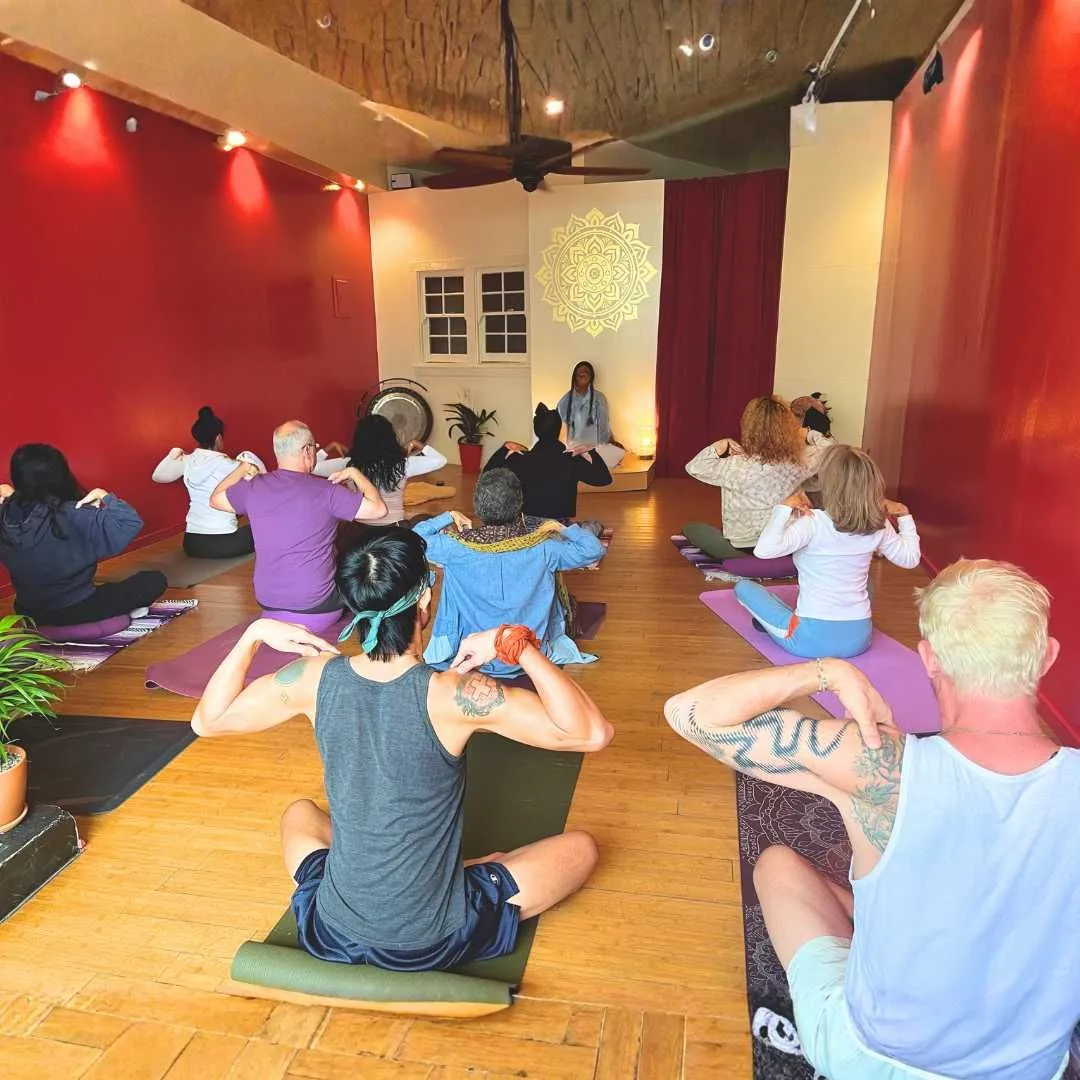 Kundalini
 Kundalini Silverlake
An intimate, affordable studio specializing in Kundalini practice, breathwork and chanting.
Open Venice
The in-person home of the Open app, blending movement, breathwork and meditation with a great sound system.
Yoga Nest Venice
An eclectic, light-filled studio known for candlelit yin, soundbaths and a magical community feel.
Frequently asked questions
How long before bed should I practice?
Anywhere from right before you get under the covers to about an hour beforehand works well. Keep it slow and dim — this is a wind-down, not a workout.
Which yoga style is best for sleep?
Restorative and yin are the gentlest and most sleep-friendly because they're slow, propped, and floor-based. Save hot yoga and power flows for earlier in the day.
Can I do this in bed?
Most of these shapes work on a soft surface or even in bed. The goal is comfort and slow breathing, not perfect form, so use pillows and blankets freely.
Will yoga fix my insomnia?
Yoga can help you wind down and may make rest easier, but it isn't a cure or a medical treatment. If sleeplessness is ongoing or affecting your health, talk to a doctor.