Guide
Yoga for stress relief
Wound a little tight? Here's how yoga helps you release tension — the restful styles, the sound bath and restorative classes that act as a reset, and how to find a slower room in LA.

Most of us carry stress in our bodies before we ever notice it in our heads — a clenched jaw, tight shoulders, a breath that never quite reaches the bottom of the lungs. Yoga is one of the oldest, simplest ways to put that tension down for a while. You don’t have to be flexible, you don’t have to “clear your mind,” and you definitely don’t have to sweat through a hard class to feel better.
This guide is the calm version — no gatekeeping, no pressure to perform. Just what actually helps when your goal is to release tension and feel a little more settled.
How yoga helps you release tension
When you’re stressed, your body runs on a kind of low-grade alarm — shallow breathing, a quick pulse, muscles braced for something. Slow, gentle movement and long, easy breathing send the opposite signal: you’re safe, you can let go. That shift is the whole point. It isn’t magic and it isn’t a cure for anything — it’s just giving your nervous system a chance to downshift.
The key thing to understand: for stress relief, slower is better. The fast, hot, and strong classes have their place, but they ask your body to work hard. What unwinds tension is the opposite — rooms that are quiet, warm, and unhurried, where the only job is to soften.
The restful styles worth knowing
Not every yoga class will calm you down. Here’s the plain breakdown of the ones that do.
- Restorative — the gentlest style there is. You’re fully propped with bolsters and blankets, almost entirely on the floor, holding a handful of supported shapes for several minutes each. Less a workout, more a reset for your nervous system. It’s hard to “do it wrong.”
- Yin — long, quiet holds that work the deep tissue. The pace is slow and meditative, though sitting with the stillness can be its own gentle challenge.
- Gentle / slow flow — light movement led by the breath, without the intensity of a power class. A good middle ground if lying still feels like too much.
- Meditation and breathwork — sometimes barely any movement at all, just guided attention and breathing. Surprisingly powerful for a tight, busy mind.
You can explore restorative classes or browse meditation sessions in the directory when you’re ready to find one near you.
Sound baths and restorative classes as a reset
If you only try one thing from this guide, make it a sound bath or a restorative class. Both are built around the same idea: do less, feel more.
What a sound bath is like
A sound bath is about as easy as wellness gets. You lie down on a mat, cover up with a blanket, and simply listen while a teacher plays singing bowls, gongs, and chimes. There are no poses to learn, nothing to get right, and no part of your body that has to perform. The waves of sound give your busy mind something soft to rest on, and most people leave feeling like they just woke from a good nap. Several LA studios run them regularly — often in the evening, sometimes by candlelight.
What a restorative class is like
A restorative class is the movement cousin of the sound bath. You’ll settle into a few well-supported poses, held long enough that your muscles finally trust they can let go. Teachers tuck props under your knees, back, and head so nothing strains. The room is usually dim and warm. By the end, the difference between how you walked in and how you walk out can be surprising — and that contrast is exactly the “reset” people come back for.
Both work best when you treat them as maintenance, not emergency repair. A standing weekly date with a slow room does more over time than one desperate class on your worst day.
A few minutes of breathing you can do anywhere
The most portable stress tool in yoga isn’t a pose — it’s your breath. You don’t need a studio, a mat, or even much time.
Try this: breathe in slowly through your nose for a count of four, then breathe out, also through your nose, for a count of six. The longer exhale is the part that signals “calm” to your body. Do that for a minute or two — sitting at your desk, in the car before you go inside, lying in bed — and notice what shifts. It won’t fix a hard day, but it gives you a small lever you can reach for any time.
If guided practice helps you stick with it, look for meditation and breathwork classes, where a teacher walks you through it so you don’t have to think about the counting.
Finding a slower studio near you
In LA, the calmest rooms aren’t always the most obvious ones. The big hot-yoga chains are easy to find; the quiet candlelit yin and sound bath classes take a little more looking. The directory is built to make that easy.
Browse by style if you already know you want restorative, yin, or a sound bath, or by neighborhood to find something close enough that you’ll actually keep going. When you’re choosing, read the class description and lean toward words like gentle, slow, candlelit, restorative, or sound — and away from power, sculpt, or hot if relaxing is the goal. Many studios offer a discounted intro week, which is a low-pressure way to test whether a room feels genuinely calming to you.
A note on stress, pain, and your health
A quick, honest word before you go. This guide is general wellness information, not medical advice. Yoga can be a wonderful way to relax and release everyday tension, but it doesn’t treat or cure anxiety, depression, chronic pain, or any medical condition.
If you’re dealing with ongoing stress, pain, an injury, or a health condition — or if you’re pregnant — talk to a doctor or another qualified health professional about what’s right for you, and tell your teacher before class so they can offer modifications. Move gently, skip anything that hurts, and rest whenever you need to. Resting isn’t quitting — in a stress-relief practice, it’s the whole point.
Studios to explore
Boheme Yoga
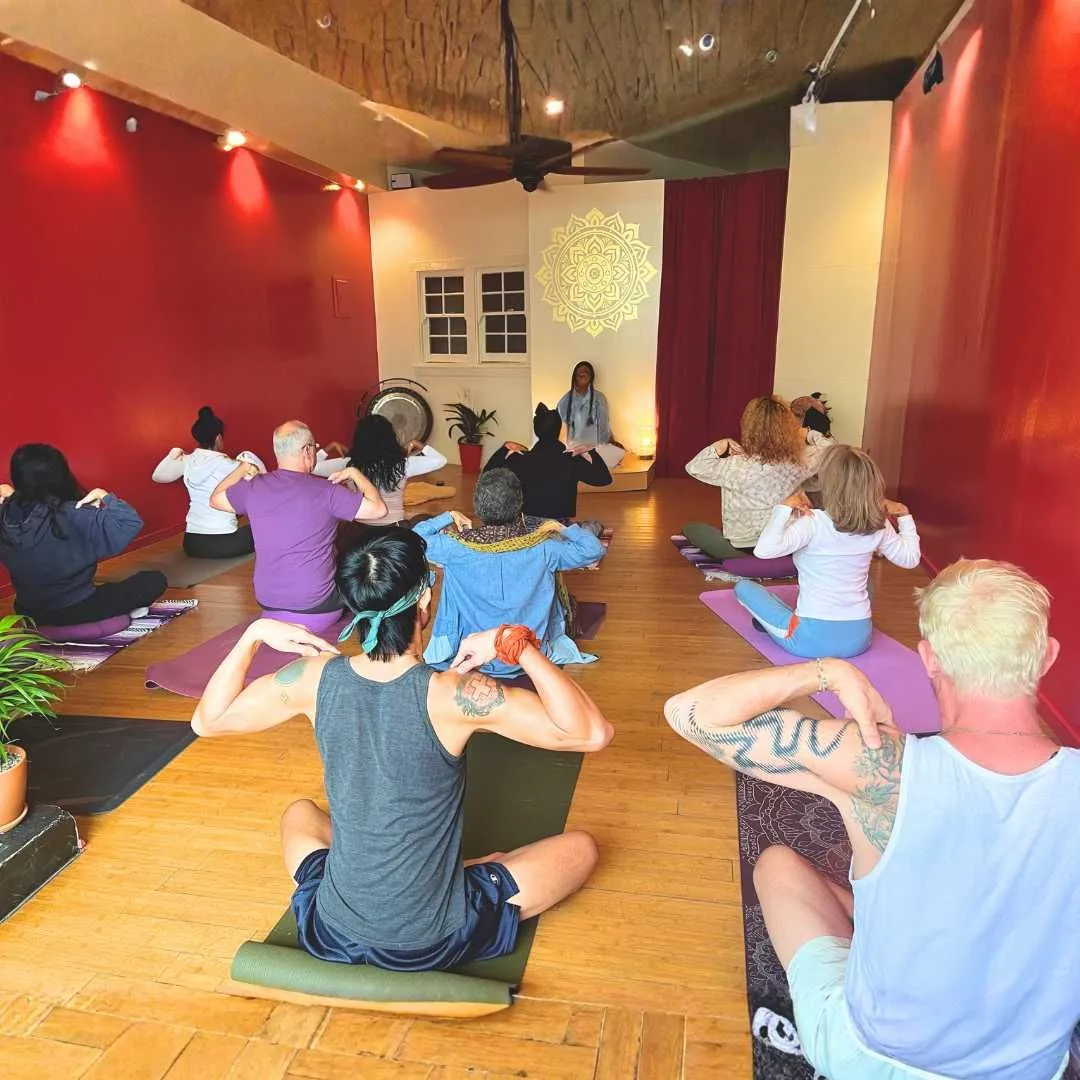
A tidy DTLA studio with hot classes, live-music sessions and restorative practice in the Historic Core.
 Kundalini
 Kundalini Silverlake
An intimate, affordable studio specializing in Kundalini practice, breathwork and chanting.
Open Venice
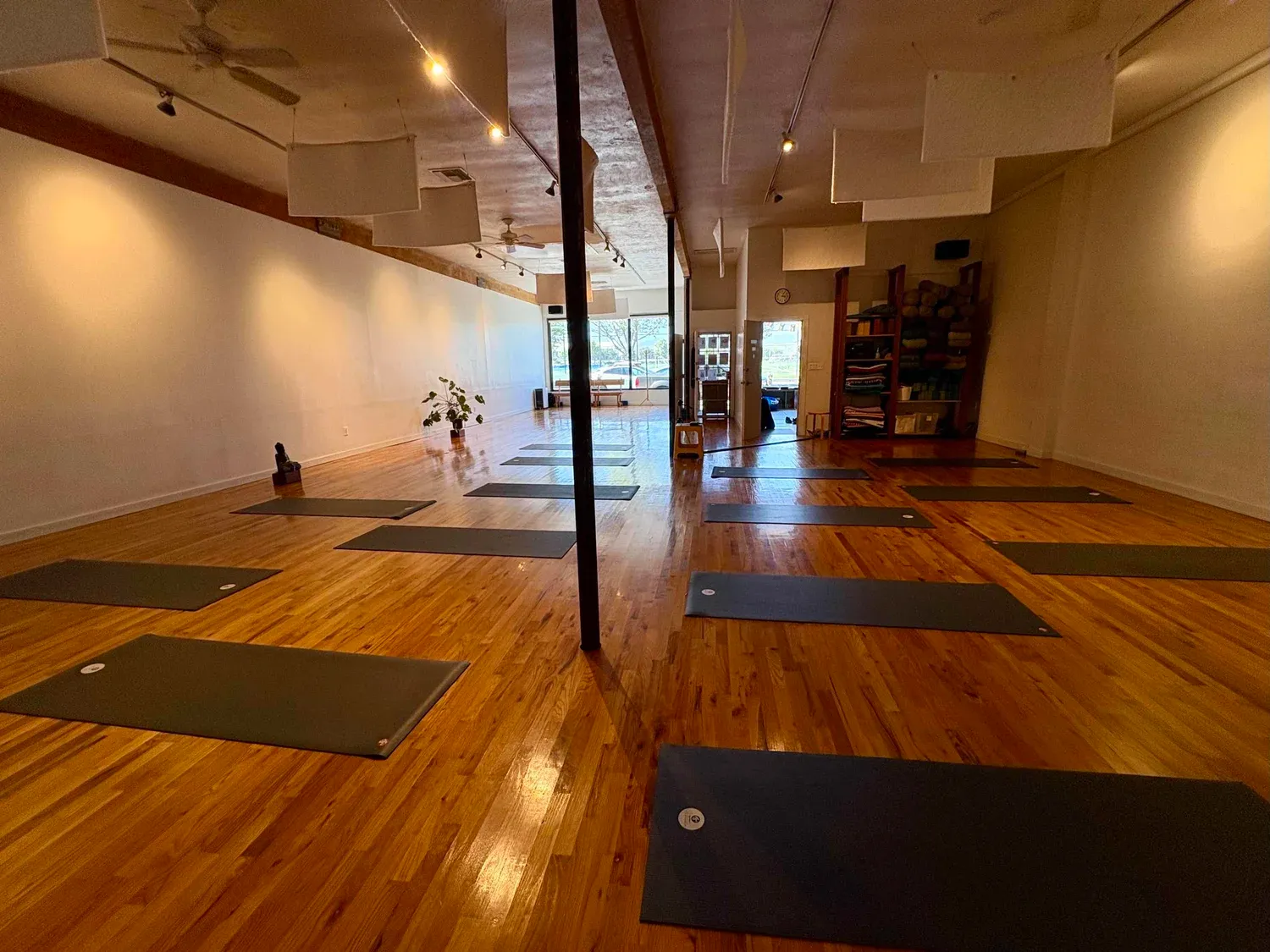
The in-person home of the Open app, blending movement, breathwork and meditation with a great sound system.
 All levels
 Santa Monica Yoga
A long-running, down-to-earth studio with a strong community and evening candlelight and soundbath events.
Yoga Nest Venice
An eclectic, light-filled studio known for candlelit yin, soundbaths and a magical community feel.
Peace Yoga Gallery
Part studio, part gallery and raw-vegan kitchen, a long-standing community hub in downtown.
Frequently asked questions
Which yoga style is best for stress relief?
The restful ones. Restorative yoga is the gentlest — fully propped and almost entirely on the floor. Yin holds slow, quiet stretches, and a sound bath asks nothing of your body at all. Skip hot and power classes when your goal is to unwind.
What is a sound bath?
You lie down, get comfortable, and listen while a teacher plays singing bowls, gongs, or chimes. There are no poses to learn and nothing to get right — the sound carries the whole session. It's one of the easiest ways to drop into a calm state.
How often should I practice for stress relief?
Even once a week helps, and many people pair a weekly restorative or sound bath class with a few minutes of slow breathing at home. Consistency matters more than length — short and regular beats long and rare.
Can yoga replace treatment for anxiety or a medical condition?
No. Yoga is a supportive practice for general relaxation, not a treatment. If you're dealing with ongoing anxiety, pain, or any medical condition, talk to a doctor or qualified health professional, and let your teacher know before class.