Guide
Somatic Yoga: What "Somatic" Actually Means
"Somatic" is on half the schedules in LA right now and means almost nothing on most of them. Here's what the word actually refers to, where the practice came from, and how to tell a real somatic class from a slow class with a new label.
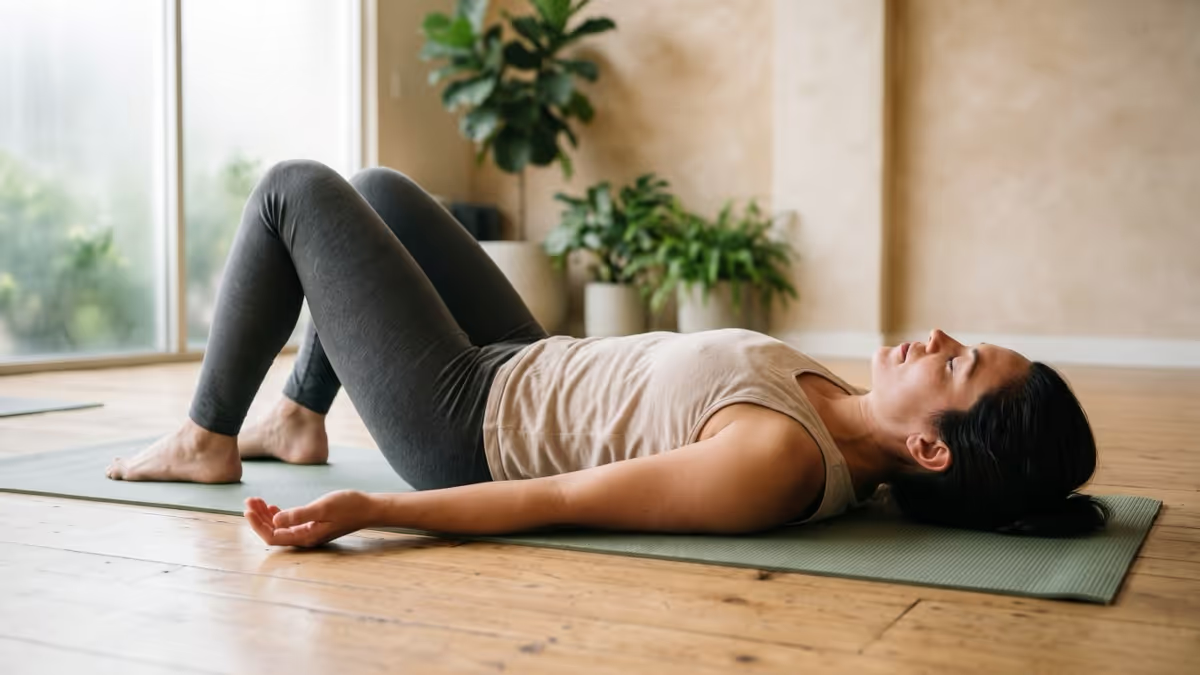
Somatic yoga is slow, floor-based movement organized around what you feel from the inside rather than how a pose looks from the outside. The movements are small, repeated several times each, and released more slowly than they were started. Most of a session happens lying down. Nothing in it is strenuous, and the thing being trained is attention.
That’s the practice. The word, meanwhile, gets attached to almost anything unhurried: a soft voice, a dimmed room, maybe a body scan at the start. Those are fine things. None of them is what the word means.
There’s a real lineage underneath the label, and one specific mechanic that makes it different from stretching. This guide separates the two, so you can read a schedule and know what you’re actually signing up for.
What “somatic” actually means
Soma means the body as experienced from the inside. First person. The body you feel from within, not the body someone else is looking at.
That sounds like a philosophy-class distinction, and it started as one, but it changes what a class is doing. In most yoga classes the reference point is external: the mirror, the teacher’s eye, the picture of the pose. In a somatic class the reference point is internal. The teacher can’t tell you whether you did it right, because the only information that counts is what you noticed. Two people doing the same tiny movement are doing different work.
One quick clean-up, because a lot of people half-remember the other meaning: in biology and medicine, “somatic” describes body cells as opposed to reproductive cells, as in “somatic cell.” That usage has nothing to do with this one. Same Greek root, different conversation.
Where the practice came from
The lineage is short and easy to check.
Moshe Feldenkrais, a physicist and judo teacher, spent the mid-twentieth century developing a movement method built on slow, small, exploratory movements and close attention to how you organize yourself, learning rather than exercise.
Thomas Hanna, an American philosophy professor, studied with Feldenkrais and gave the field its name. He put “somatics” into circulation in its modern sense in 1976, when he founded a magazine under that title, using the word for the study of the body from within. His central idea was what he called sensory-motor amnesia: that muscles you hold contracted all day, every day, gradually drop off your radar. You stop being able to feel them, and because you can’t feel them, you can’t release them. They aren’t stuck. You’ve lost the connection to the dial.
That’s the whole premise of the practice: not stretching a tight muscle, but restoring the connection so you can let it go yourself. Hanna made much larger claims than we’ll make here. Treat sensory-motor amnesia as the idea that shaped the method, which is what it is, rather than as a diagnosis of what’s happening in your back.
Pandiculation: the part nobody explains
If you take one thing from this page, take this. Pandiculation is the old word for the involuntary yawn-and-stretch, and doing it on purpose is the single thing that separates somatics from stretching.
So you already know the movement. It’s what your body does by itself when you wake up: a firm contraction, then a long, slow release. Cats and dogs do it constantly. In a somatic class you do it deliberately, muscle by muscle, in three parts:
- Contract. Deliberately tighten the muscle you’re working with. Go slightly further into the position it’s already holding.
- Release slowly. This is the whole thing. Come out at a crawl, slower than feels natural, and stay with the sensation the entire way down.
- Pause and notice. Rest for a few seconds and pay attention to what changed before you repeat.
Why bother, when pulling on the muscle is faster? Because a passive stretch is information arriving from outside. Pull hard enough on a muscle that’s already guarding and it can answer by tightening, which is why a stretch sometimes feels great for ten minutes and then you’re right back where you started. A slow, voluntary release is information arriving from the inside, at a speed your nervous system can actually track, in a movement you are the one commanding. The claim is modest and mechanical: you have better control over something you are actively doing than something being done to you.
None of this makes stretching bad. Stretching does a different job well, and if range of motion is what you’re after, our yoga for flexibility guide covers that ground properly. Pandiculation is aimed at control and awareness, not at length.
Somatic yoga vs. a regular yoga class
The clearest way to see the difference is at the level of the cue. Same body, same floor, completely different instruction.
| Alignment-led class | Somatic class | |
|---|---|---|
| Typical cue | ”Square your hips, straighten the front leg." | "Move about a quarter of the way, then come back.” |
| What you’re told to notice | Where a body part should be. | Which side feels heavier, tighter, or vaguer. |
| Depth | ”Go a little deeper, five more breaths." | "Stop before the sensation gets interesting.” |
| Pace | Steady, breath-linked, sometimes brisk. | Slower than feels natural, with long pauses. |
| Repetition | Each shape once or twice per side. | The same small movement six to ten times. |
| Range | Full expression, with options. | Deliberately small. Often a few inches. |
| Eyes | Open, often on a drishti or a mirror. | Usually closed. |
| Position | Mostly standing and seated. | Mostly lying down. |
| Structure | A sequence you can learn and repeat. | An exploration that may never repeat. |
| Success looks like | The pose done well. | Noticing something you hadn’t noticed. |
Read the right-hand column again and notice how much of it is instructions to do less. That’s the signature. A somatic teacher spends more time slowing you down than pushing you along, and “that was too big, make it smaller” is a normal correction.
How to tell whether a class is actually somatic
Because the word sells, plenty of classes wear it without doing it. Starting a vinyasa flow with a two-minute body scan doesn’t make the class somatic, and neither does naming muscles out loud. Both are good things. Neither is the practice.
Five things to look for on a schedule, or to ask the front desk:
- Is most of it on the floor? A real somatic class is largely supine. If the description promises a flow, it’s a flow.
- Are the movements small and repeated? Look for words like slow, small, micro-movement, repetition, exploration. Look away from strong, sculpt, and full-body.
- Are you told to do less rather than more? “Move a fraction of your normal range” is the tell. So is any mention of releasing slowly.
- Is there a named lineage? Hanna somatics, Clinical Somatic Education, Feldenkrais, Somatic Movement Education, or a teacher bio listing somatic movement training. Vagueness here usually means the label is decoration.
- Is the class deliberately small? Sensation-led teaching needs the teacher to see individuals. A 40-person somatic class is a contradiction.
And the honest grey zone: plenty of genuinely good slow, sensation-led classes carry the word “somatic” without any lineage behind it, and they are still worth taking. Slow, quiet, low-stakes movement has value whatever it’s called. Just know which one you booked, so you’re not disappointed and not misled.
What a beginner session really feels like
Expectations first, because this is where people bounce off.
A beginner session runs 45 to 60 minutes. You’ll spend most of it lying on your back. You’ll do maybe five or six movements total, each one repeated slowly, several times, through a range that would look like almost nothing on video. There are long pauses where you’re doing nothing at all, and those pauses are part of the method, not filler. There’s often no music. You will not sweat.
The first class or two can feel boring. That’s a fair reaction and worth naming up front: you’re being asked to pay close attention to very small things, and that’s a skill, not a mood. Most people find it starts landing somewhere around the third session, when they notice a difference between the two sides of their body that they couldn’t feel at all in week one.
If you want a workout, this is not it. If you want an hour that asks nothing of you physically and quite a lot of you attentionally, this is exactly it.
Five slow movements to try at home
You need a floor, and that’s it. No mat required, though it’s nicer with one. Across all five, the instruction that matters most is the same: go slower than you want to, and make it smaller than you think.
1. Cat-cow at a fraction of normal speed. On hands and knees, do cat-cow, but take a full slow count of eight in each direction, and move through maybe half your usual range. Six rounds. Pay attention to where the movement stops passing smoothly along your spine and starts skipping a section. That skip is the useful information.
2. A small pelvic tilt in constructive rest. Lie in constructive rest, on your back, knees bent, feet flat. Gently tilt your pelvis so your lower back presses toward the floor, hold two seconds, then release very slowly, taking twice as long to release as you took to tilt. Eight repetitions. This is pandiculation in its simplest form.
3. A reclined twist to the first hint of sensation. From lying, let both knees drift to one side, as in reclined twist, and stop the moment you feel the very first stretch, not the good stretch, the first one. Stay for three slow breaths, come back, switch sides. Three each way. The discipline is stopping early.
4. A slow arm slide on the floor. Lying on your back, arms by your sides, palms down. Slide one arm slowly along the floor toward overhead, and stop as soon as your shoulder blade wants to lift or your ribs want to flare. Slide back just as slowly. Six per side. Notice how far each side gets before it starts cheating.
5. One full shoulder pandiculation. Still lying down. Draw both shoulders up toward your ears (actively, about 70 percent of your maximum), and hold for three seconds. Then release over a slow count of ten, staying with the sensation the entire way, and let them keep releasing past the point you’d normally call done. Rest for ten seconds. Repeat three times.
Total: about twelve minutes. Do it before bed a few times a week and it will teach you more about what this practice is than any amount of reading.
How it overlaps with restorative, yin, and yoga nidra
All four are slow and mostly on the floor, which is why they get lumped together. The aim is different in each, and choosing between them is easy once you see it:
- Restorative props you up so you can stop working entirely. Bolsters, blankets, long passive holds. The goal is rest.
- Yin loads connective tissue with long, still, passive holds, usually three to five minutes. The goal is tissue change over time.
- Yoga nidra is guided stillness, you lie down and don’t move at all while a teacher walks your attention around the body. The goal is deep rest with the mind awake.
- Somatic is the only one of the four with active movement in it. Tiny, repeated, voluntary movement. The goal is attention and control.
So: if you want to stop working, restorative. If you want length over months, yin. If you want to be talked into deep rest, nidra. If you want to feel and steer what your body is doing, somatic. Our yoga styles guide has the wider map if you’re still choosing.
Who it suits, and what it isn’t
It tends to suit people who find fast classes overwhelming, people who sit at a desk all day and have lost track of what their hips and shoulders are doing, people coming back after a long break who don’t want to start with pushups, and people who dislike being physically adjusted by a teacher. It’s low-intensity, low-embarrassment, and easy to do badly-but-usefully.
Now the boundary, stated plainly.
Somatic yoga is a movement and awareness practice. It is not medical care, and this guide doesn’t diagnose or treat anything. The “somatic” in somatic therapy refers to a different field, clinician-led work, often around trauma, practiced by licensed professionals. A yoga teacher is not that, and a class that suggests otherwise is overreaching. If you’re working with trauma, see a qualified professional.
Same for pain. Hanna’s sensory-motor amnesia is a useful idea about habit and attention, not a claim about what’s causing your back to hurt. If you have ongoing pain, get it looked at by someone qualified first. Our lower back pain guide and the therapy and wellness section are the better starting points for that, and neither replaces a professional.
And for completeness, because the internet asks: this isn’t a weight-loss practice. It’s low-intensity by design, and we have no basis for a claim like that.
Finding a slow, sensation-led class in LA
“Somatic” often isn’t on the schedule even when the class would suit you. Search sideways instead.
Look for restorative, yin, slow flow, gentle, and breath-centered classes, and for anything with a small cap. In DTLA, Yoga Circle Downtown is the yin end of the scale and Boheme Yoga keeps restorative on the schedule. On the westside, Power Yoga East is breath-led and slow by design rather than by exception, and Open Venice programs movement, breathwork, and meditation together, which is close neighboring territory. None of these advertise somatics. They’re the shelf it would sit on. Browse the full studio directory by neighborhood. The practice you keep is the one that’s close to home.
Then ask one question at the front desk or by email: does the teacher have somatic movement training? You’ll get a straight answer or a vague one, and both tell you what you need to know. If group pacing still feels too fast, a single private session with a teacher who works this way is the fastest way to learn what “slower and smaller” actually means in your own body. Westside Yogis is one of the few listings built around private and personalized sessions rather than a class schedule.
Start small, move slowly, and let the noticing be the point. That’s the whole practice.
Studios to explore
Yoga Circle Downtown
An old-school, down-to-earth studio with strong yin classes and a livestreaming option.
Boheme Yoga
A tidy DTLA studio with hot classes, live-music sessions and restorative practice in the Historic Core.
 Breath-centered
 Power Yoga East
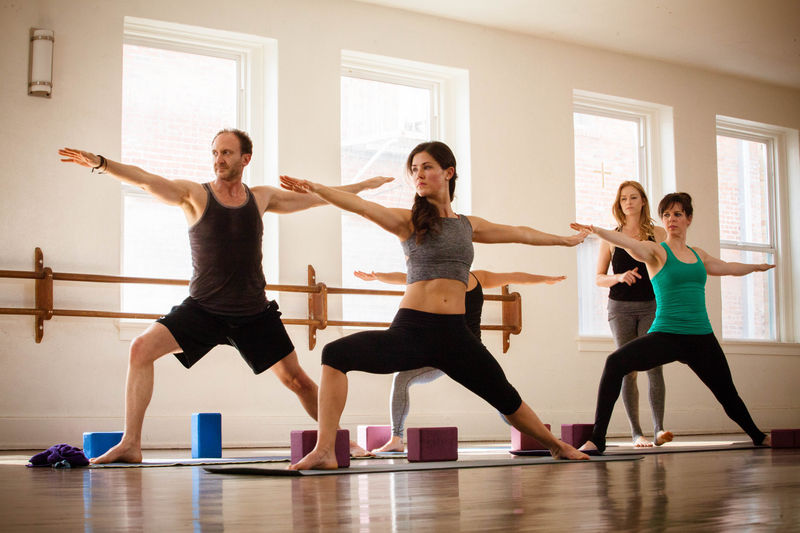
A light-filled second-floor loft focused on breath-led, steady practice rather than high-intensity flow.
 Meditation
 Open Venice
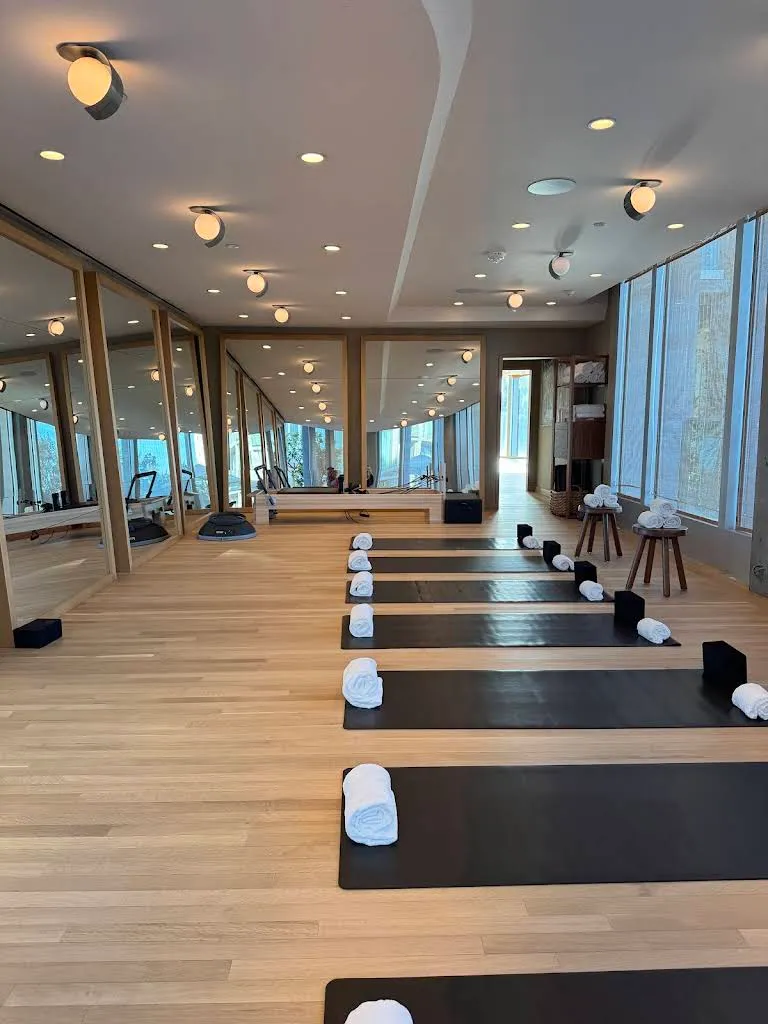
Open Venice is the physical studio of Open, a meditation and breathwork app that brings mindfulness and wellness into everyday life. The studio offers a curated mix of movement and relaxation classes, including Flow, Align, Tone, Power Tone, Breath + Sound and Restore, with sessions throughout the day. Guests can also book 30-minute Hot + Cold sauna sessions. Mats, sweat towels and eye masks are provided, creating a welcoming space to move, recharge and unwind.
 Private sessions
 Westside Yogis
A boutique outfit offering personalized group and private sessions, including beach yoga.
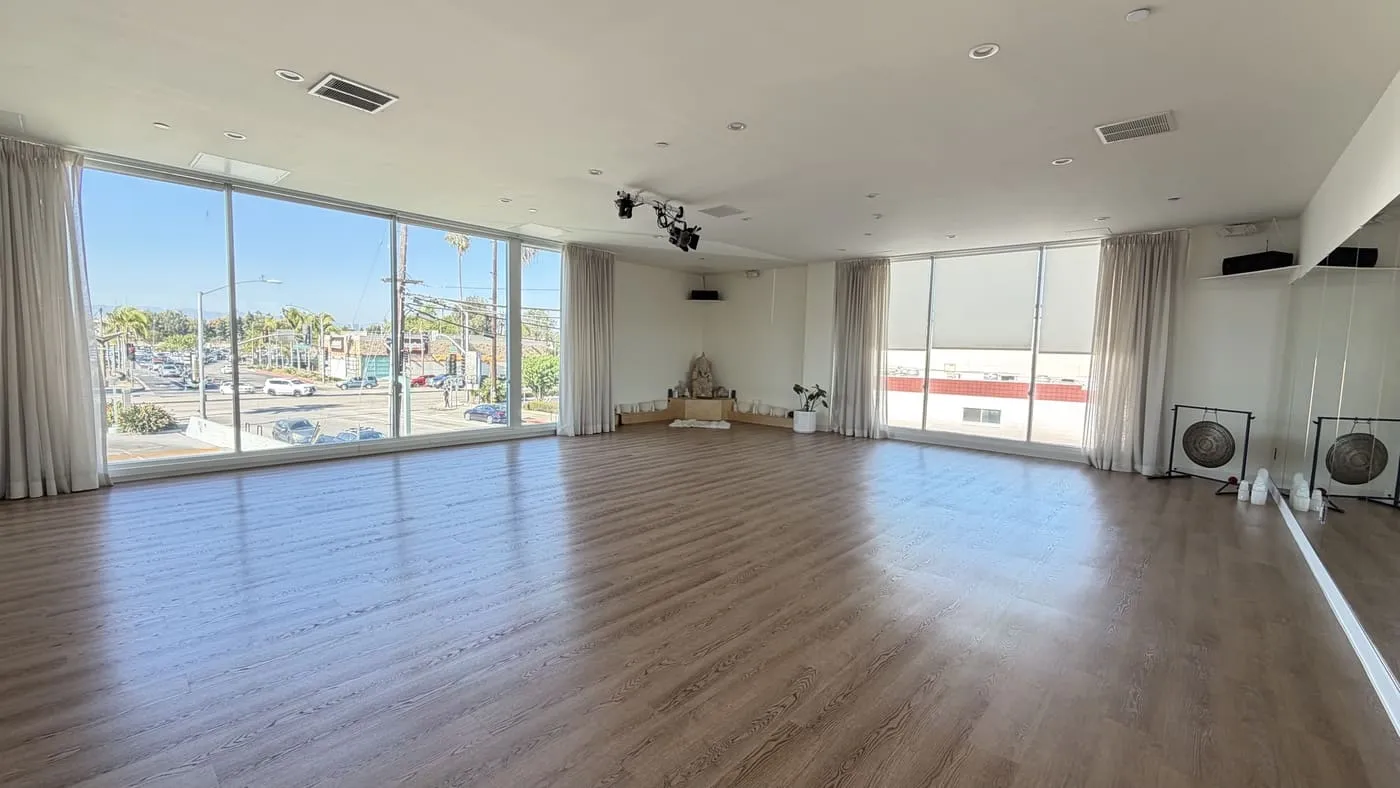 Featured Sound bath
 CEREMNY
A first-floor Washington Blvd space that runs soul yoga and sound baths alongside somatic workshops, breathwork and a 200-hour teacher training. The schedule leans slow and guided rather than back-to-back drop-ins, and monthly immersive workshops are the centre of it, worth checking the calendar before you plan a first visit.
Frequently asked questions
What is somatic yoga?
A slow, floor-based movement practice organized around internal sensation rather than the external shape of a pose. Movements are small, repeated, and released slowly, and the point is to notice and regain control of muscles you hold without realizing it. Most of a session happens lying down.
How is somatic yoga different from regular yoga?
A regular class cues alignment from the outside, square your hips, straighten the leg, five more breaths. A somatic class cues sensation from the inside, go a quarter of the way, come back, notice which side feels heavier. The pace is much slower, the range is much smaller, there is far more repetition, and there is often no set sequence at all.
What does "somatic" actually mean?
It comes from soma, the body experienced from within, in the first person. Thomas Hanna used it to distinguish the body you feel from the body someone else observes. It is unrelated to the everyday medical use of "somatic" for body cells as opposed to reproductive cells.
Is somatic yoga good for beginners?
Yes, and it is one of the easier entry points because nothing is strenuous and there is nothing to balance. Be warned that the first couple of classes can feel boring or pointless if you are used to sweating. The skill being trained is attention, and that takes a few sessions to become interesting.
Is somatic yoga the same as somatic therapy?
No. Somatic therapy is a clinician-led field practiced by licensed professionals, often around trauma. Somatic yoga is a movement class taught by a movement teacher. They share a word and not much else. If you are looking for therapy, look for a qualified clinician, not a yoga schedule.
Does somatic yoga release trauma or help you lose weight?
Those are marketing claims, and we are not going to make them. Somatic yoga is slow, low-intensity movement, so it is not a weight-loss method, and trauma work belongs with a qualified professional. What the practice honestly offers is better awareness and control of how you hold your body.