The pose library
Yoga poses, explained plainly
A yoga pose, or asana, is a position you hold with steady breathing. Here are the 40 you'll meet in an LA class, each with a picture, the steps, the mistake most people make and an easier version. No Sanskrit gatekeeping, no flexibility required.
- 40 poses with pictures
- 31 beginner-friendly
- A 3D model for every pose
- Pictures and steps free, no sign-up
Start here: 10 poses for your first class
In the order a beginner class tends to use them. Learn these and most classes will feel familiar.
-
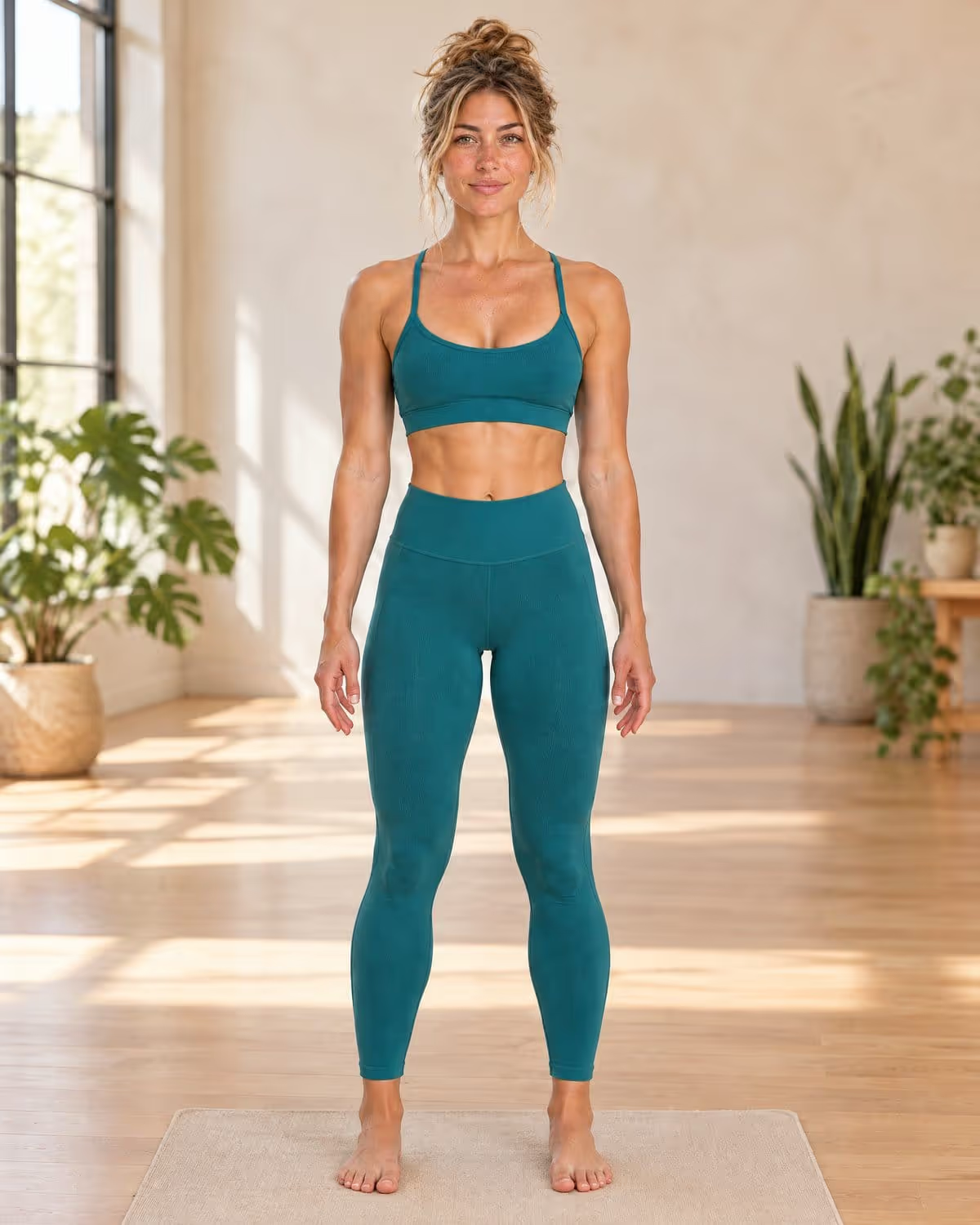 Mountain Pose Learn how to stand before anything else.
-
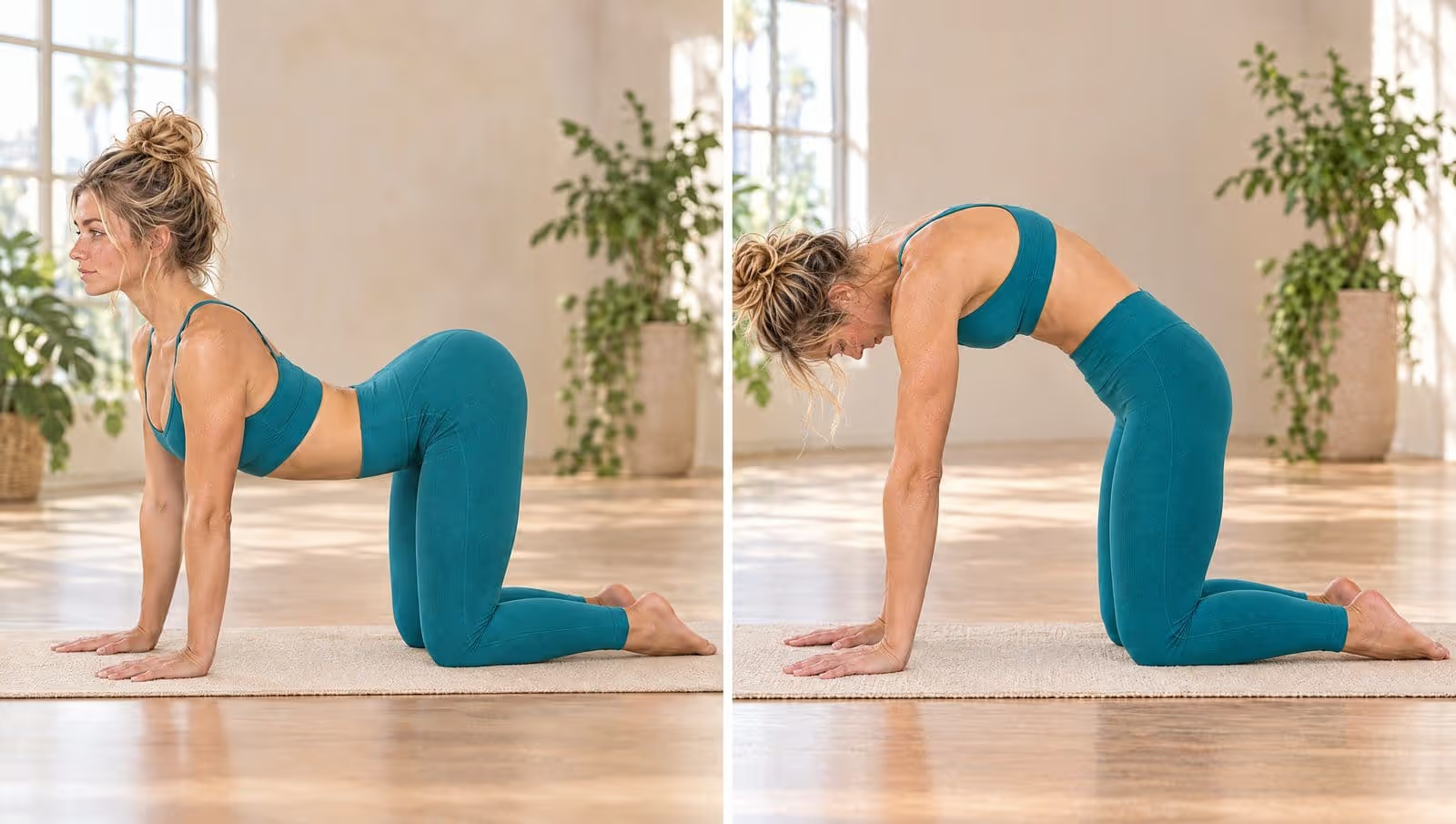 Cat–Cow Wake the spine up, moving with the breath.
-
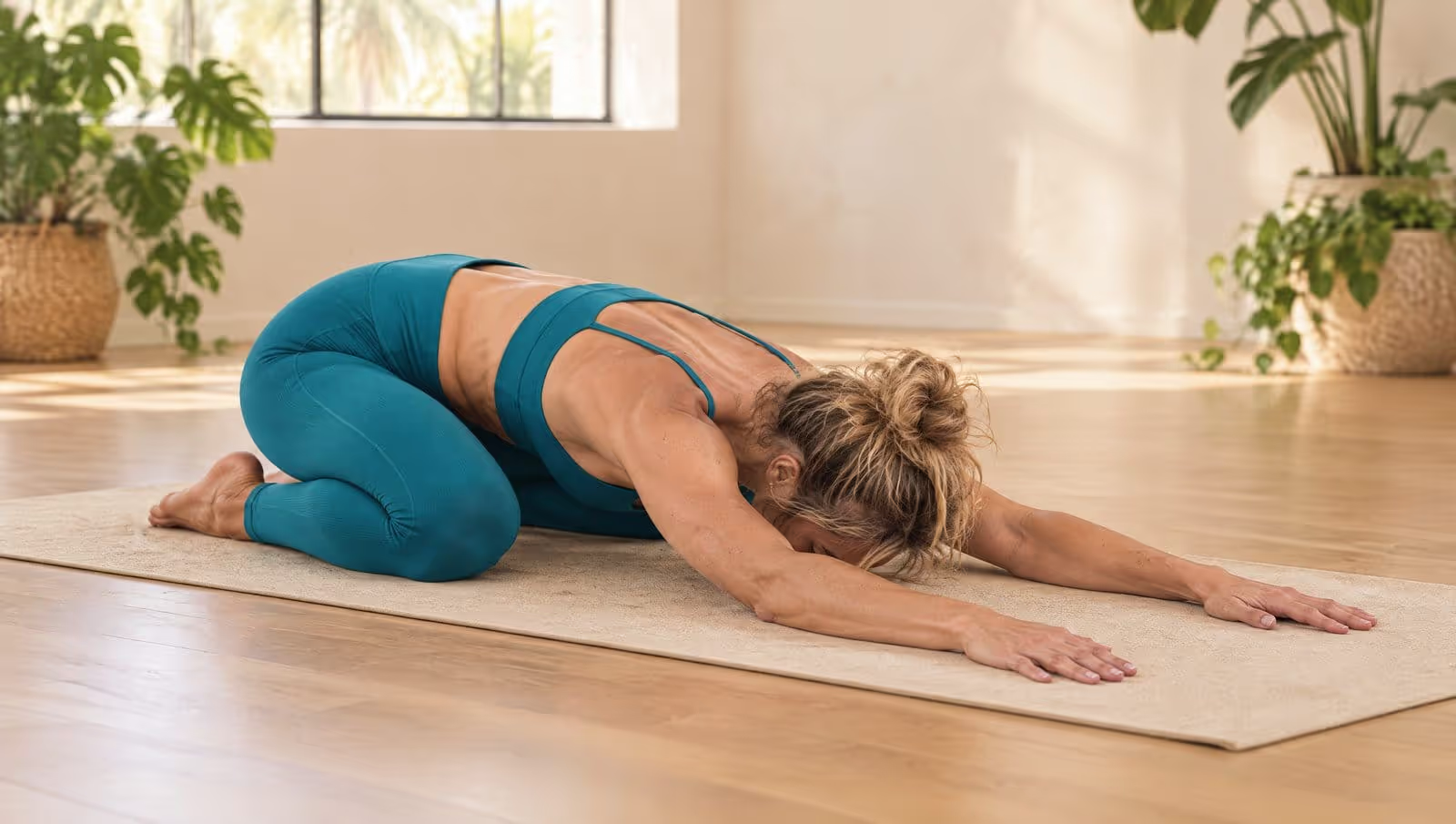 Child's Pose The rest position. Come back to it whenever you need to.
-
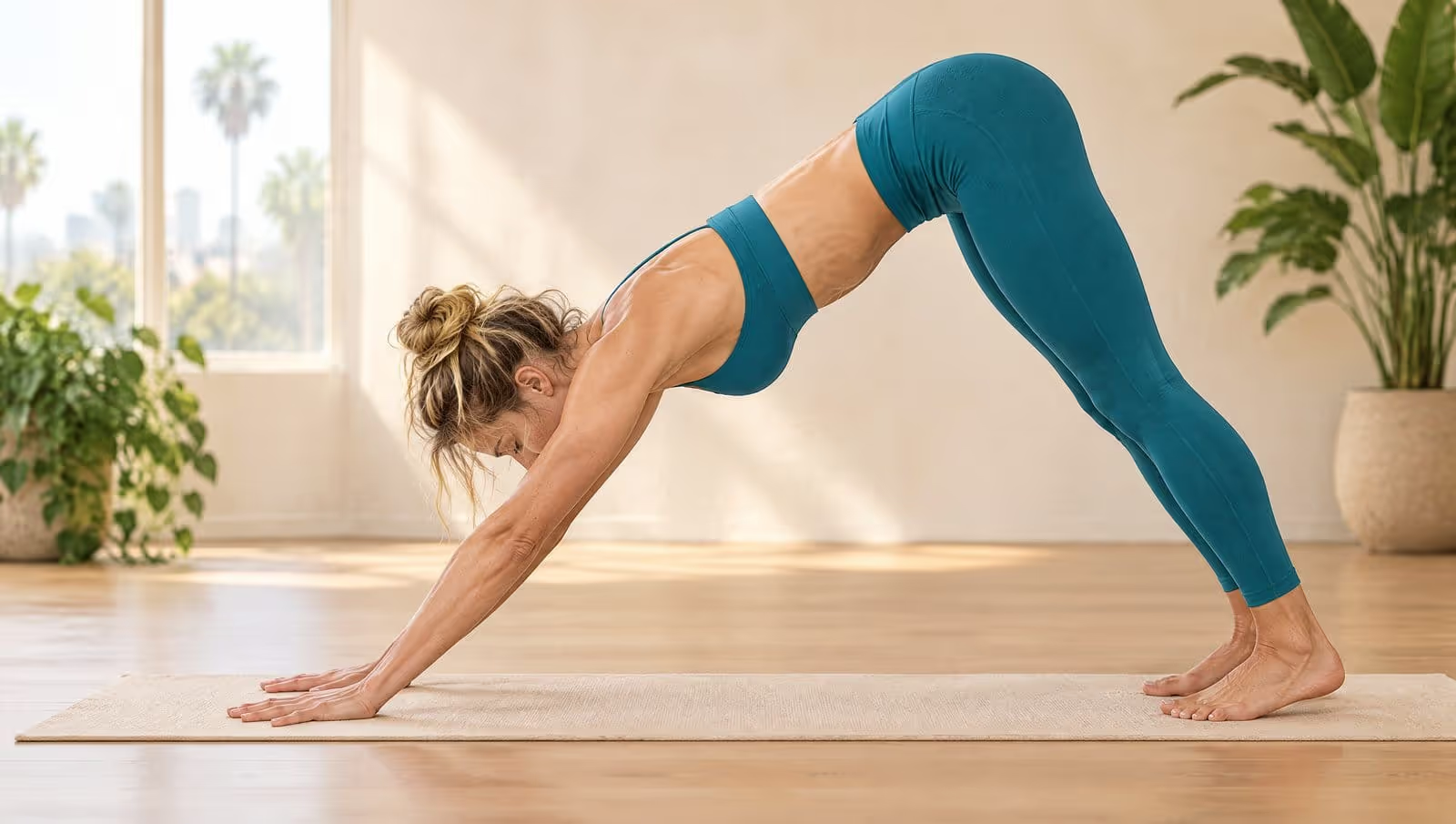 Downward-Facing Dog The pose most classes pass through. Bend the knees.
-
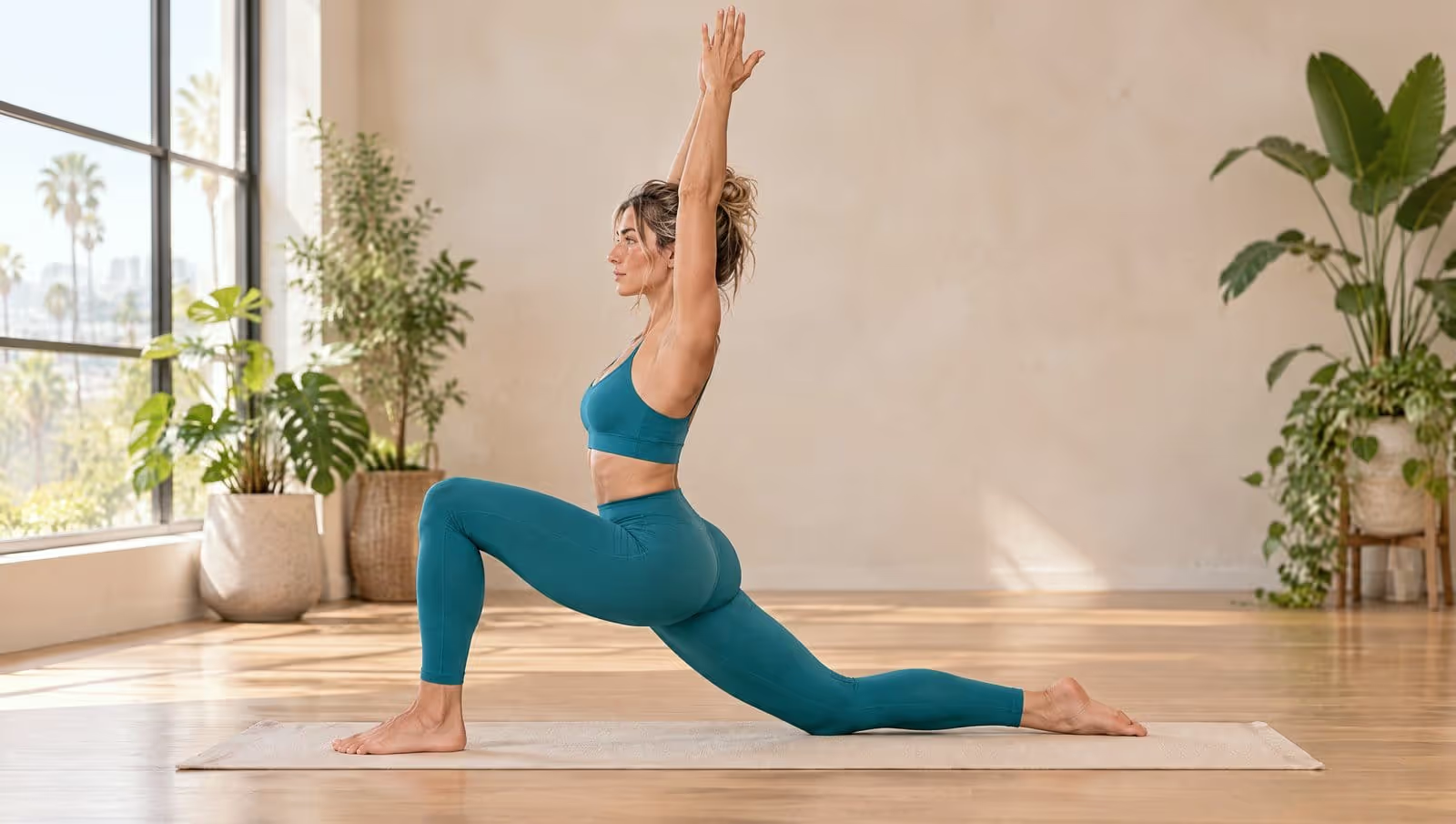 Low Lunge Opens the front of the hip with a knee down for support.
-
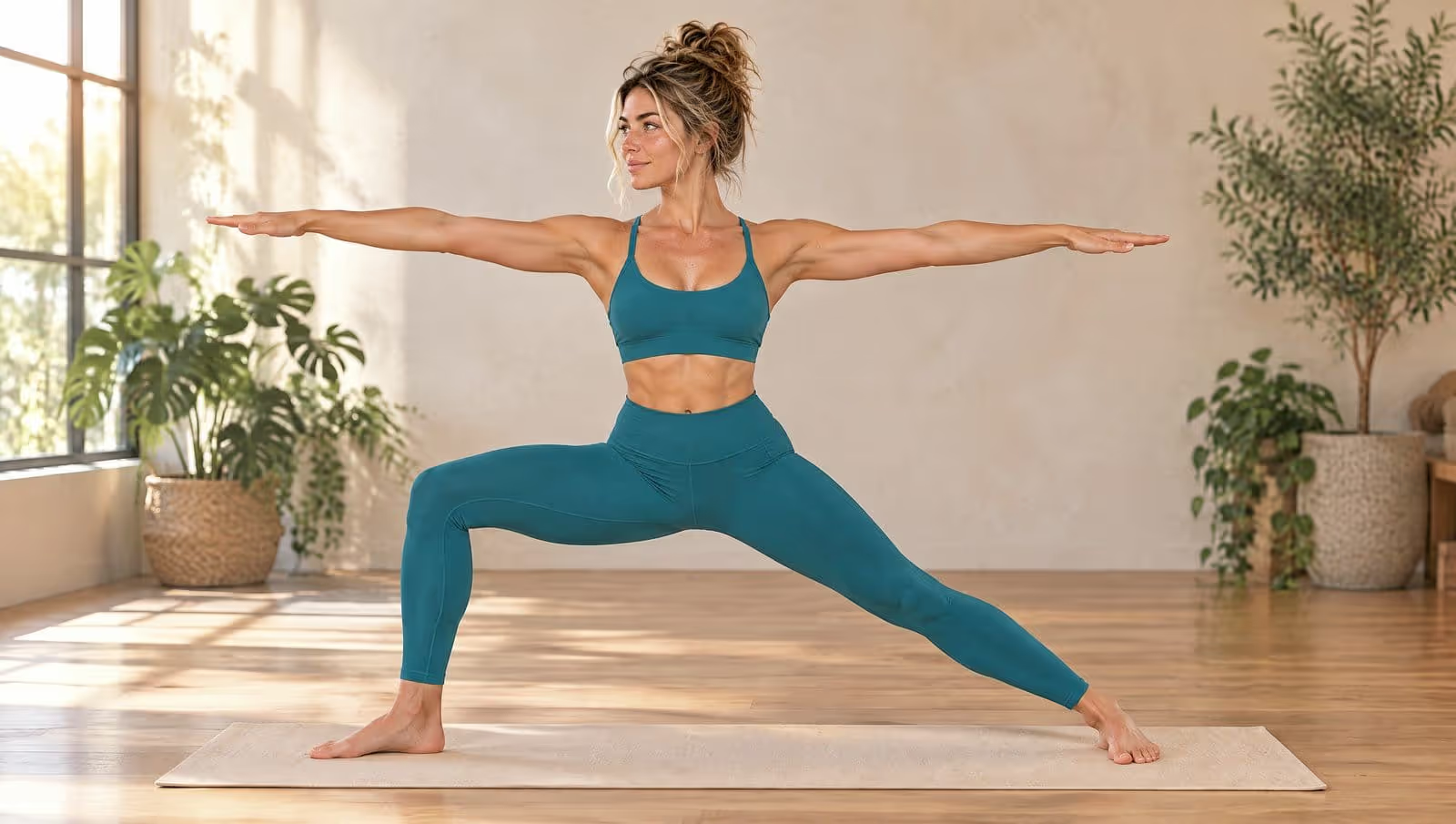 Warrior II Leg strength and a steady gaze.
-
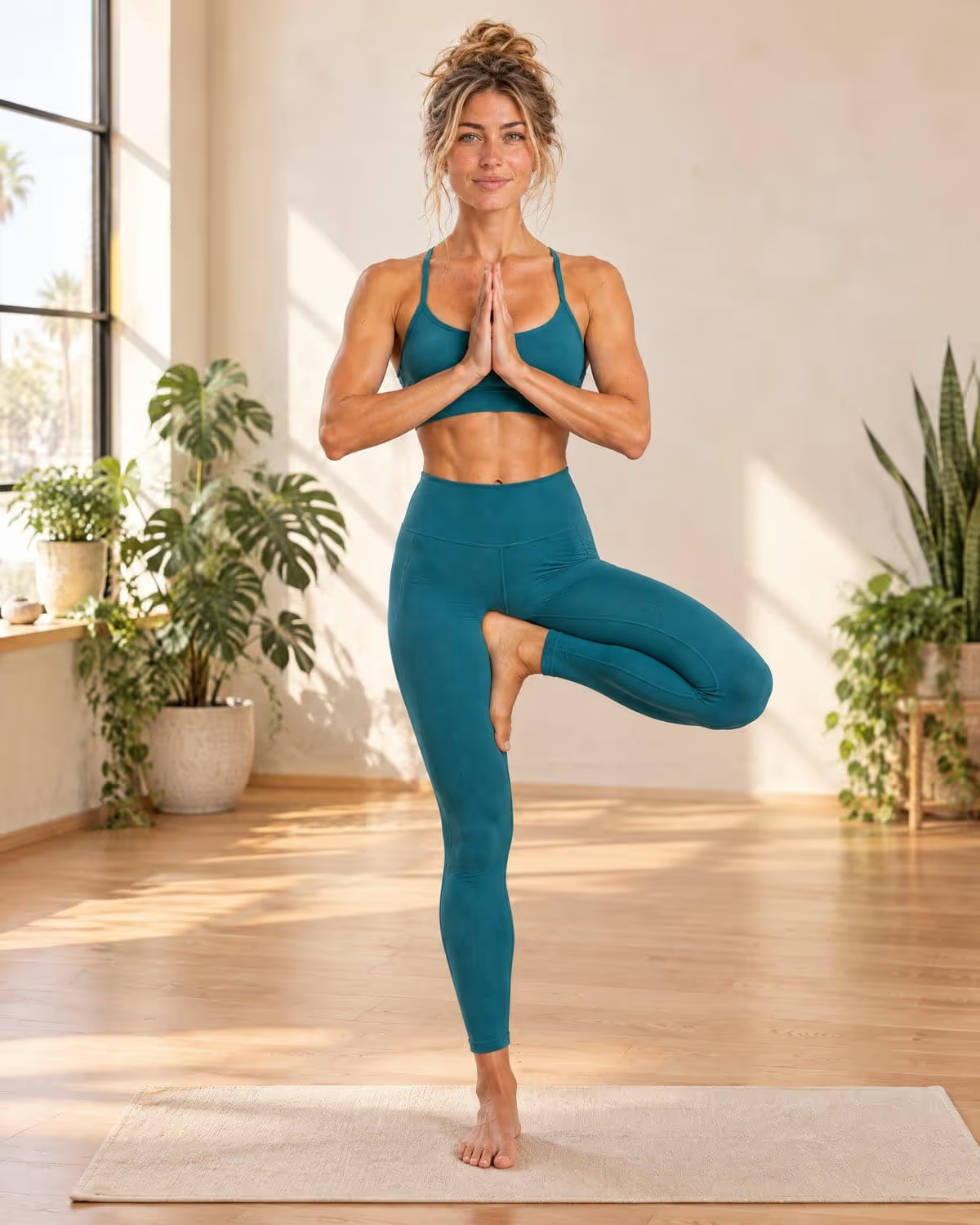 Tree Pose Your first balance. A wall nearby is fine.
-
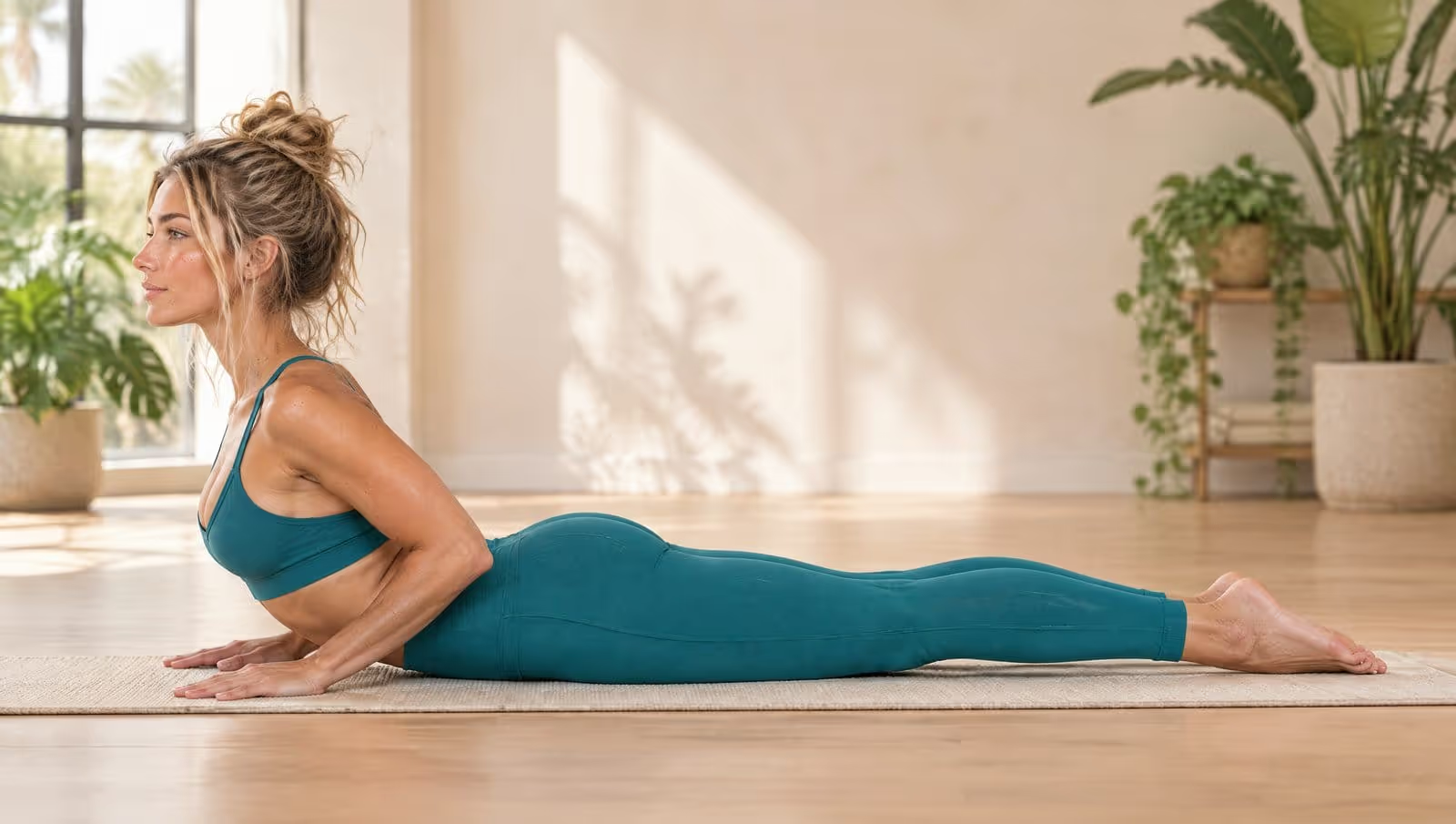 Cobra Pose A small backbend, lifted by the back, not the arms.
-
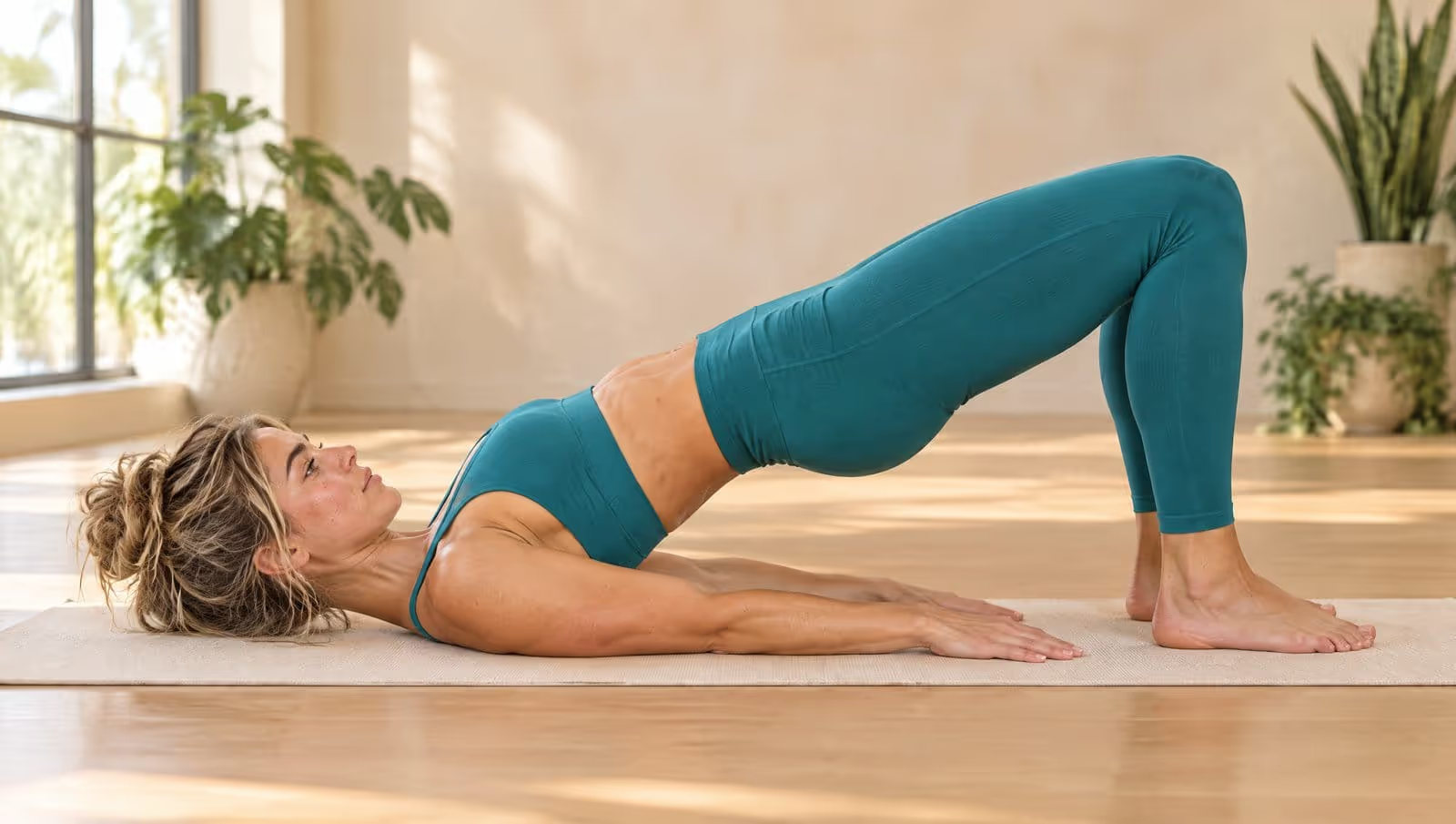 Bridge Pose Hips up, feet down, knees tracking forward.
-
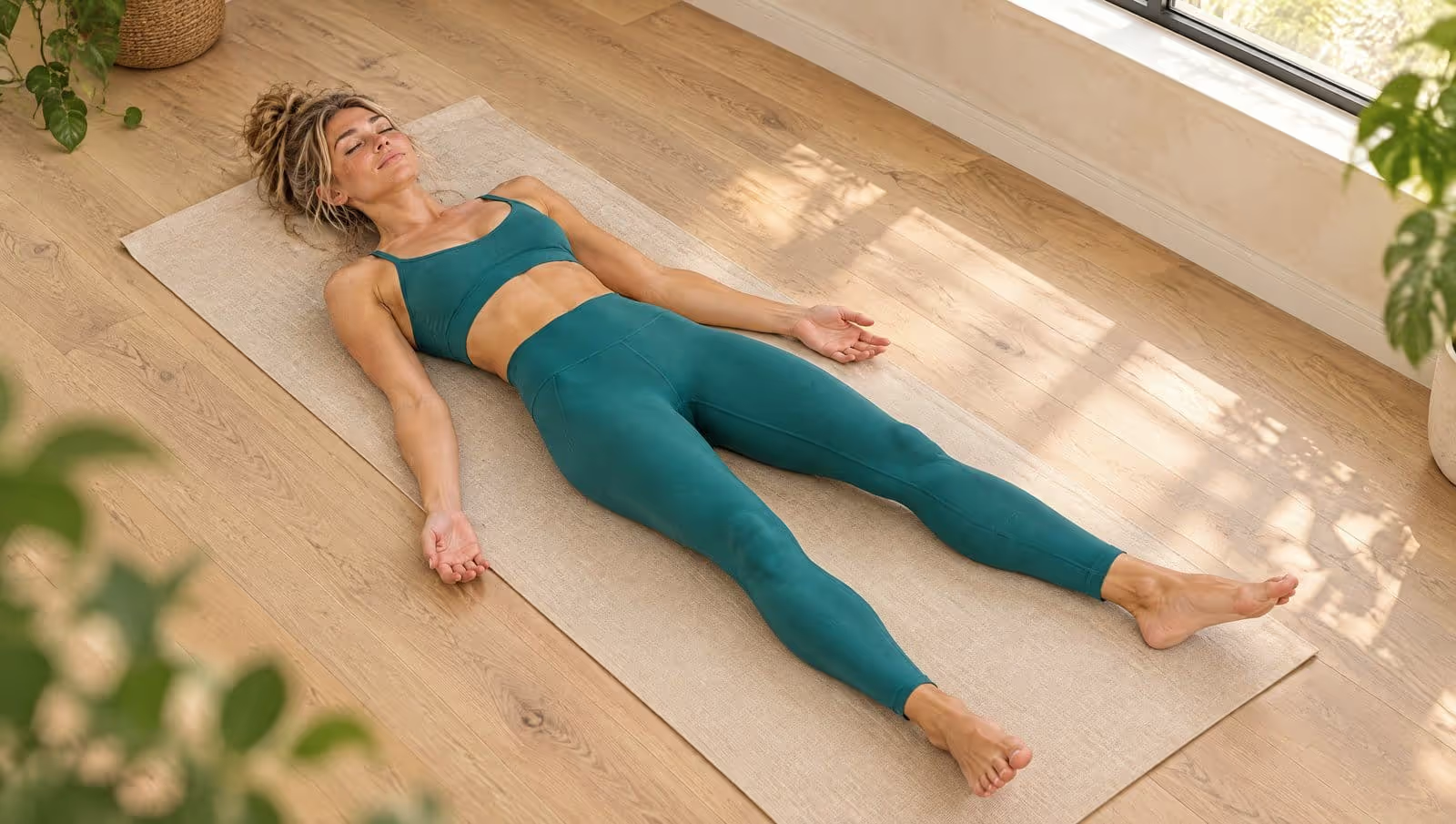 Corpse Pose Five to ten minutes of doing nothing on purpose.
Warm-ups
Where most classes start, small movements that tell you what your body has today.
Standing poses
The working poses. Strength, stability, and most of the effort in a typical class.
-
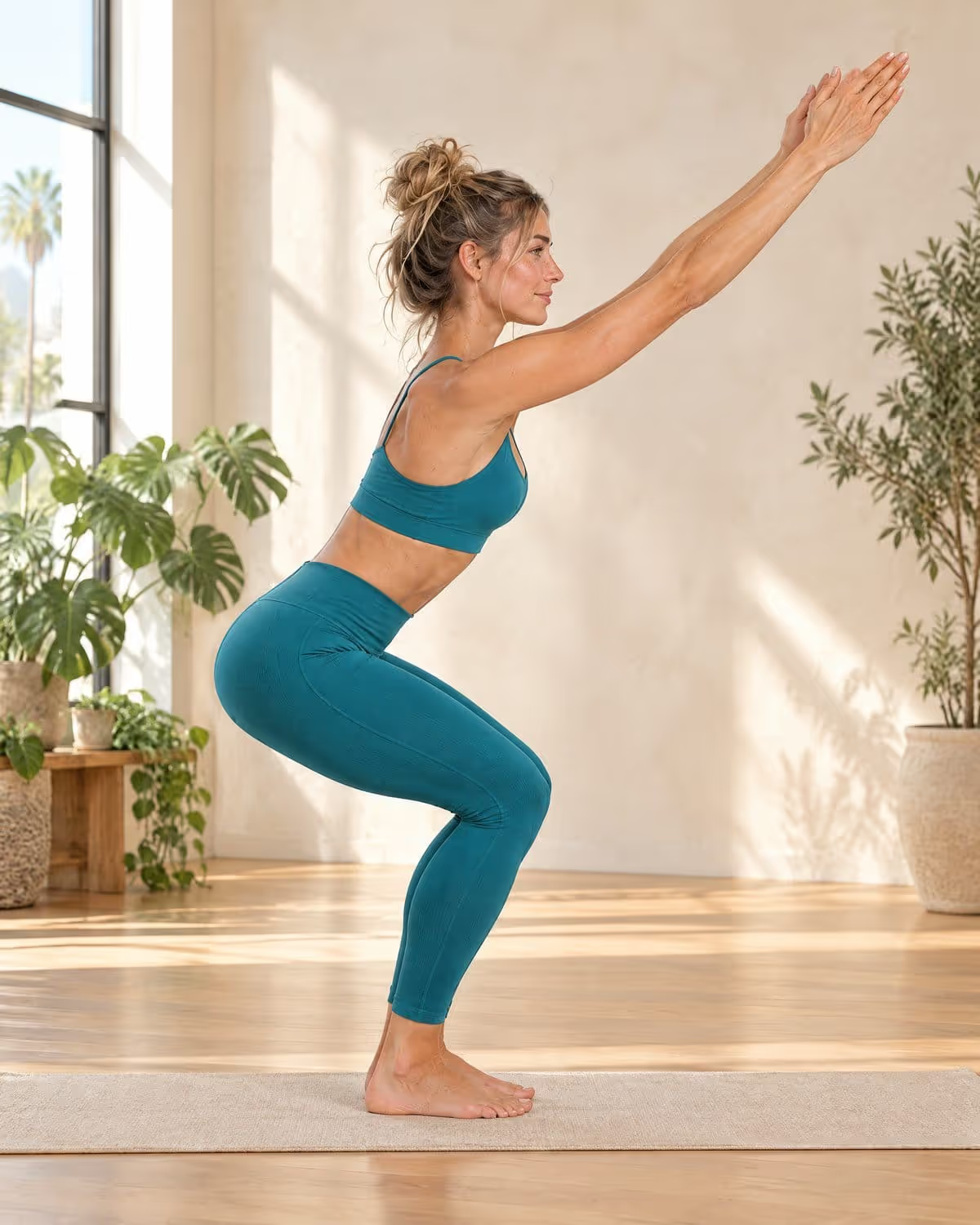 Chair Pose Utkatasana A held squat with the arms up. Simple to describe, and the legs know about it within thirty seconds. beginner
- Downward-Facing Dog Adho Mukha Svanasana The pose most people picture when they hear 'yoga', a full-body stretch that doubles as a resting position once it stops feeling like work. beginner
-
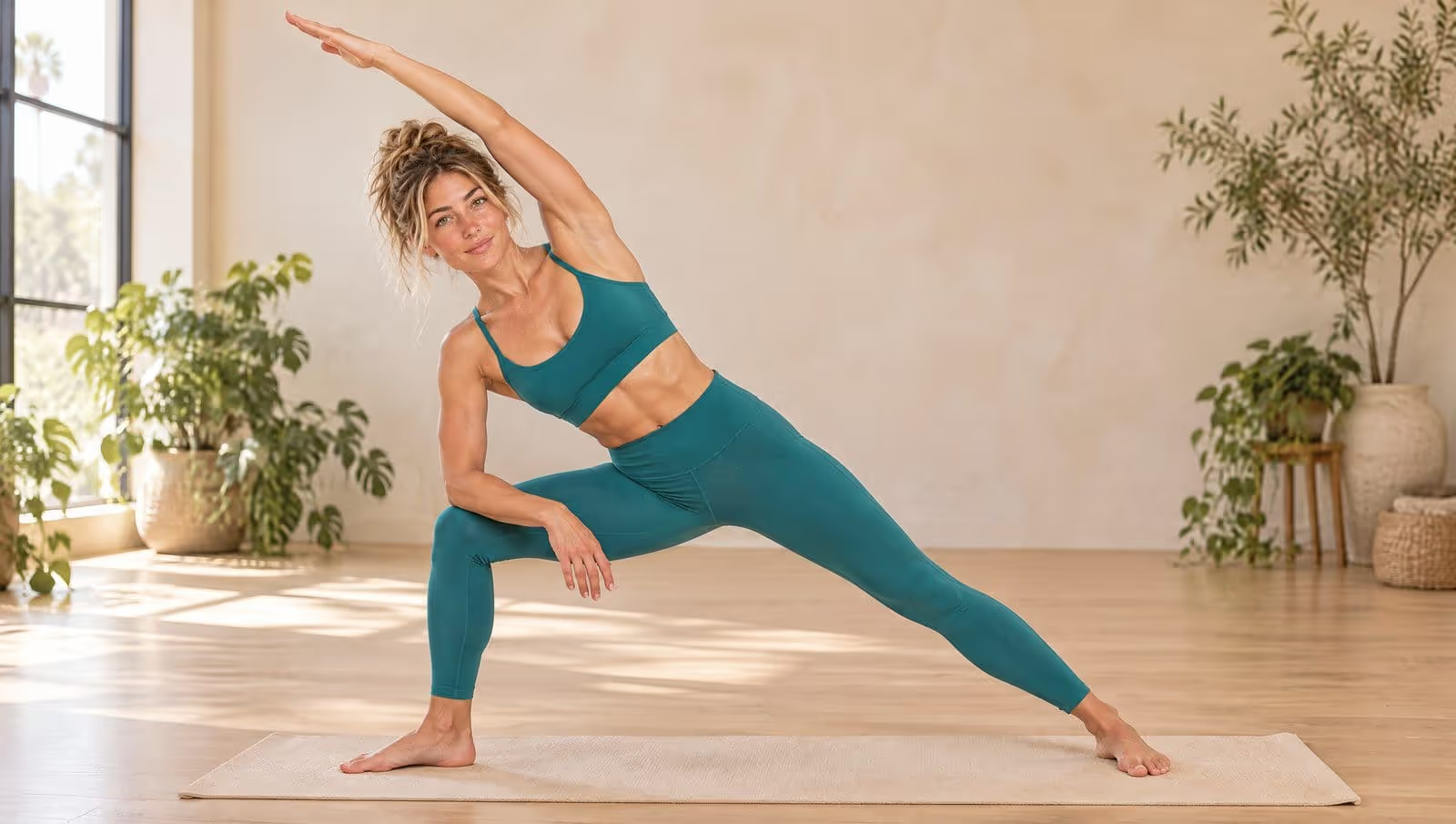 Extended Side Angle Utthita Parsvakonasana A long diagonal line from the back heel to the top fingertips, a working pose that looks like a stretch. intermediate
-
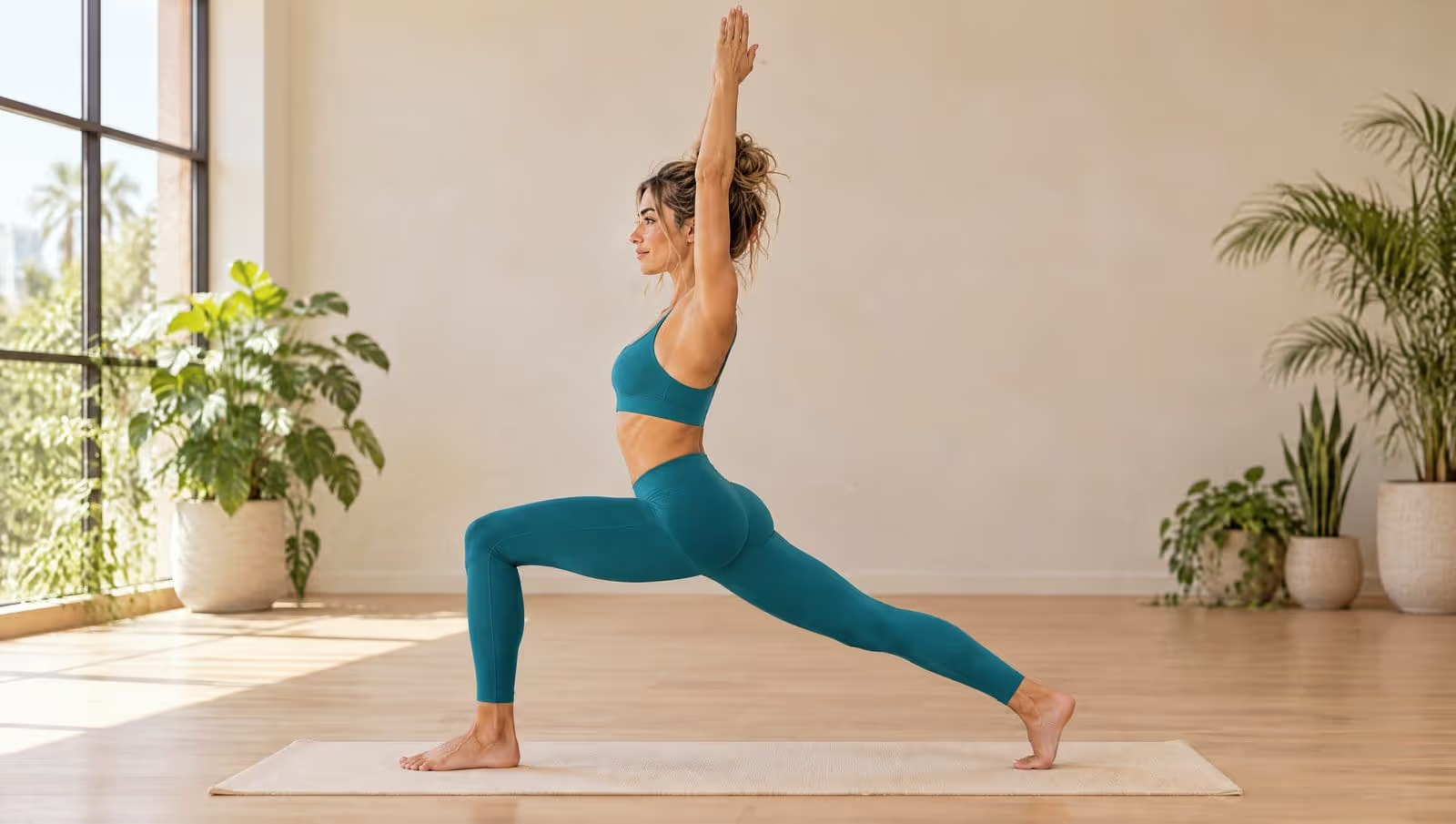 High Lunge Ashta Chandrasana A lunge held with the back knee lifted, more work for the legs than Low Lunge, less depth in the hip. beginner
- Low Lunge Anjaneyasana The most direct hip-flexor stretch in the practice, and the one runners and cyclists tend to need most. beginner
- Mountain Pose Tadasana The reference posture for every standing shape: quiet to look at, and the one that teaches you how to stand. beginner
-
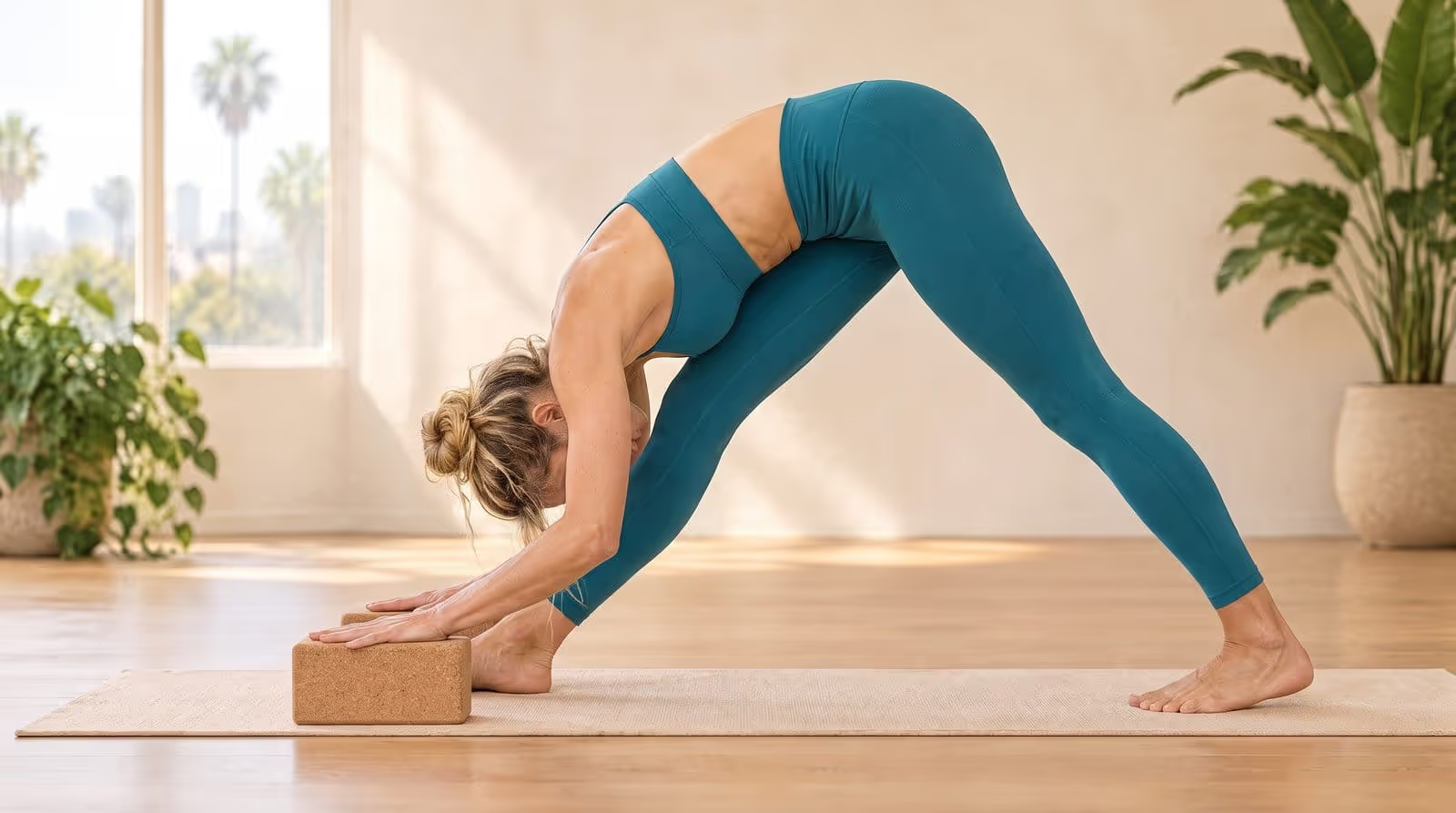 Pyramid Pose Parsvottanasana A square-hipped fold over a straight front leg, a stronger hamstring stretch than it looks, and easy to overdo. intermediate
-
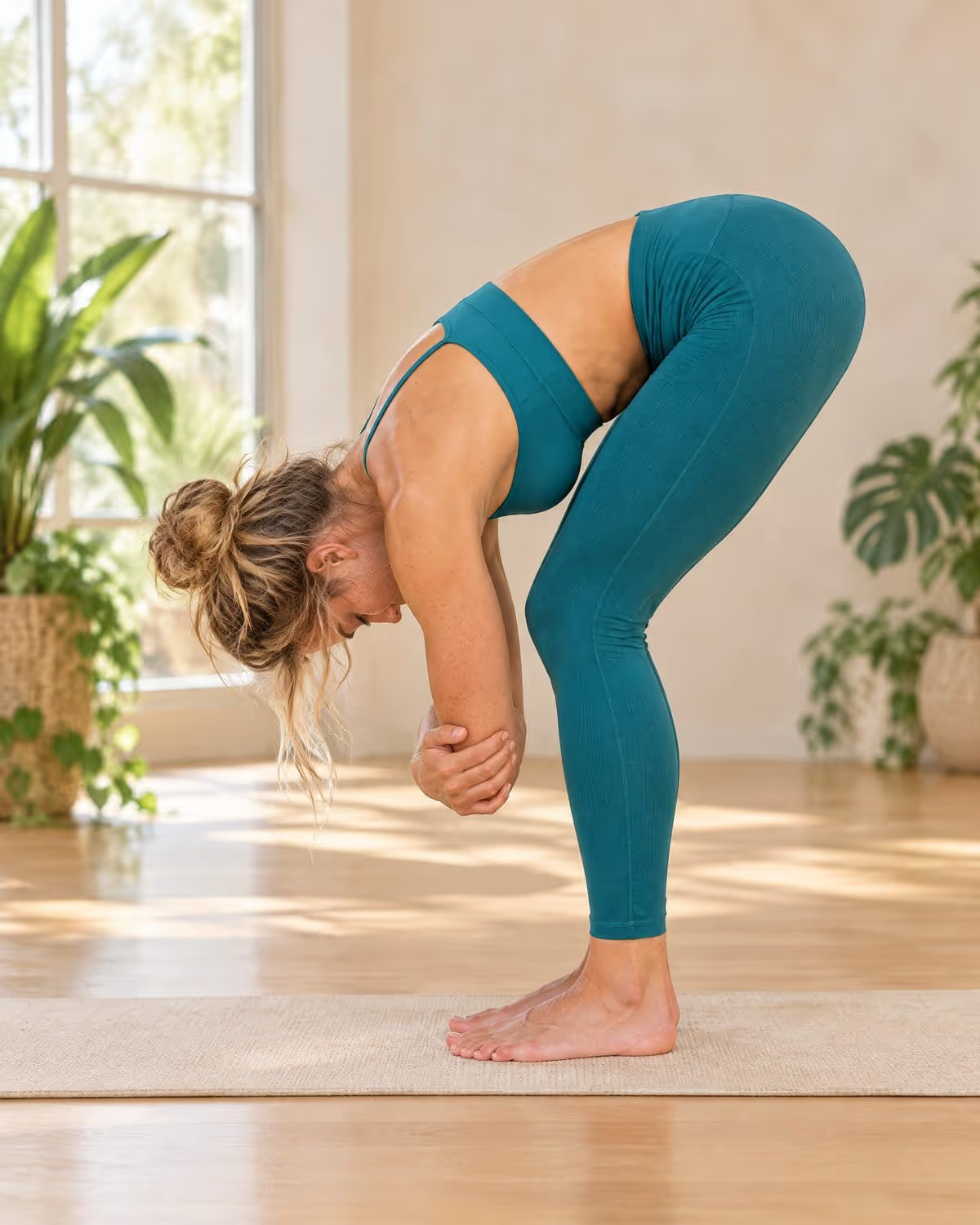 Standing Forward Fold Uttanasana A hanging fold from the hips. Comfortable and useful with bent knees; a common way to irritate a back with straight ones. beginner
-
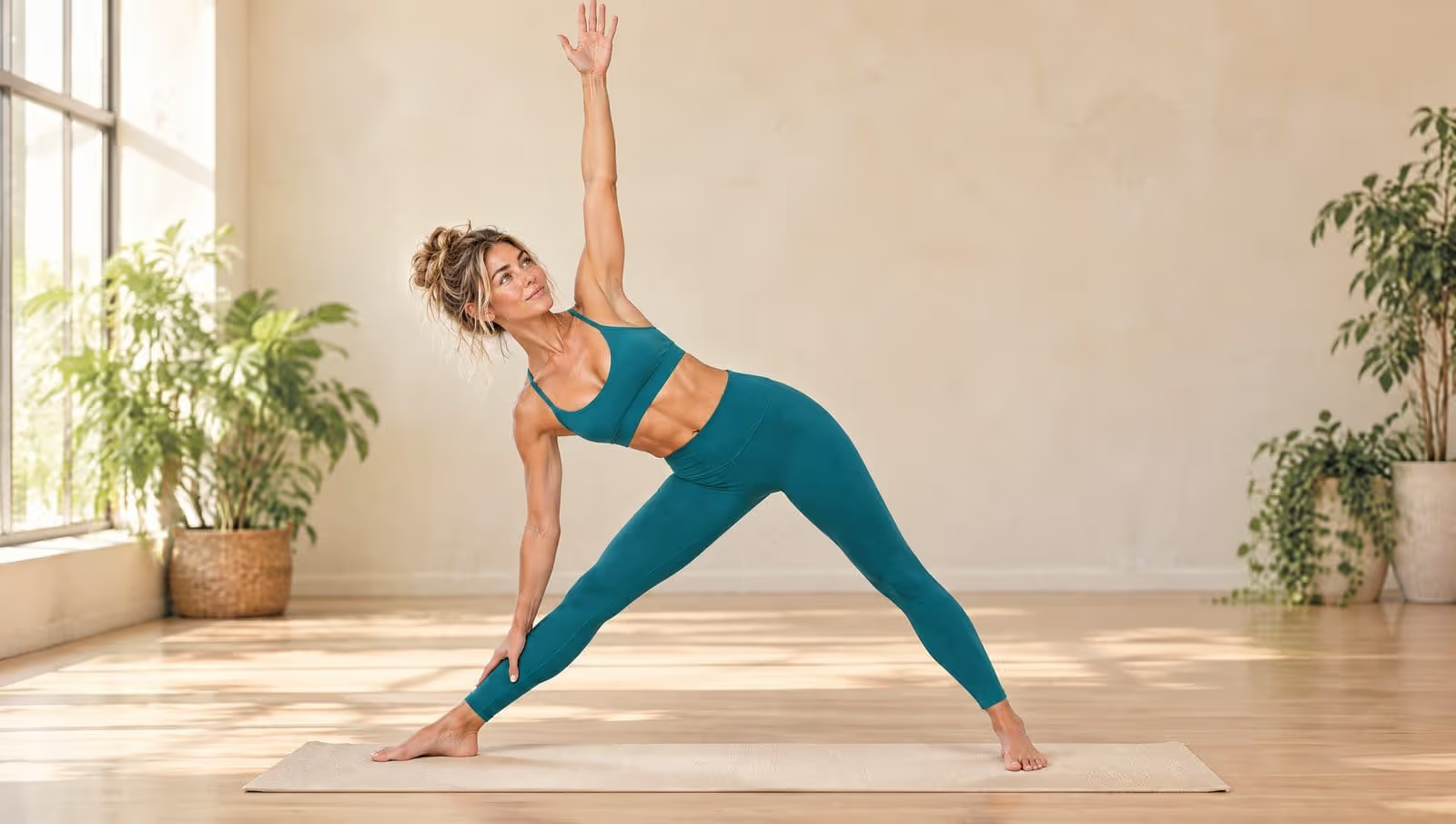 Triangle Pose Trikonasana A long side-body stretch with straight legs: easy to fake by reaching for the floor, better done with length. beginner
-
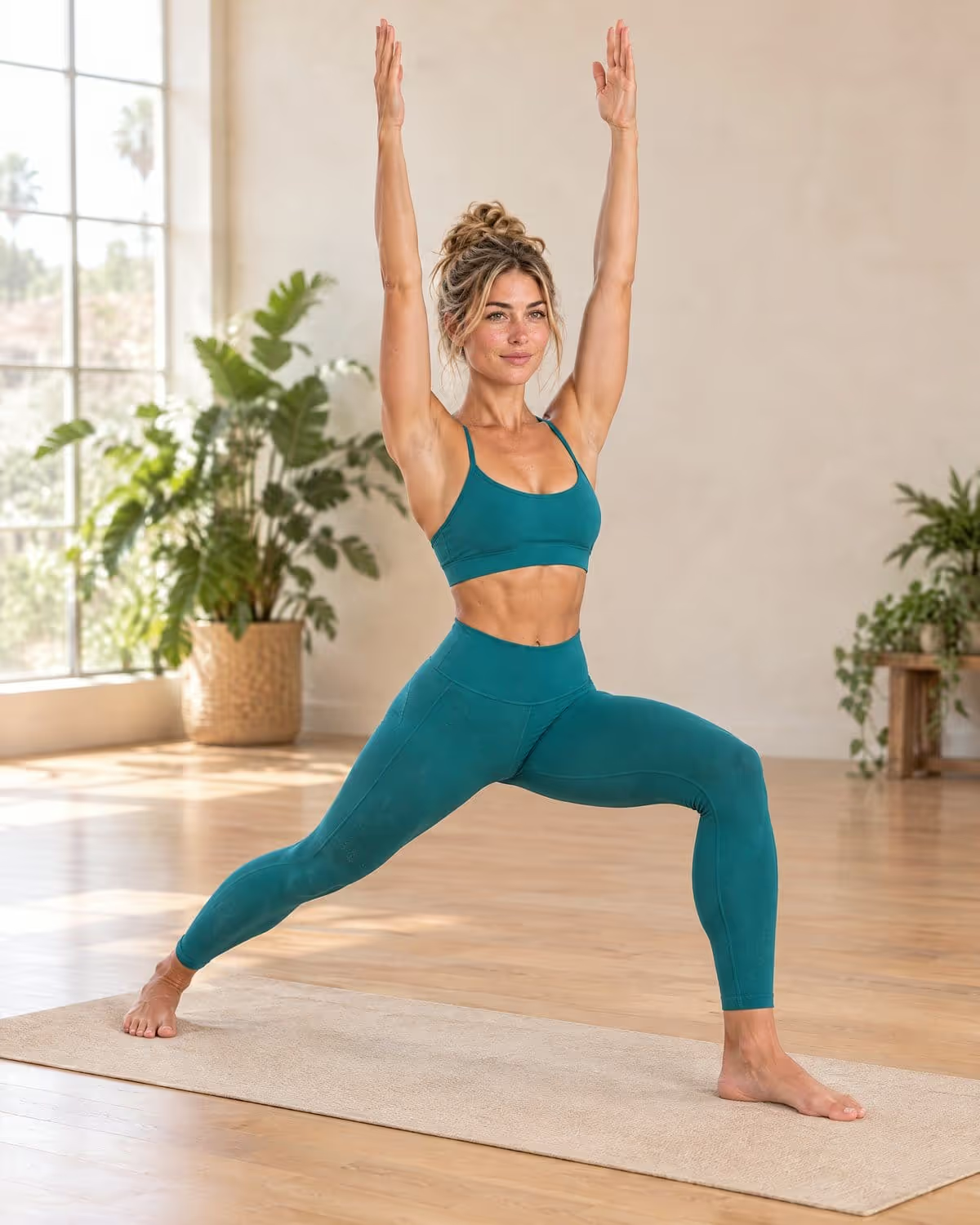 Warrior I Virabhadrasana I A strong, square-hipped lunge with the arms overhead, the pose where most people first meet the difference between effort and strain. beginner
- Warrior II Virabhadrasana II The open-hipped warrior, a long, low stance that asks the front leg to work and the mind to stay put. beginner
-
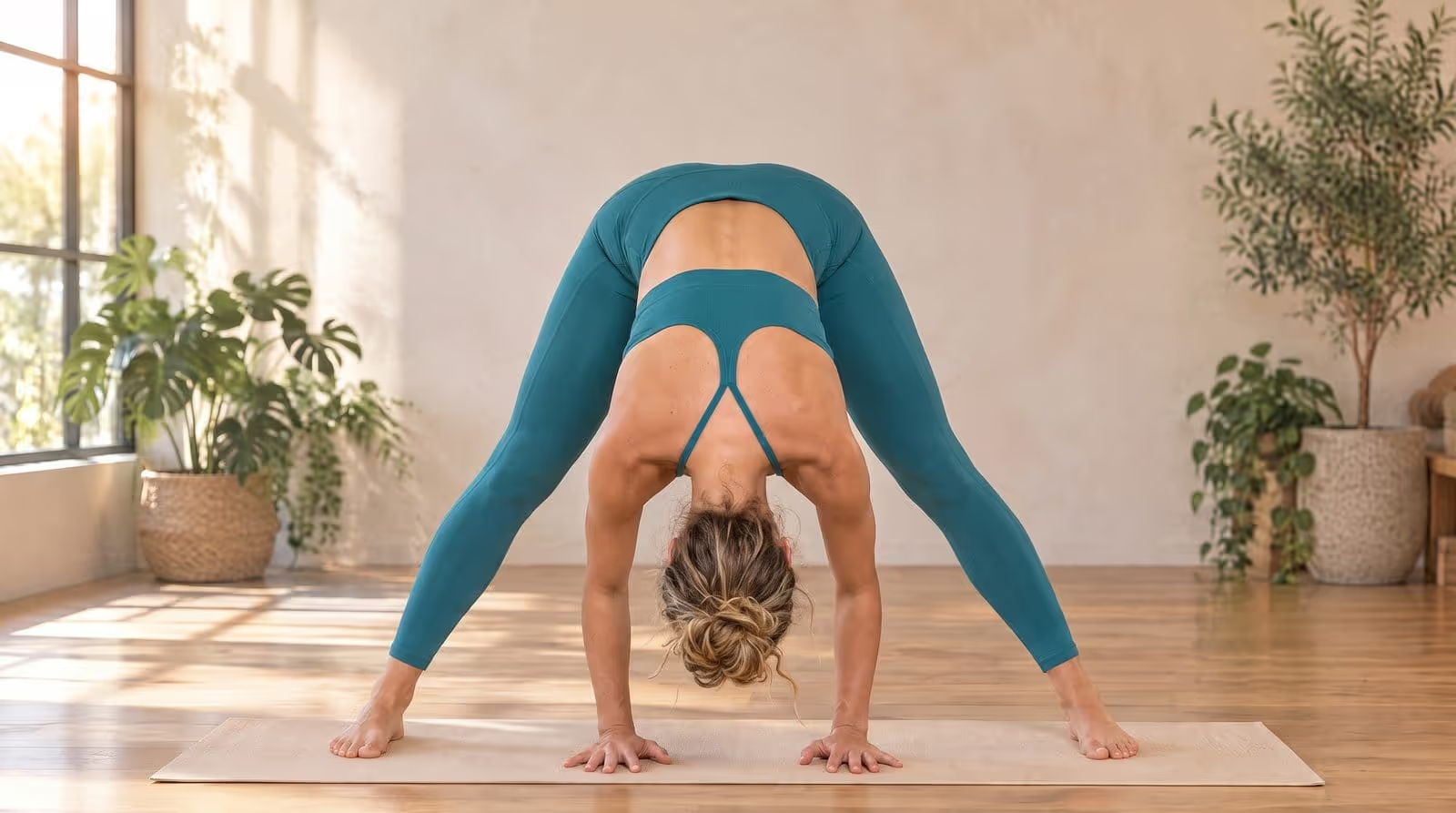 Wide-Legged Forward Fold Prasarita Padottanasana A stable, wide-based fold, usually more accessible than the feet-together version, and kinder to tight hamstrings. beginner
Balances
One leg, full attention. These expose left-right differences faster than anything else.
-
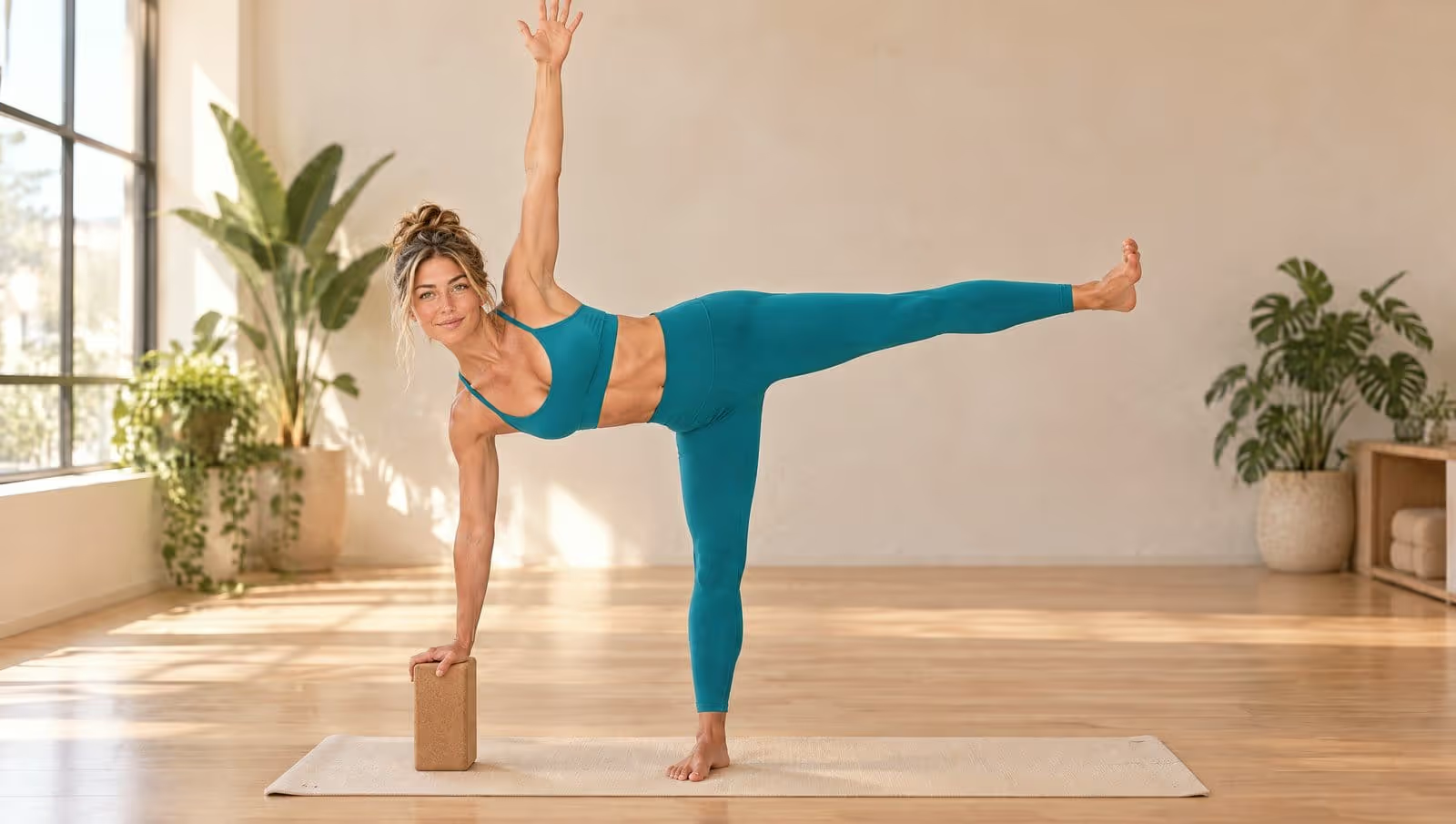 Half Moon Ardha Chandrasana A standing balance turned open to the side, one of the clearest tests of hip stability in the practice. intermediate
- Tree Pose Vrksasana The first balance most people learn, and a useful daily check on how steady you actually are. beginner
-
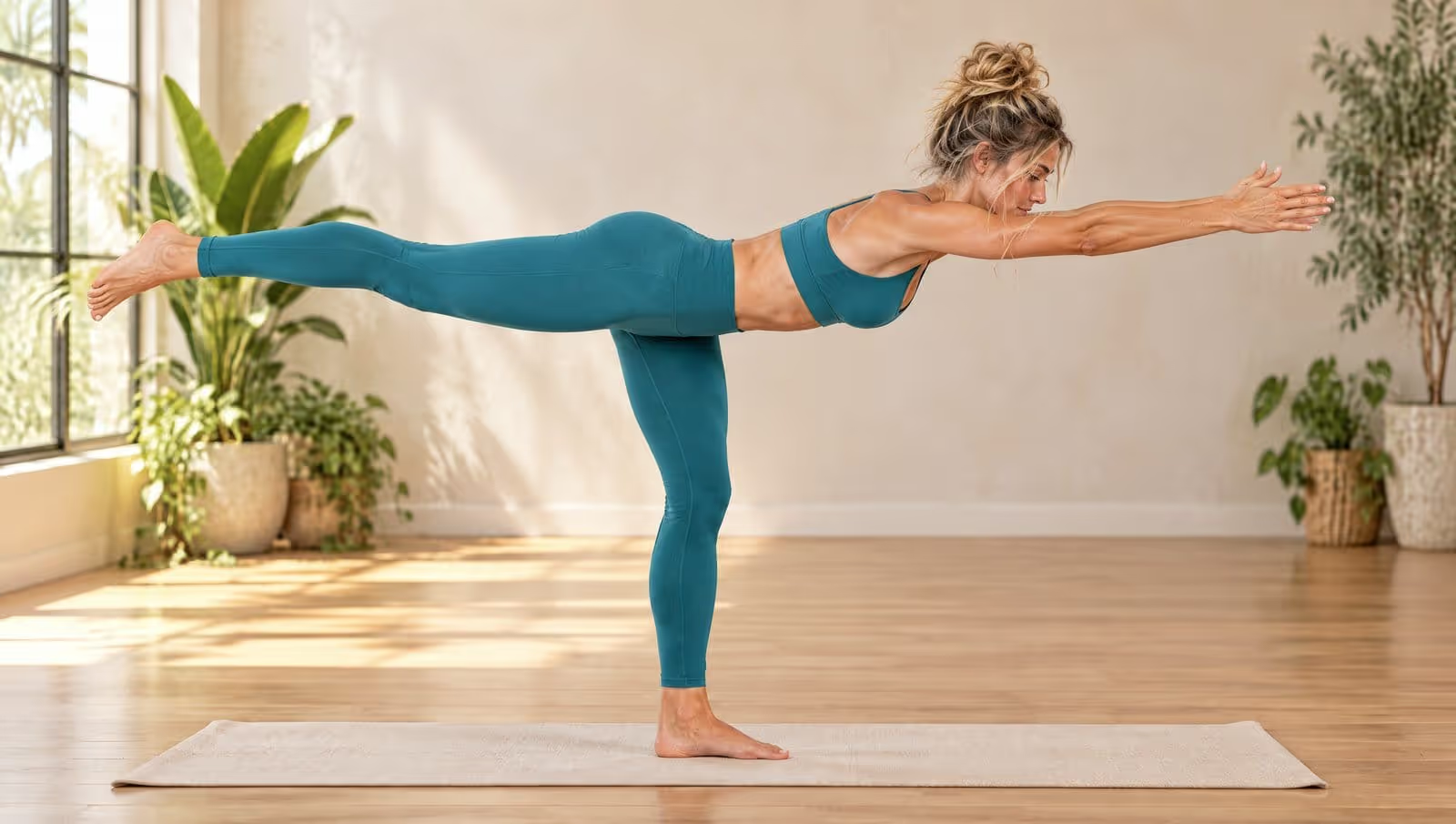 Warrior III Virabhadrasana III A single-leg balance held horizontal. The pose that exposes exactly how strong the standing-leg glute is. intermediate
Seated poses
Hips and hamstrings, usually held longer and taken slower.
-
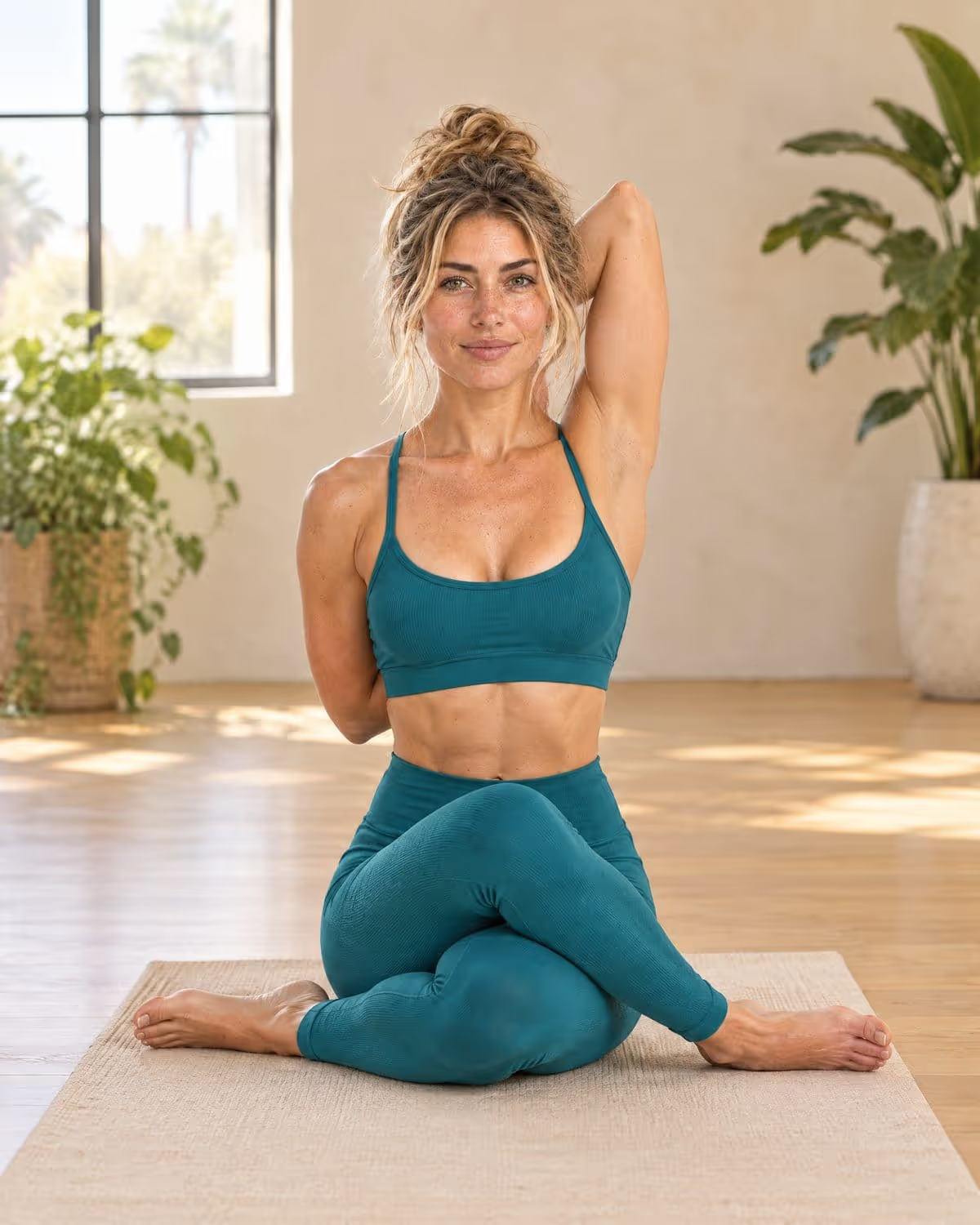 Cow Face Pose Gomukhasana Stacked knees and bound hands, an unusually specific stretch for outer hips and shoulders at once. intermediate
-
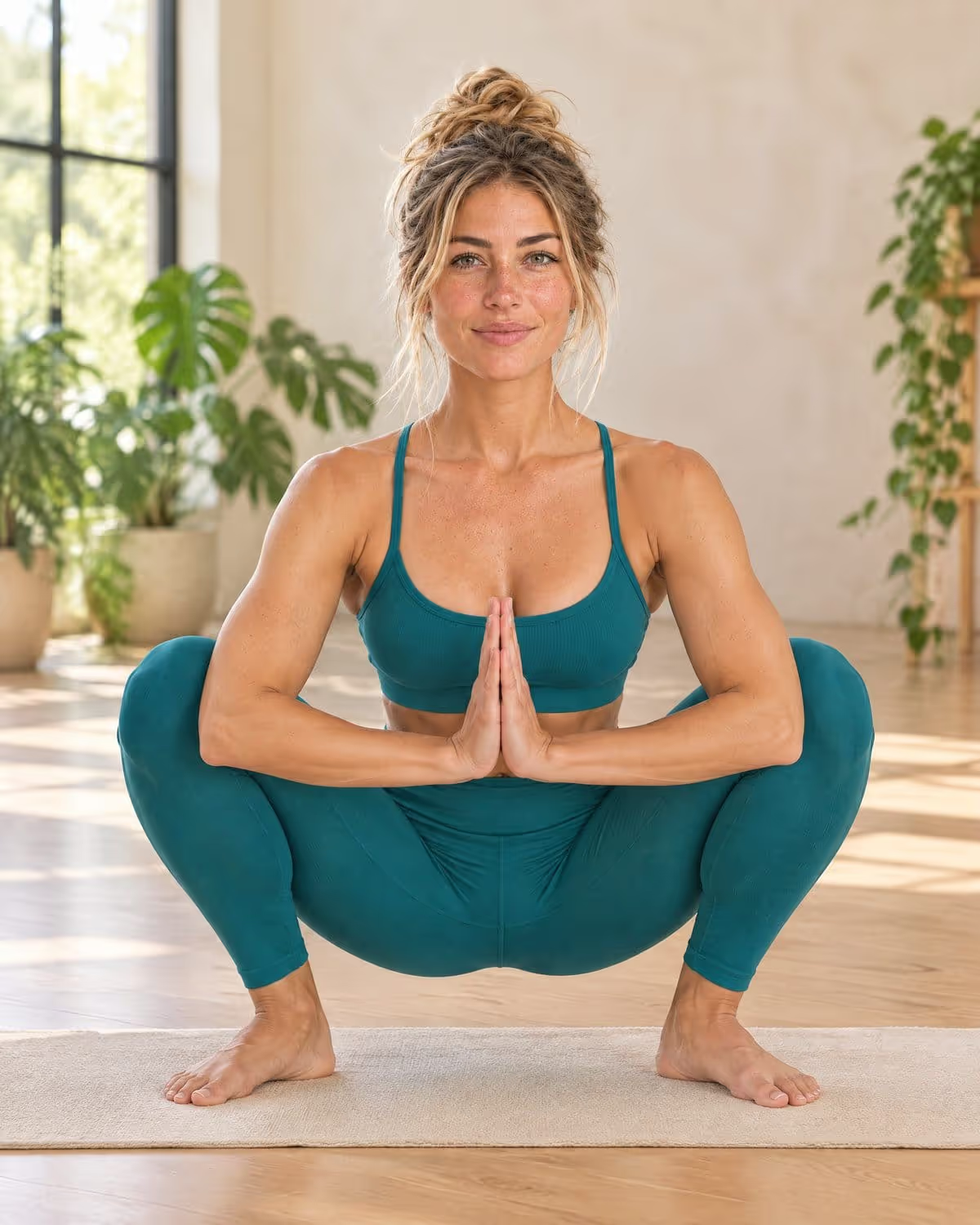 Garland Pose Malasana A deep squat with the heels down, a resting position in much of the world and a mobility project in most of LA. beginner
-
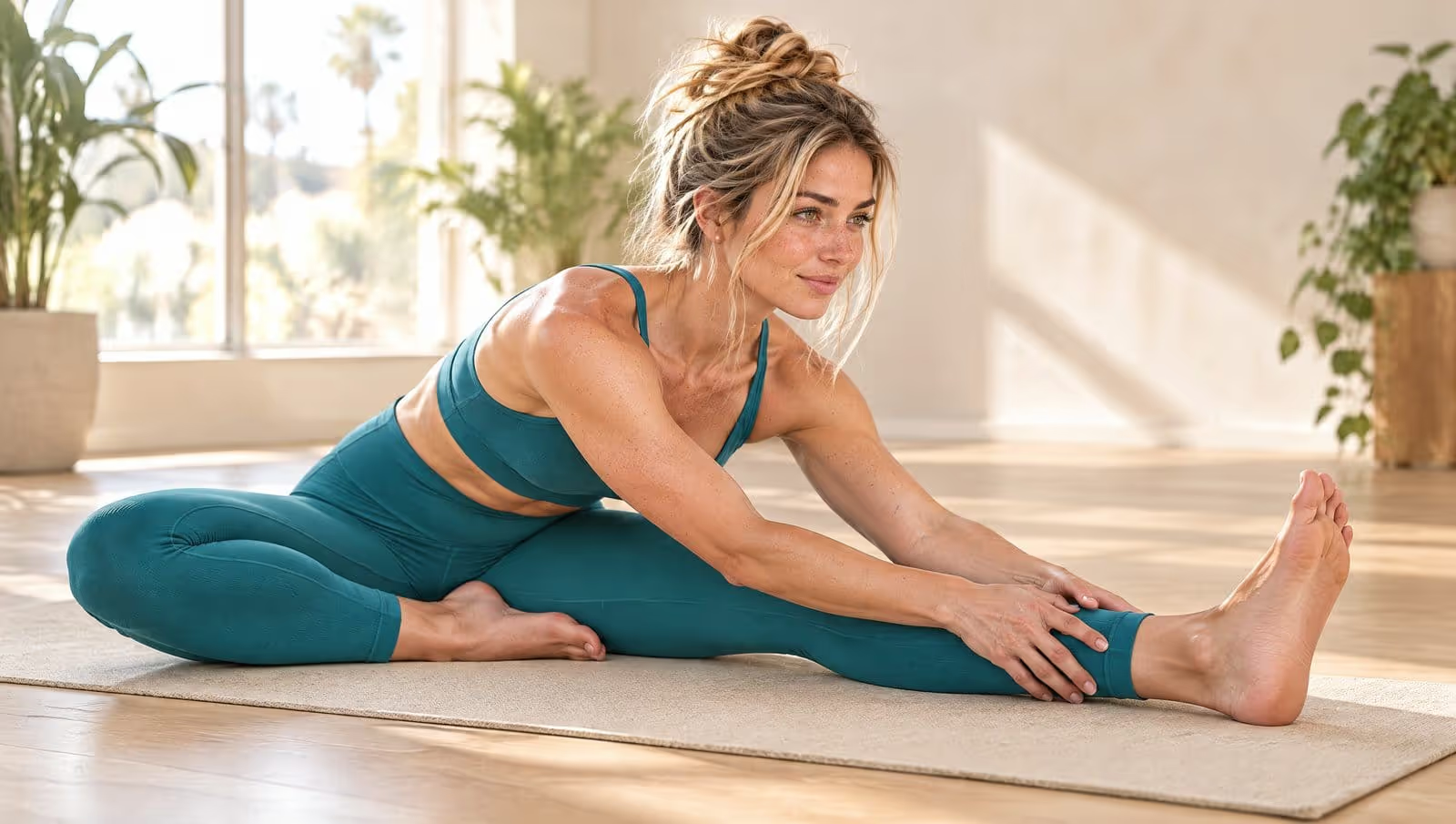 Head-to-Knee Pose Janu Sirsasana A one-legged seated fold. Usually kinder than the two-legged version because one hip gets to open. beginner
-
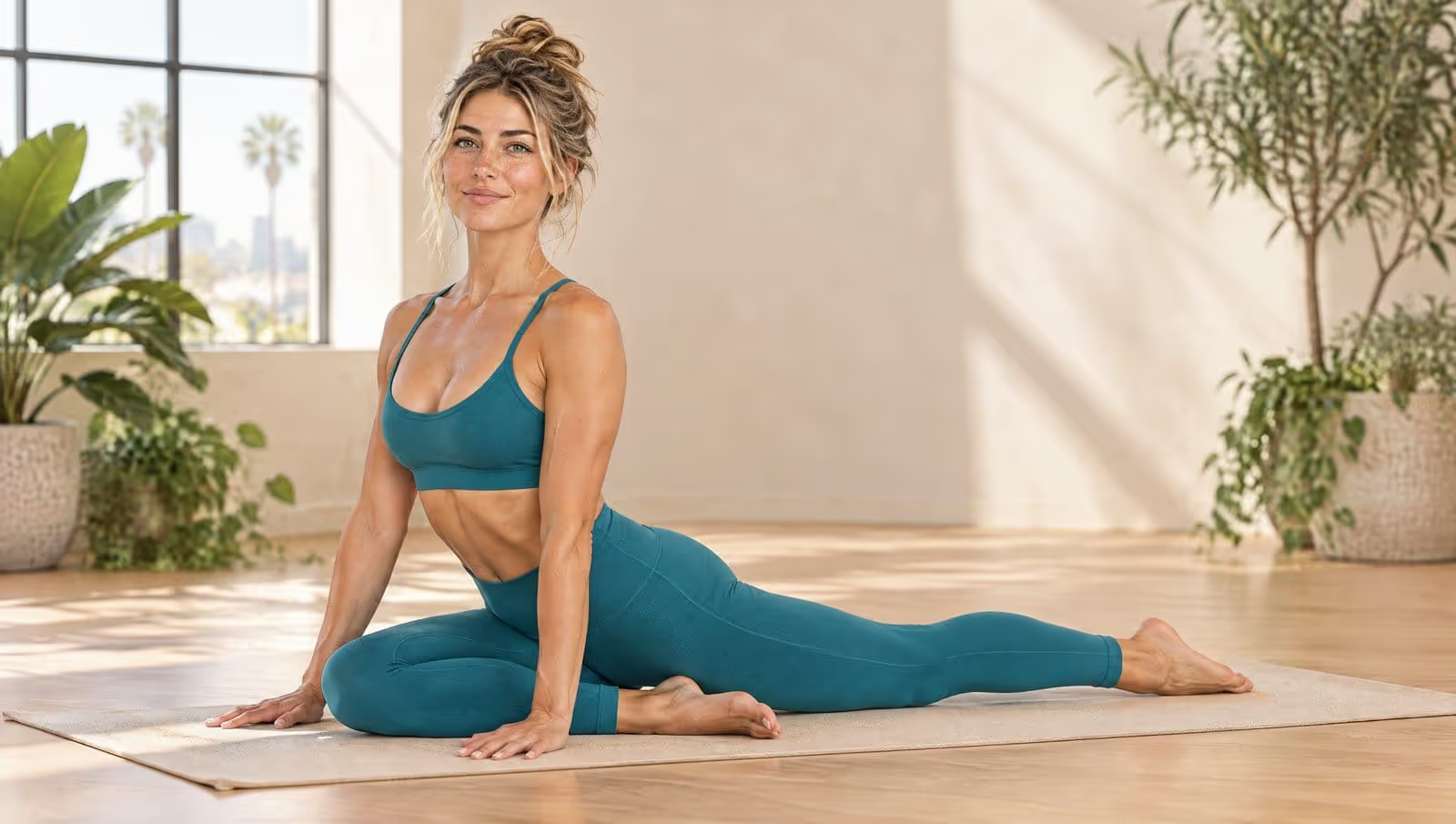 Pigeon Pose Eka Pada Rajakapotasana The deep outer-hip opener everyone asks for, and the pose most often forced by people whose hips aren't ready. intermediate
-
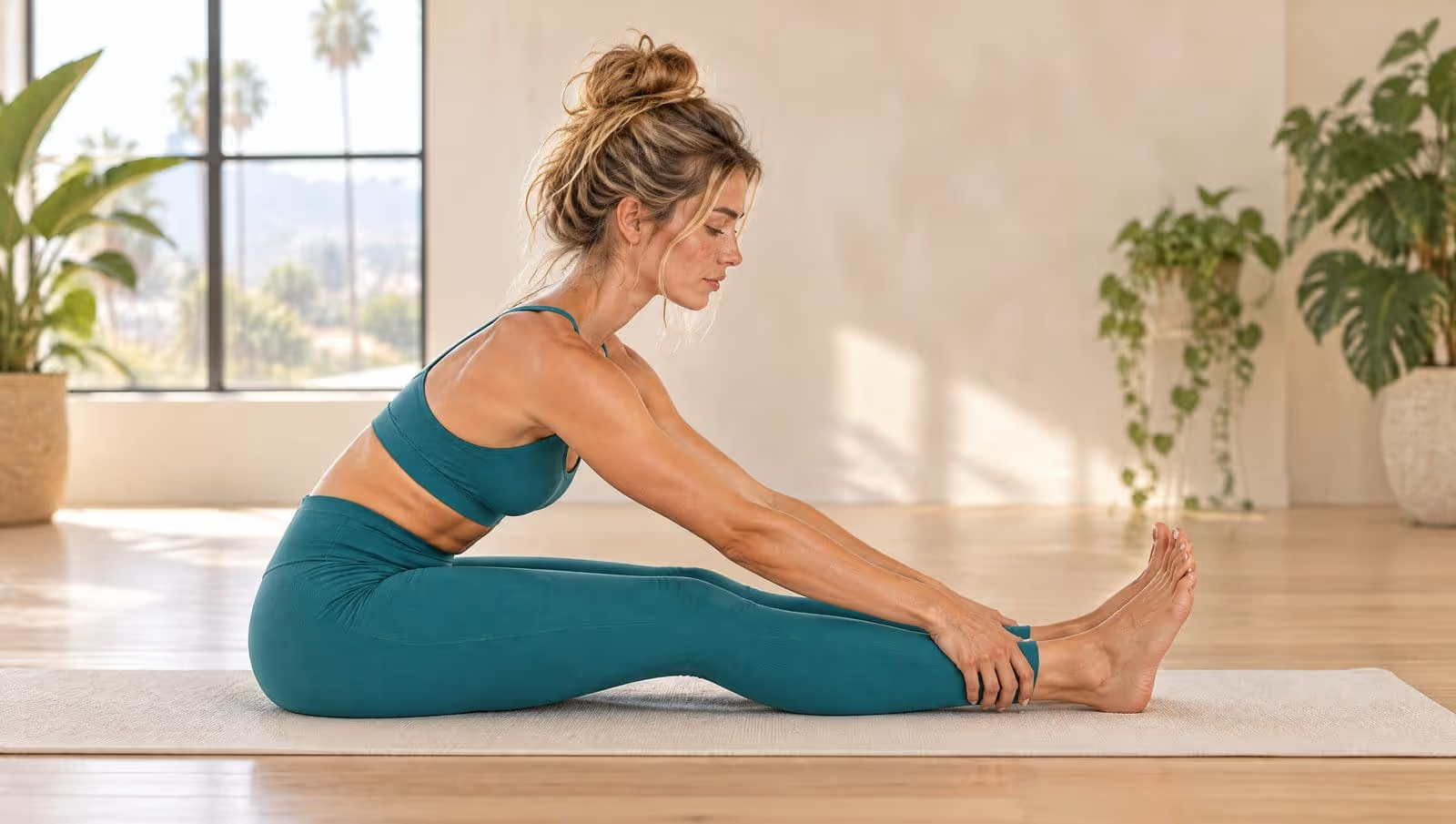 Seated Forward Fold Paschimottanasana A long fold over straight legs. The classic hamstring stretch, and the classic place people round their lower back. beginner
Twists
Rotation through the spine, length first, then turn.
-
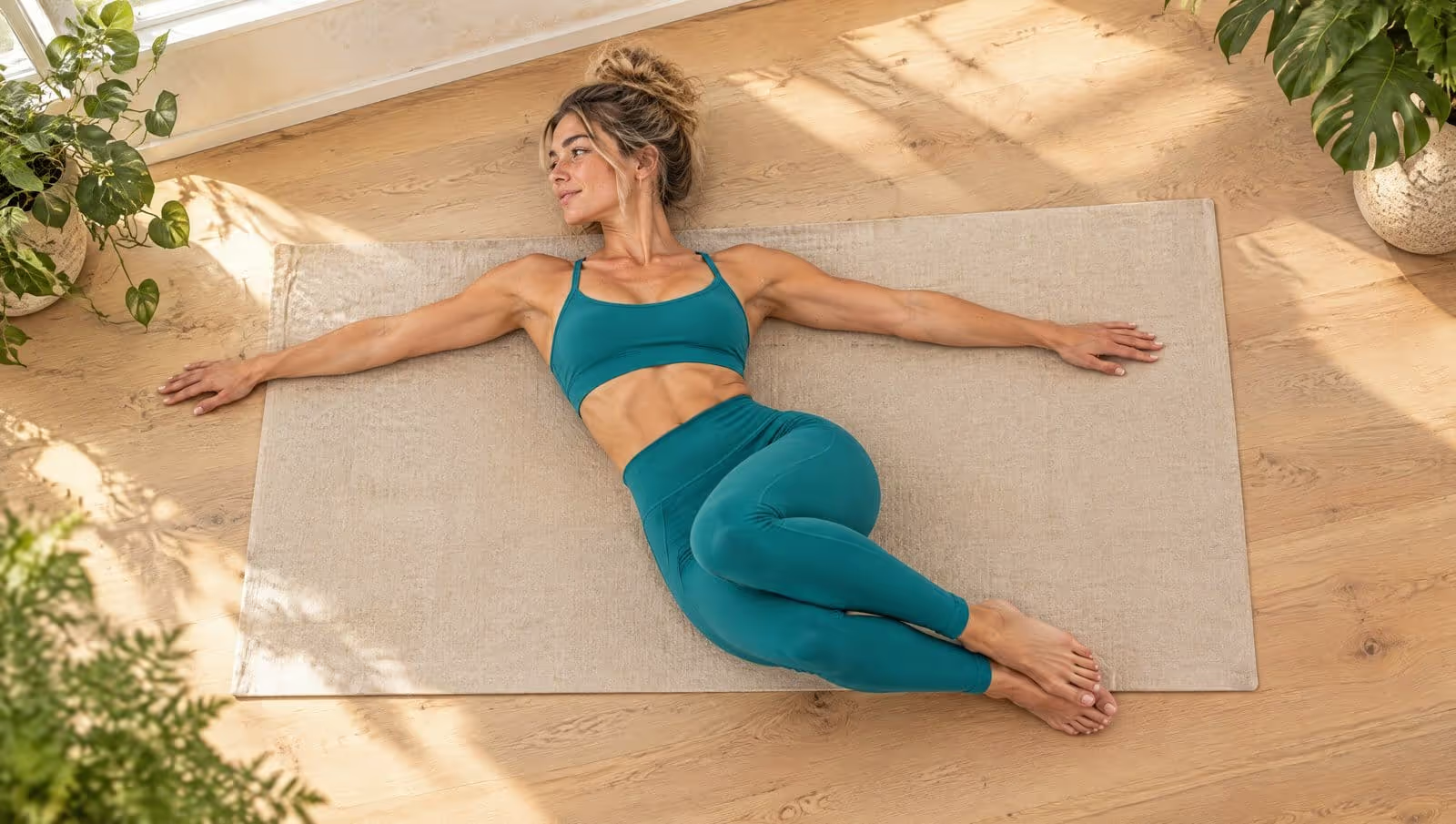 Reclined Twist Supta Matsyendrasana A supported twist on the floor, usually the last thing before rest. The one twist almost everyone can do comfortably. beginner
-
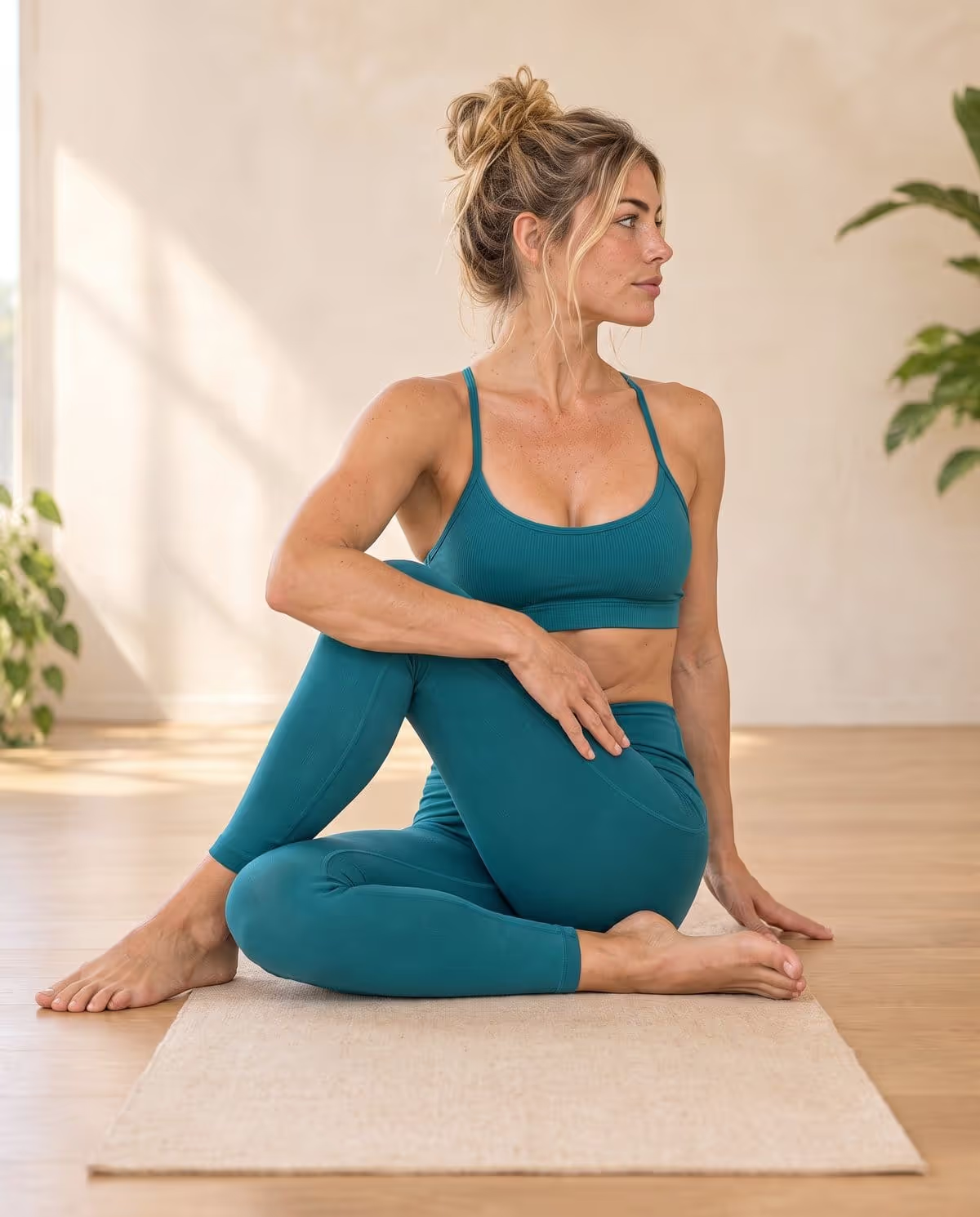 Seated Spinal Twist Ardha Matsyendrasana An upright rotation of the spine, length first, then turn. Reversing that order is how twists get uncomfortable. beginner
-
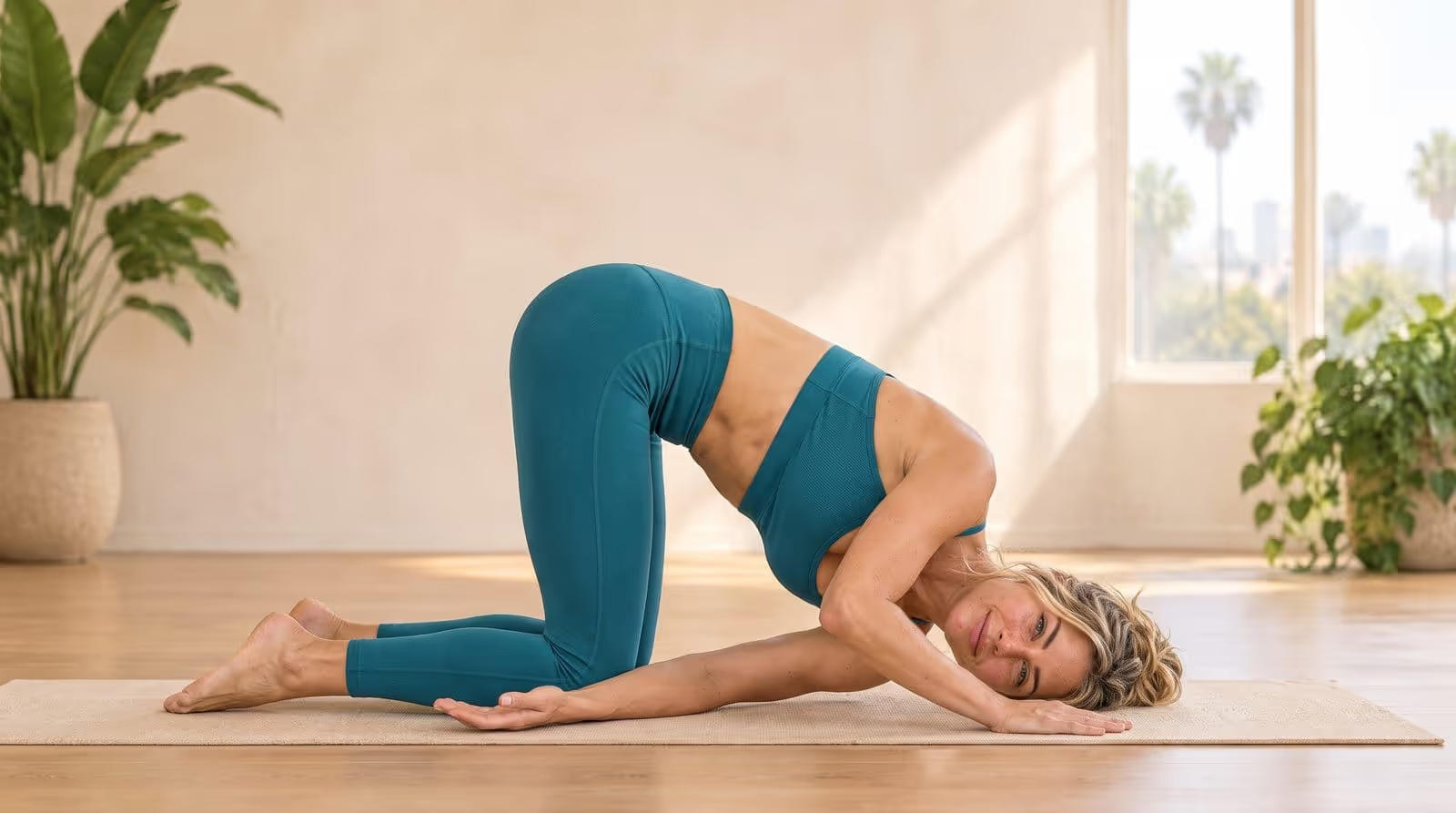 Thread the Needle Parsva Balasana A shoulder and upper-back twist done from hands and knees: small, specific, and very good for desk-shaped bodies. beginner
Backbends
Opening the front of the body, from very gentle to genuinely strong.
- Bridge Pose Setu Bandha Sarvangasana A supine backbend powered by the glutes. One of the few poses that is both a stretch and a strengthener. beginner
-
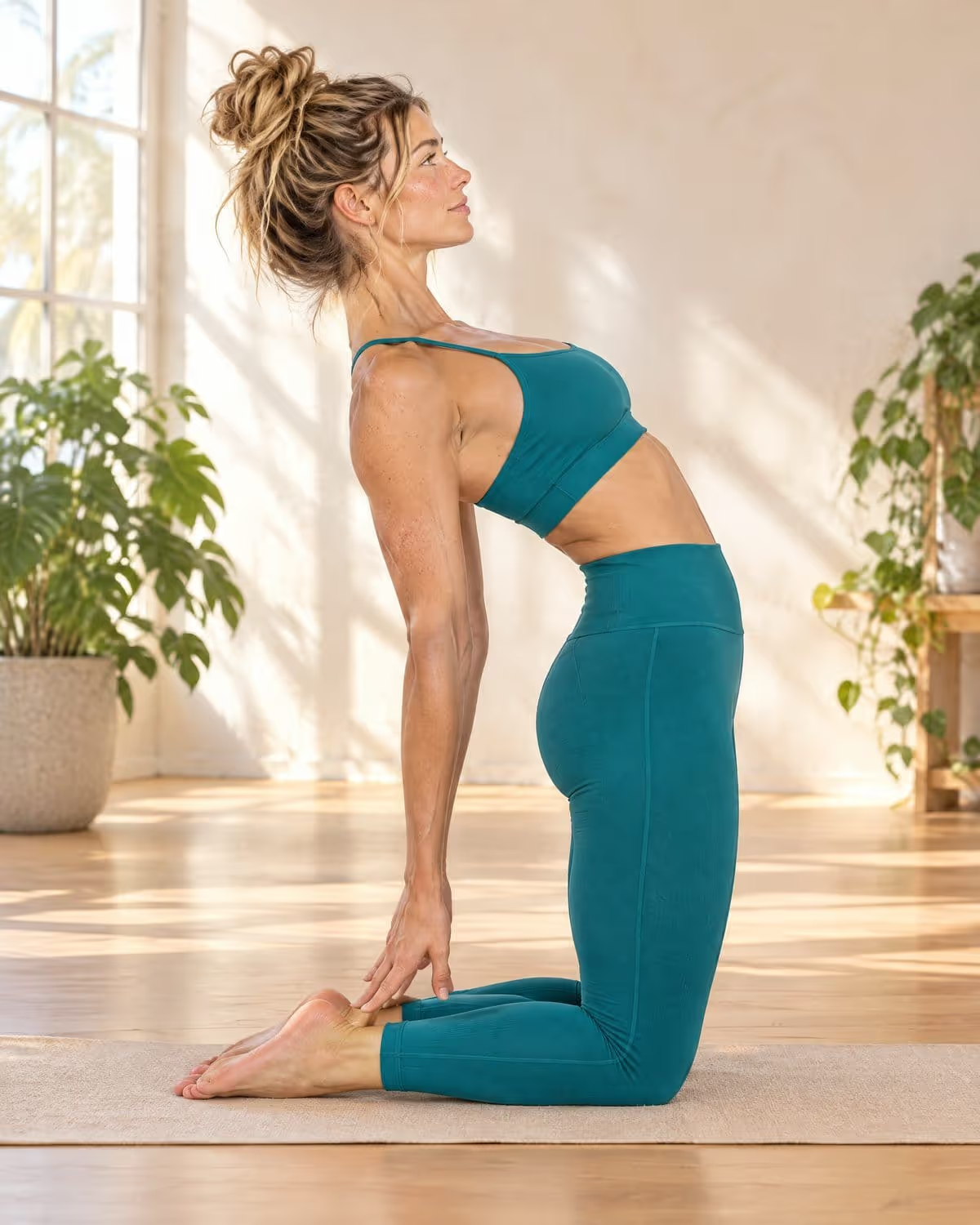 Camel Pose Ustrasana A kneeling backbend with a big reputation: powerful, and the pose most often pushed past what the body agreed to. intermediate
- Cobra Pose Bhujangasana A low backbend driven by the back muscles rather than the arms: small and strong beats big and pushed. beginner
-
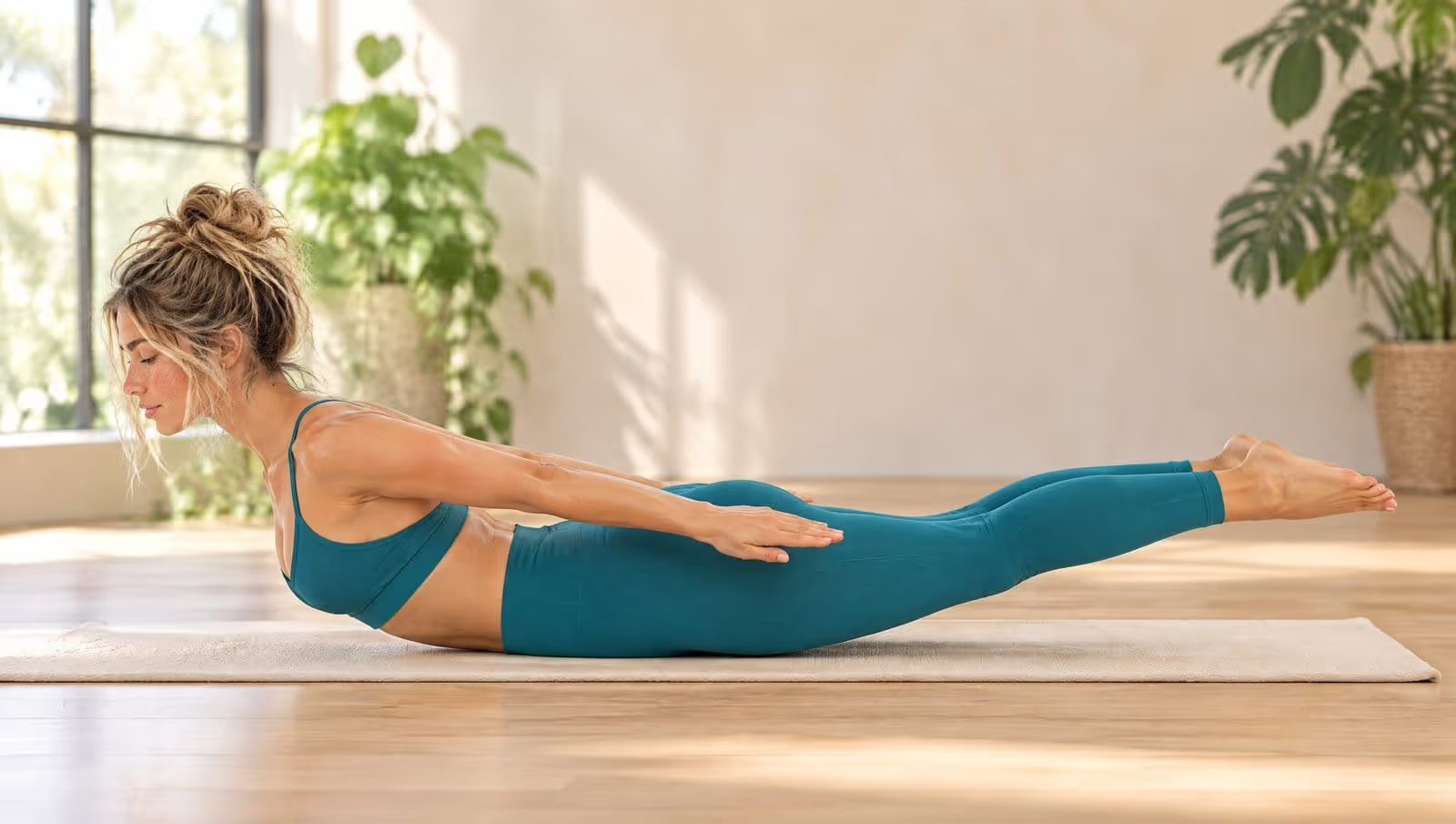 Locust Pose Salabhasana A prone lift with no hands to help. The clearest way to find out whether your back muscles are actually working. intermediate
-
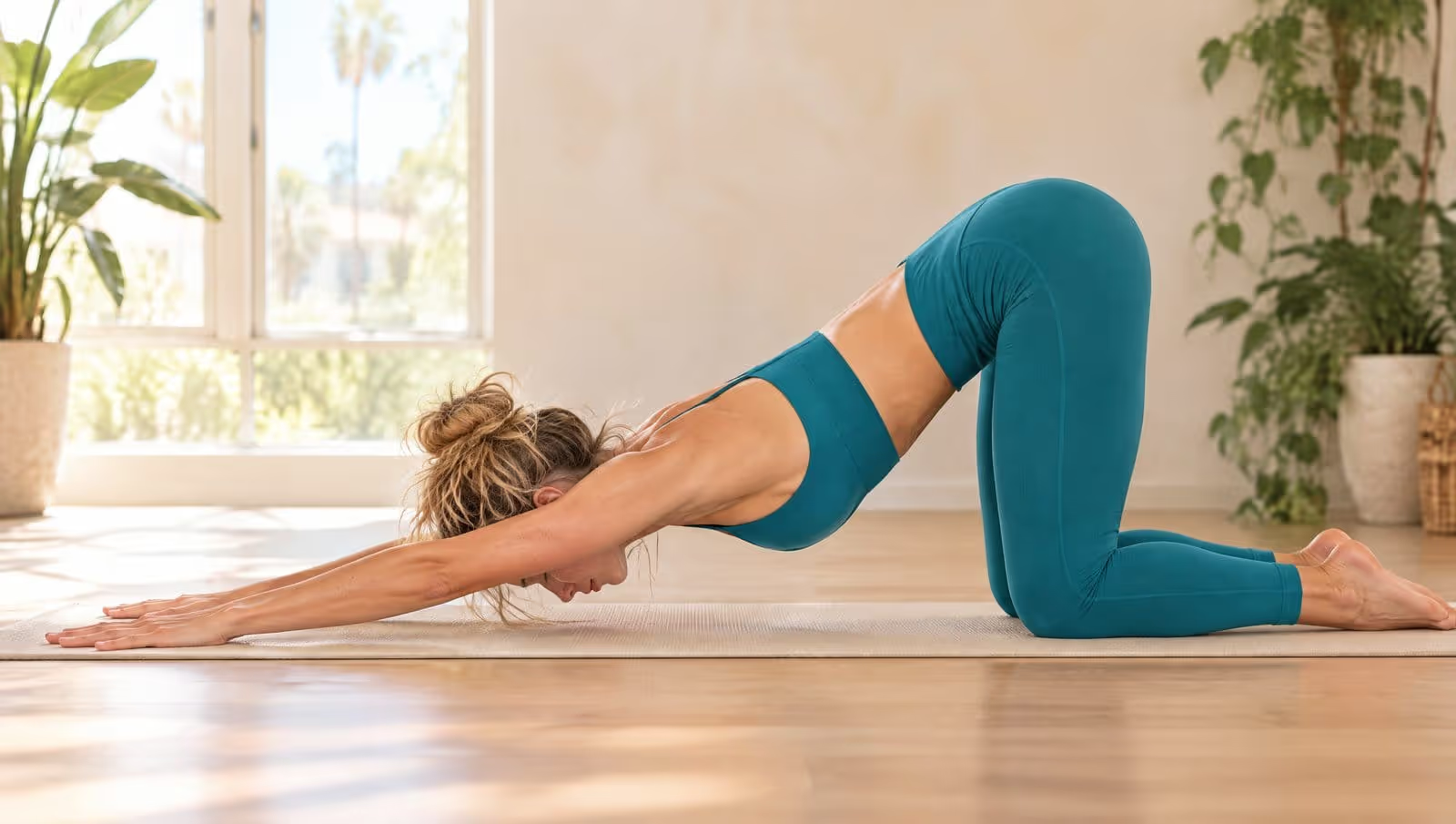 Puppy Pose Uttana Shishosana Halfway between Child's Pose and Downward Dog. A chest opener that leaves the hips where they are. beginner
-
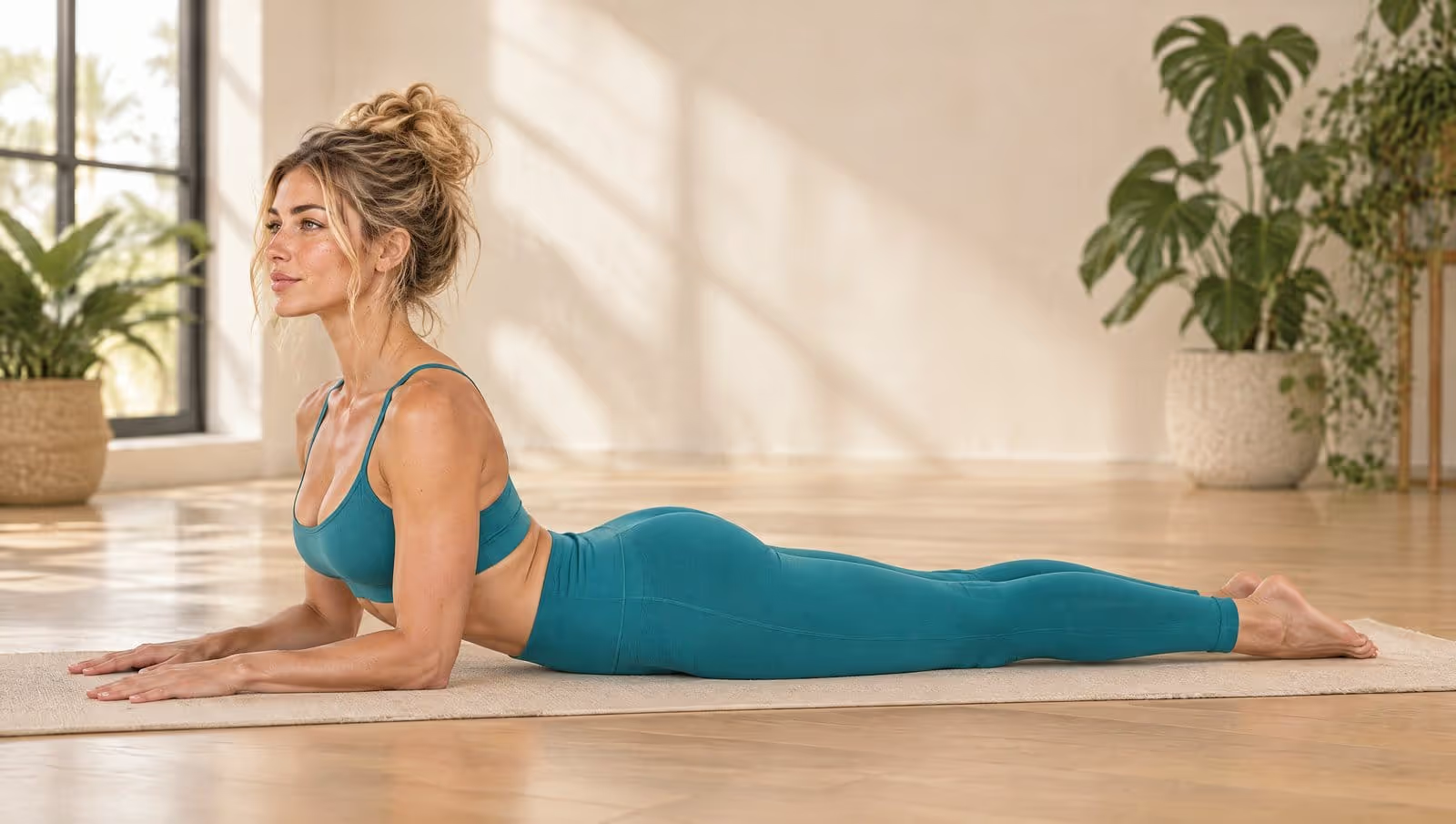 Sphinx Pose Salamba Bhujangasana A propped, forearm-supported backbend you can hold for minutes rather than breaths. beginner
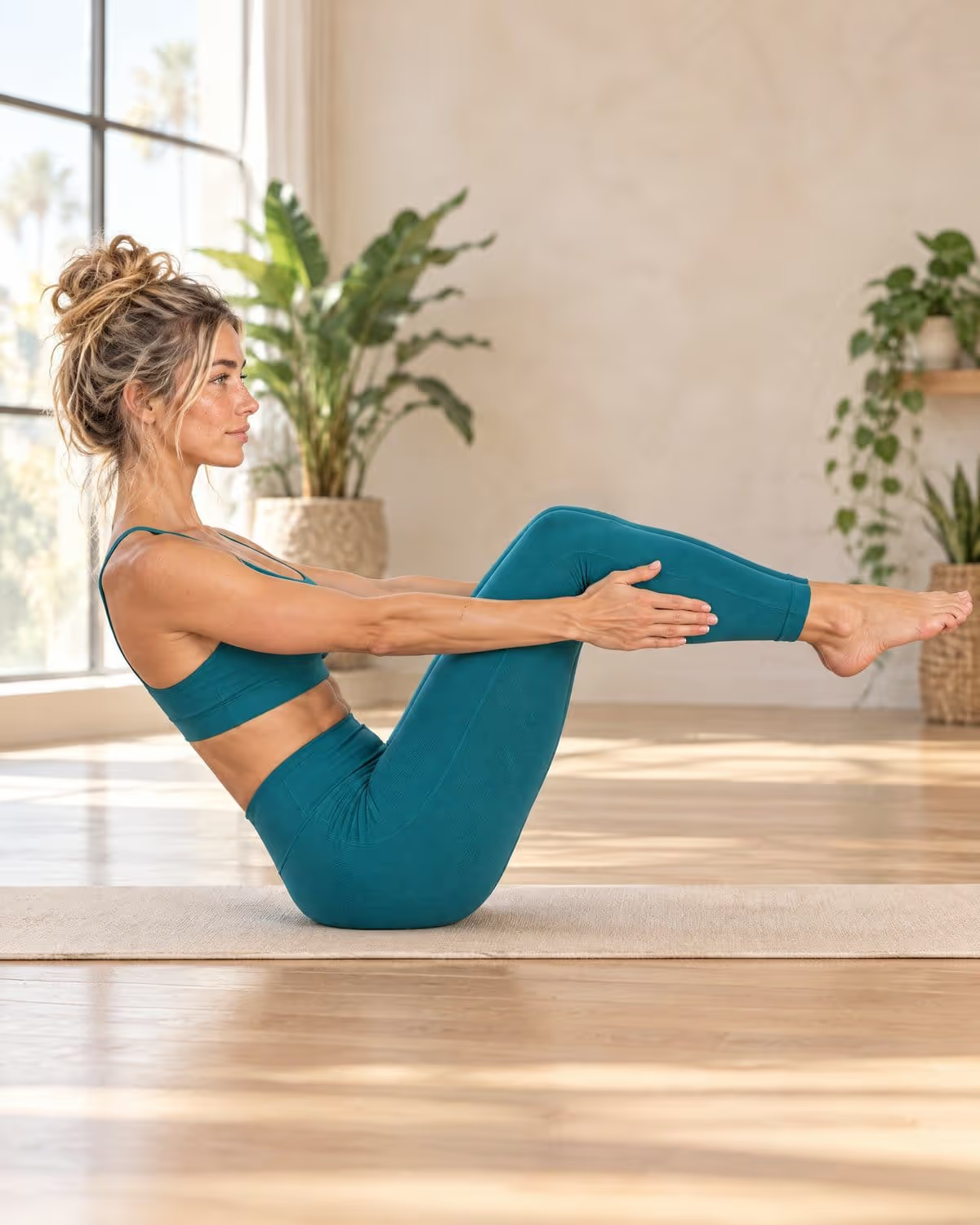
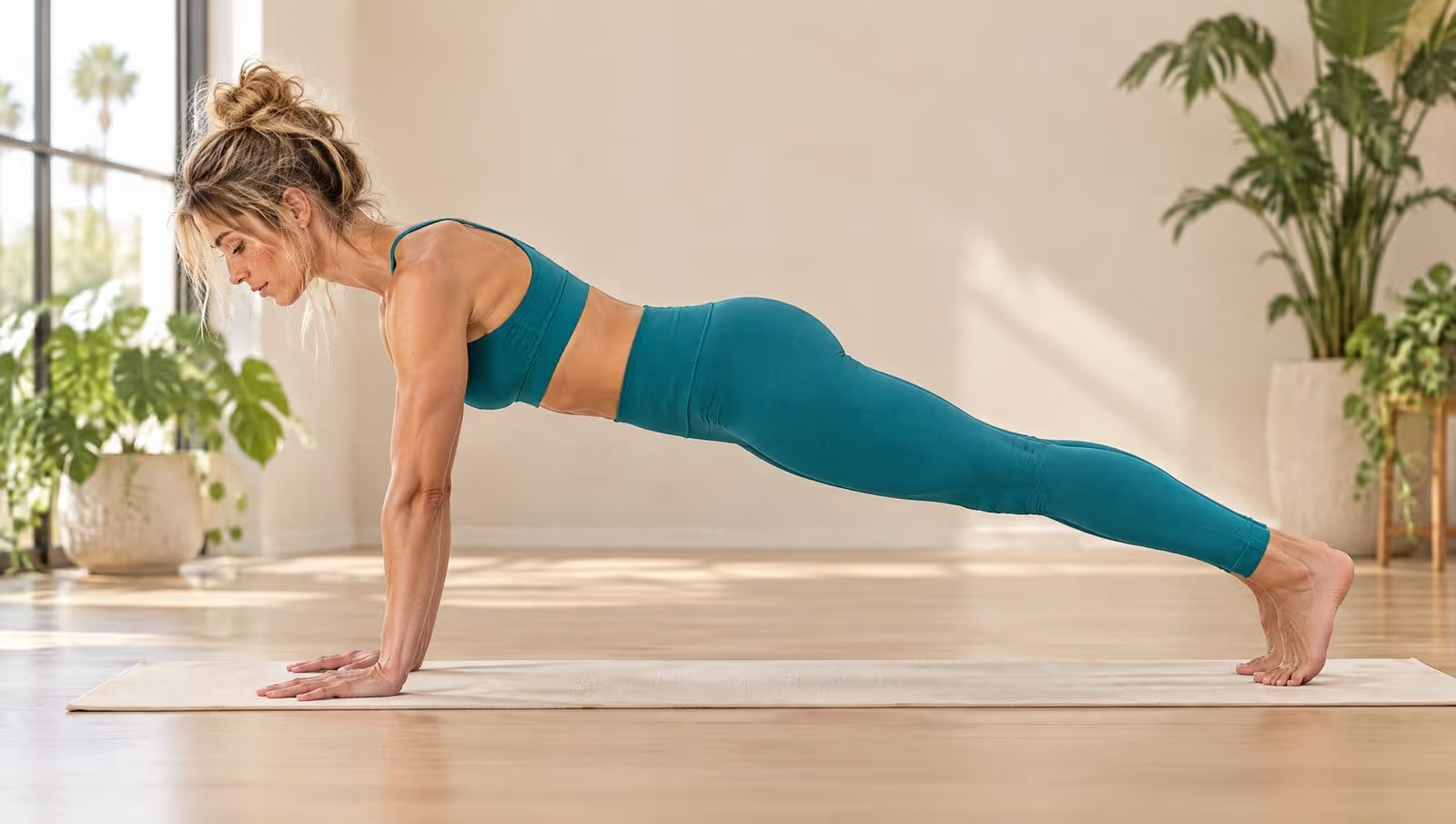
Core poses
Held strength work. Short, honest, and harder than they look.
Reclined poses
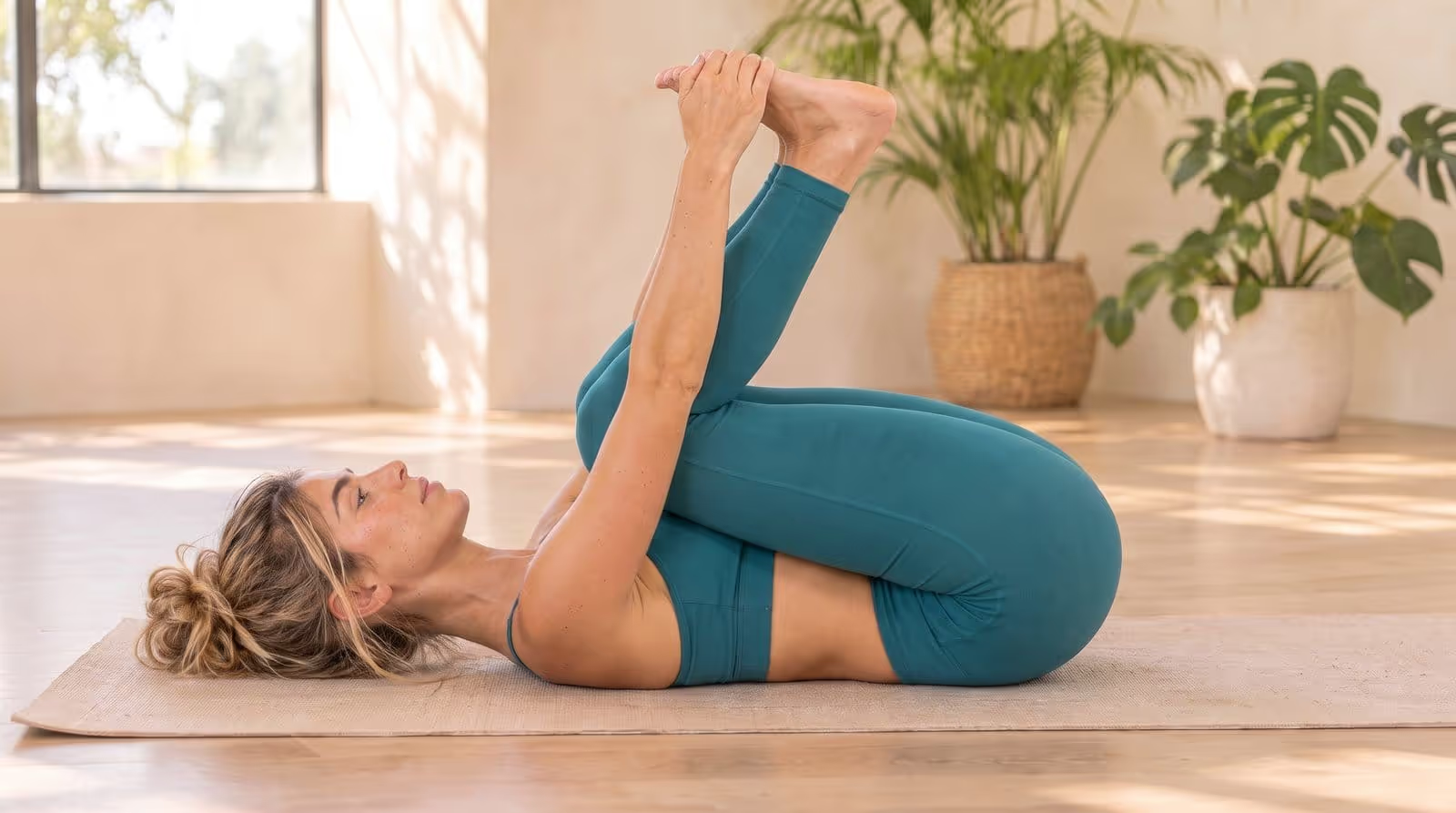
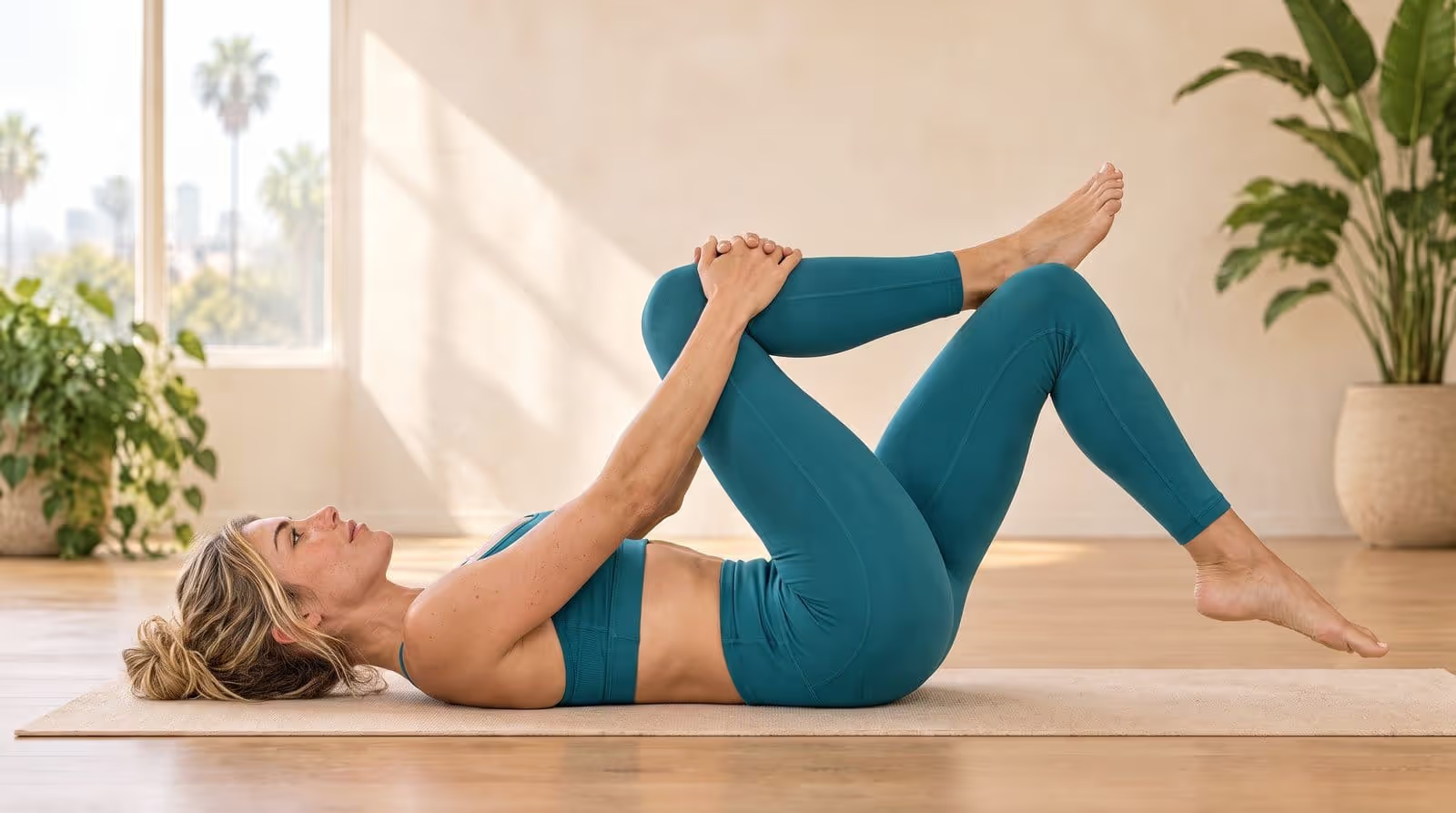
On your back, with the floor doing the supporting.
Restorative poses
Nothing to achieve. Props hold the shape so you can stop holding it.
- Child's Pose Balasana The universal rest position. Available in any class, at any moment, without asking. beginner
-
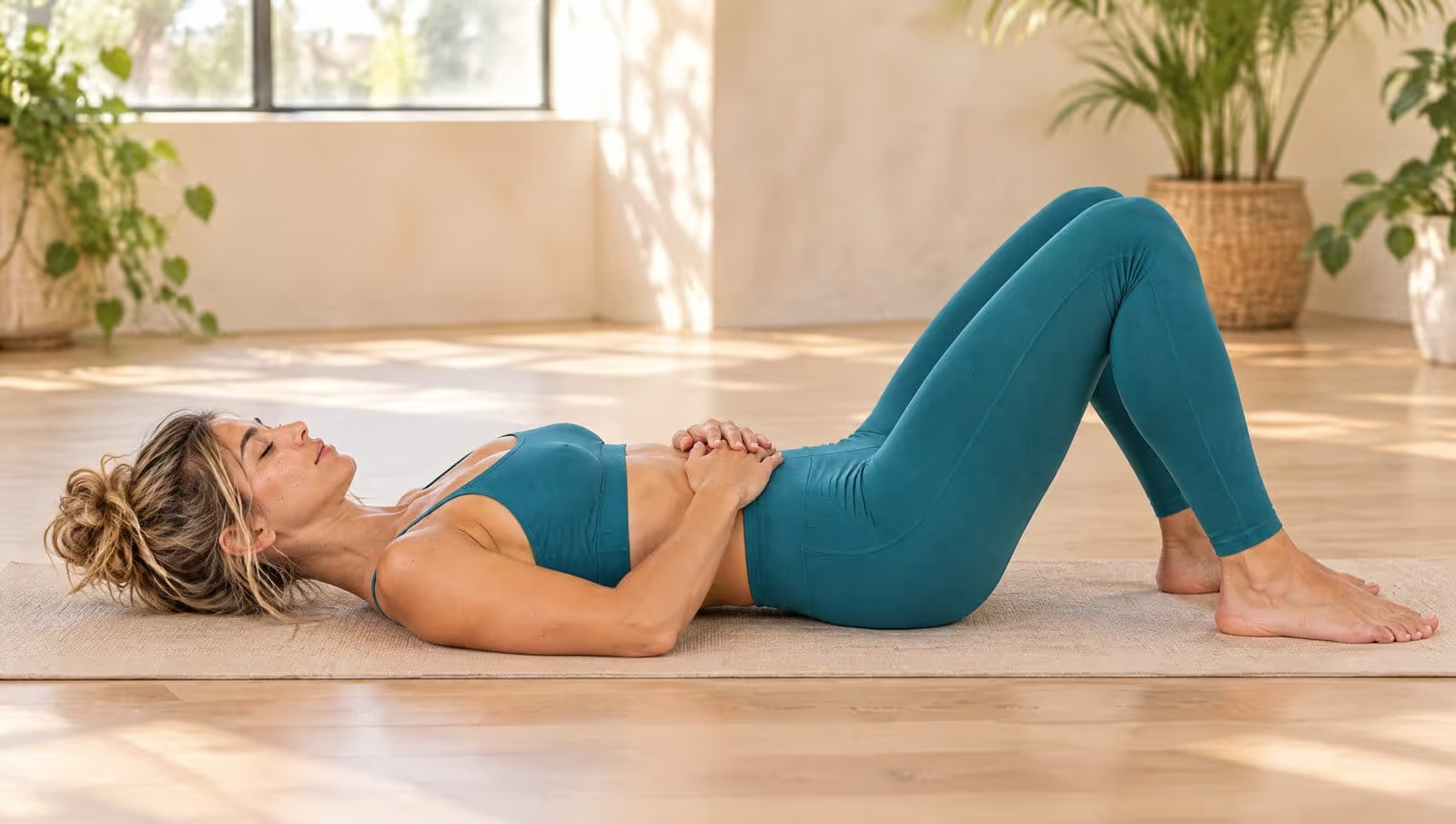 Constructive Rest Lying down with the knees bent. It looks like nothing and it is one of the kindest things you can offer a tired back. beginner
- Corpse Pose Savasana The final rest of every class. Physically the simplest pose in yoga and, for a lot of people, the hardest. beginner
-
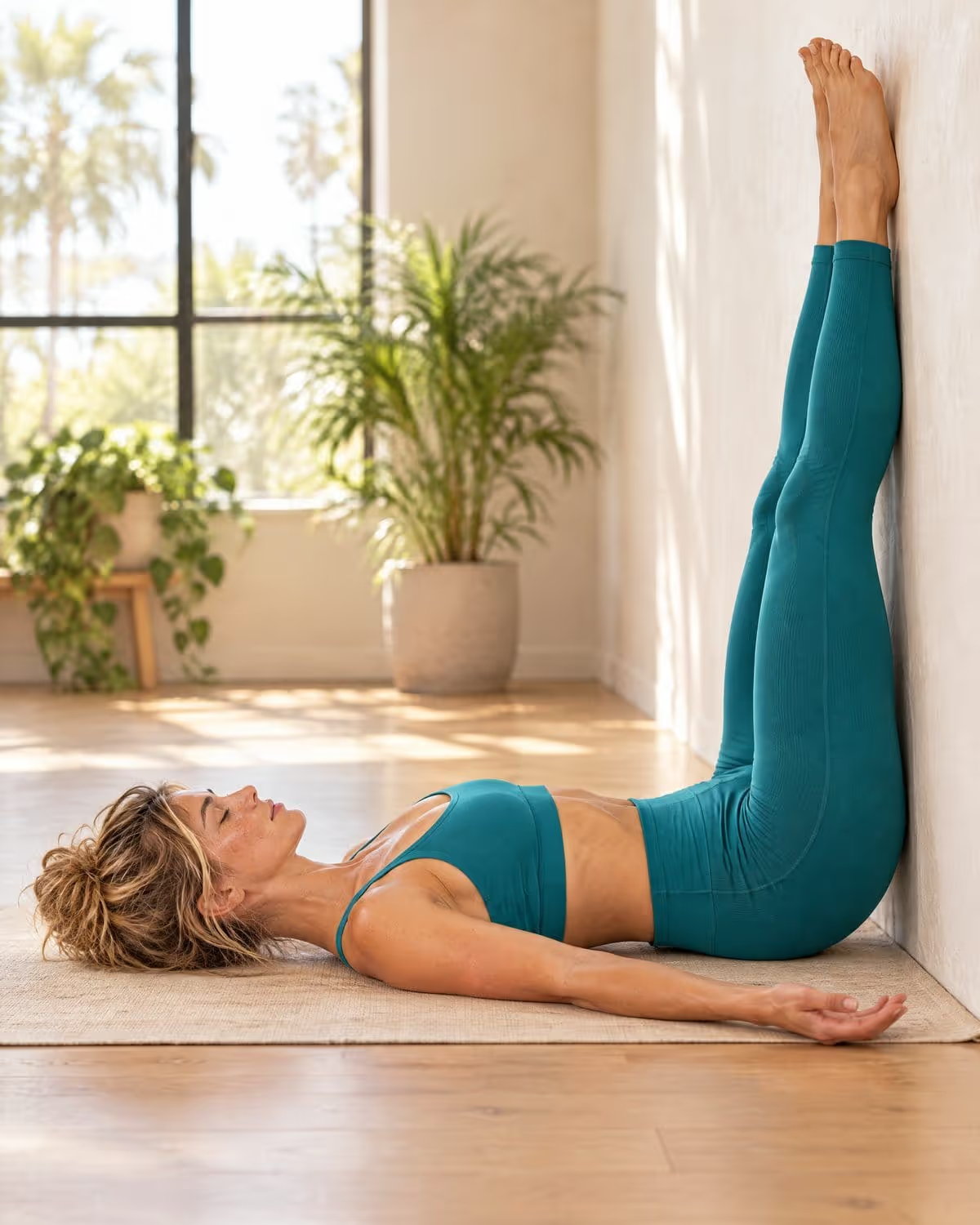 Legs Up the Wall Viparita Karani The most-recommended recovery pose there is, and the least demanding. You lie down; the wall does the rest. beginner
-
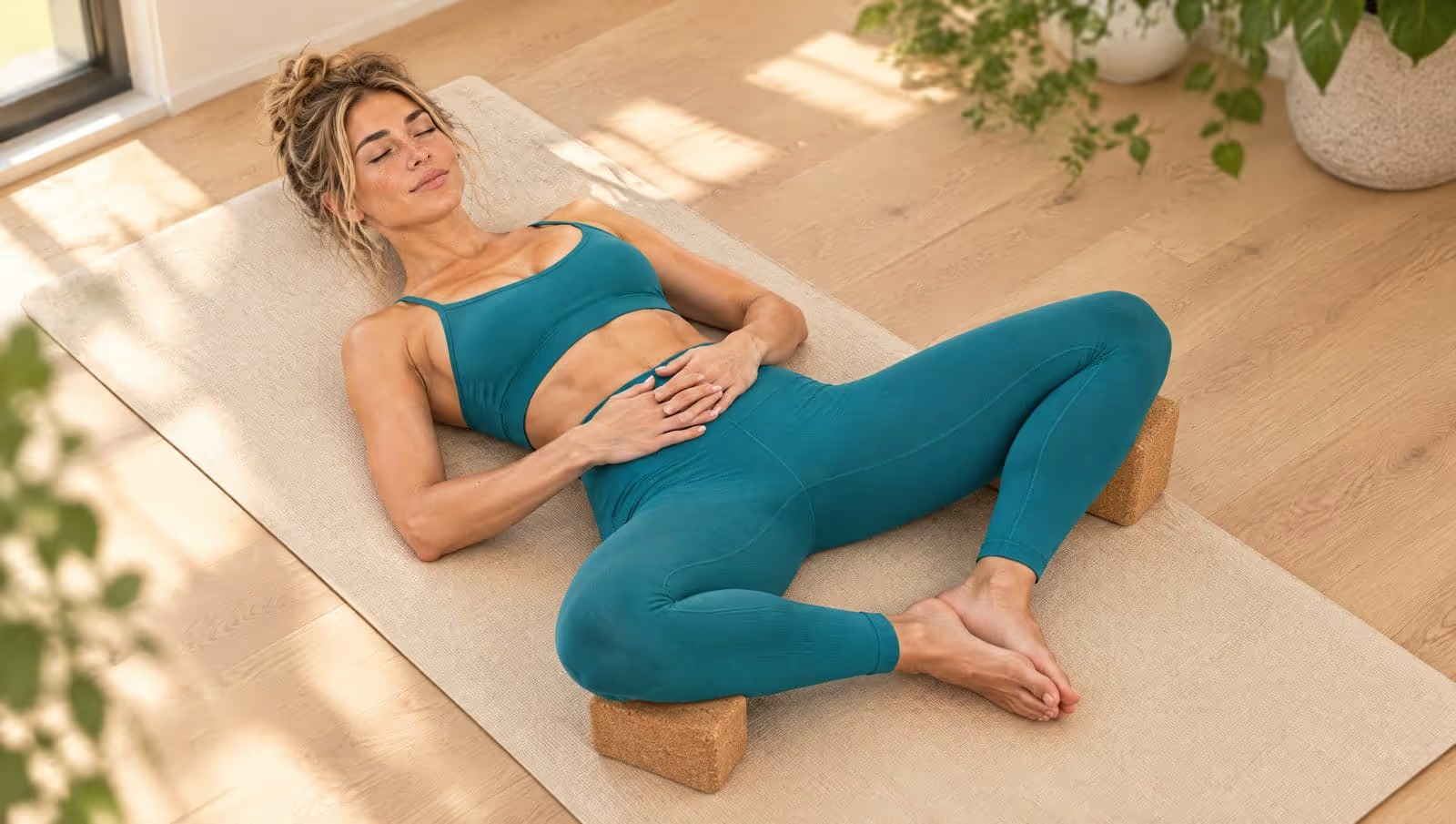 Reclined Bound Angle Supta Baddha Konasana Soles of the feet together, knees falling open, fully supported. A pose you can stay in for ten minutes. beginner
-
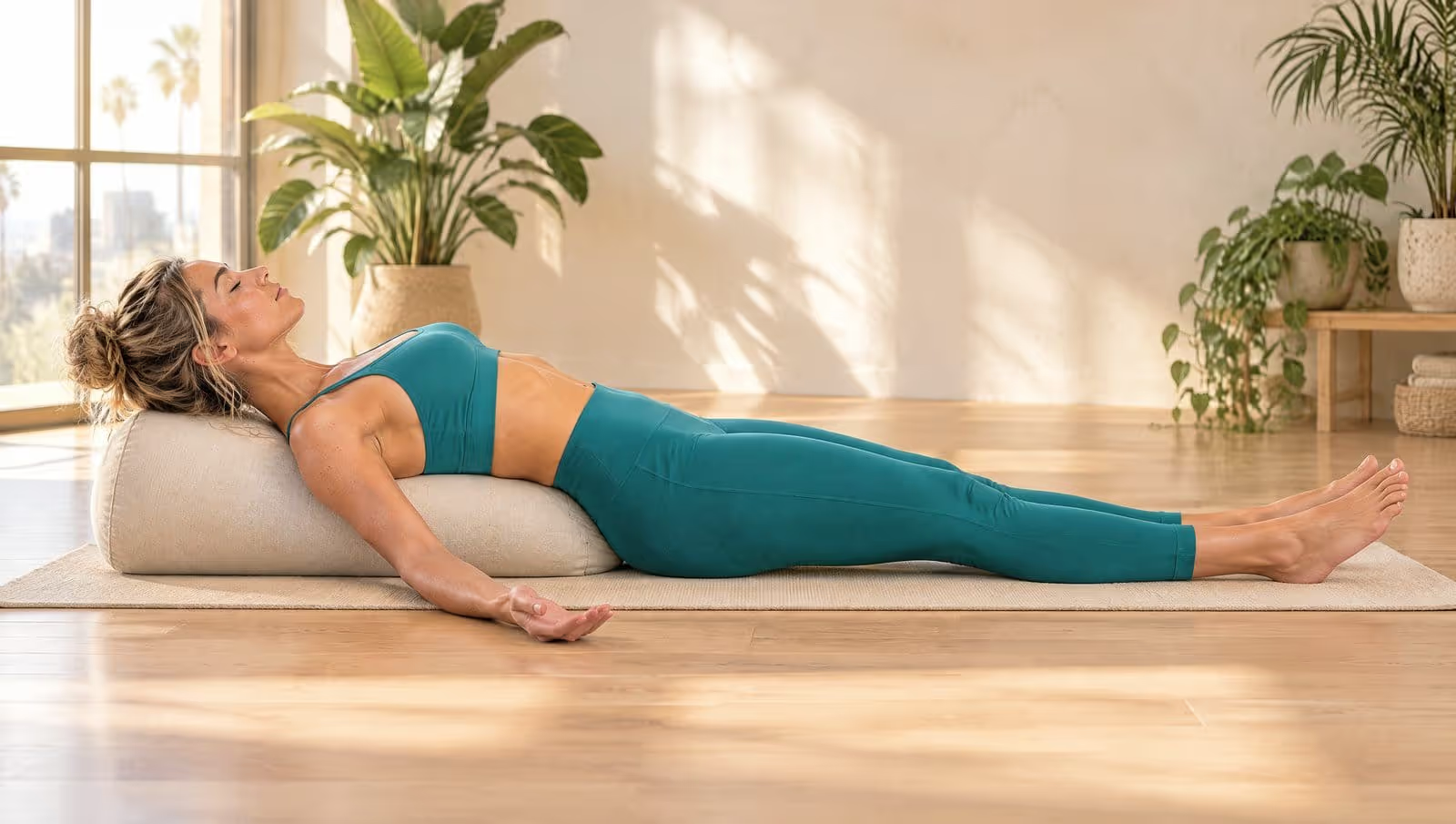 Supported Fish Matsyasana A passive chest opener over a prop. Nothing to hold, nothing to achieve: you just lie there and open. beginner
How to practise these poses
- Warm up first. A few rounds of Cat-Cow before anything held or deep.
- Let the breath set the pace. Breathe through the nose and slowly. If you can't, you've gone too far; back off until you can.
- Hold for breaths, not seconds. Three to five slow breaths in a working pose; resting poses for minutes.
- Use the easier version. Bent knees, a block or a wall are part of the practice, not a lesser form of it. Every pose page lists them.
- Stop at sharp pain. A stretch is fine; a sharp or pinching feeling is a signal to come out. Each pose page lists who should skip it.
- End lying down. A few minutes of Corpse Pose lets the body settle before you get up.
Want a sequence? The daily practice routine strings these together, and beginner yoga in LA lists the classes that teach them slowly.
Yoga poses: common questions
What are the basic yoga poses?
The poses almost every beginner class uses are Mountain, Cat-Cow, Child's Pose, Downward-Facing Dog, a lunge, Warrior II, Tree, Cobra, Bridge and Corpse Pose. They are the ten in the Start here row above, in the order a class tends to use them.
How many yoga poses are there?
There is no fixed number. Medieval texts such as the Hatha Yoga Pradipika name 84 asanas, and B.K.S. Iyengar's Light on Yoga (1966) describes about 200, with many more devised since (source). This library covers the 40 you are most likely to meet in a class in LA.
Which yoga pose is the most important?
If you learn one, learn Mountain Pose. It looks like standing still, but it teaches where your weight sits and how to stand without bracing, and every standing pose builds on it.
How long should I hold each pose?
Count breaths rather than seconds. Three to five slow breaths is a sensible start for a working pose, coming out sooner if anything feels sharp. Resting and supported poses are held longer: Sphinx for one to three minutes, Supported Fish for three to five, Legs Up the Wall and Corpse Pose for five to ten.
Do I need to be flexible to start yoga?
No. Flexibility is something yoga builds, not an entry requirement. Every pose page here has an easier version, such as bent knees in Downward Dog or a block under the hand in Triangle, so you can work at the range you have today. More in yoga for flexibility.
What should I wear to my first yoga class?
Anything you can move in that stays put when you fold forward: fitted leggings or shorts and a top that does not ride up. You practise barefoot, so no special shoes. Our what to wear to yoga guide has the details.
Is there an official list of 12 basic yoga poses?
No. Lists of 10, 12 or 24 beginner poses are editors' choices, and they overlap heavily. The ten in our Start here row cover the same ground: one standing reference, one warm-up, one rest, the common standing shapes, a balance, two gentle backbends and a final rest.
Is yoga safe for beginners?
Generally, yes. The US National Center for Complementary and Integrative Health calls yoga generally safe for healthy people when done properly, ideally with a qualified instructor, and says people who are pregnant, older or have a health condition should talk to their health care provider first (NCCIH). Each pose page here lists its own cautions.
Practising these with a teacher
A library is a reference, not a class. If you're starting out, a teacher watching you is worth more than any written cue, browse LA studios by style or by neighborhood, and tell them it's your first time.