Guide
Yoga for Flexibility: How the Practice Builds Mobility Over Time
Flexibility isn't something you're born with or without — it's something you build, slowly. Here's how yoga improves mobility over time, why patience beats forcing, and where heat and long holds fit in.

If you’ve ever watched someone fold calmly into a deep forward bend and thought my body just doesn’t do that, here’s the good news: flexibility is far less about how you’re built and far more about how you practice. Mobility is trainable. It changes slowly, quietly, and almost without you noticing — and yoga is one of the most reliable ways to build it, as long as you’re willing to be patient with the process.
This guide is the unhurried version. No competition, no party-trick poses, no pushing your body somewhere it isn’t ready to go. Just a plain look at how yoga improves flexibility over time, and how to get there without forcing.
How flexibility actually builds
Flexibility isn’t one thing. It’s a mix of how far your muscles can lengthen, how freely your joints move, and — maybe most importantly — how willing your nervous system is to let you move into a new range. That last part surprises people. A lot of what feels like tightness is actually your body protecting a range it doesn’t trust yet.
Yoga works on all three. Holding and moving through poses gently lengthens muscle and trains the tissue around your joints, while slow breathing teaches your nervous system that the new position is safe. Over weeks and months, the “edge” where you used to stop quietly moves further out.
Why it takes time
Muscle warms and lengthens fairly quickly, but the deeper connective tissue — the fascia and the structures around your joints — adapts on a much slower clock. This is why a single ambitious session won’t transform you, and why a steady, gentle habit will. You’re not stretching a rubber band; you’re slowly remodeling tissue, and tissue takes its time.
The practical takeaway: progress is measured in weeks, not minutes. If you show up regularly and stop trying to win each session, your body does the rest.
The role of heat and long holds
Two tools come up again and again when people talk about flexibility: warmth and time. Both earn their reputation, with a couple of honest caveats.
Heat
Warm muscles move more easily — that’s just physics. A heated room can help you settle into poses that feel stiff and reluctant when you’re cold, which is part of why so many people find heated classes satisfying for opening up the hips and spine. LA has no shortage of heated rooms; you can explore them through the hot yoga hub if that’s the direction you want to lean.
The caveat: heat makes everything feel more available, which can quietly tempt you past your real limit. Treat a heated class like any other — move to a comfortable edge, not the deepest shape the warmth will allow. The goal is to use the heat to relax, not to override your body’s feedback.
Long holds
The other tool is simply staying. When you settle into a pose and hold it for a while — breathing, softening, not fighting it — the deeper tissues get a gentle, sustained signal to release. This is the whole idea behind yin yoga: poses held for several quiet minutes, working the parts of the body that quick, flowing classes tend to skip right over.
Yin is slow, and the stillness can feel like its own kind of work. But for pure long-term mobility, those patient holds are hard to beat. Many LA practitioners pair a more active flow earlier in the week with a yin or restorative session to balance it out.
Patience over forcing
Here’s the part that matters most, and the part that’s easiest to ignore when you’re motivated: you cannot rush flexibility, and trying to usually backfires.
When you yank yourself into the deepest version of a stretch, your body reads it as a threat and tightens up protectively — the opposite of what you want. Real range opens when the body feels safe enough to relax into it. That’s why the calmest practitioners often turn out to be the most flexible: they’re not winning the stretch, they’re allowing it.
Find the edge, not the limit
In any pose, there’s a point where you feel a clear, breathable stretch — present, but not alarming. That’s your edge. Live there. You should be able to breathe slowly and evenly. If you’re holding your breath, gritting your teeth, or feeling anything sharp or pinching, you’ve gone past the edge to the limit, and that’s where progress stalls and strain begins.
A simple test: can you take five slow, full breaths in this shape without bracing? If yes, you’re in the right place. If no, ease back until you can.
Let breath do the work
Breathing is the quiet engine of flexibility. A long, slow exhale tells your nervous system to downshift, and that release is often what gives you the next half-inch of range. So instead of pushing deeper with muscle, try staying put and breathing — and notice how the body tends to open on its own when you stop forcing it to.
Building a flexibility practice
You don’t need a complicated plan. You need a sustainable one.
- Aim for frequency over intensity. Two or three gentle sessions a week will do more for your mobility than one heroic session that leaves you sore.
- Mix your styles. A flowing class builds strength and warmth; a slow, held practice builds depth. Together they round each other out.
- Warm up before you ask for range. Cold tissue doesn’t lengthen well — a few minutes of easy movement first makes everything safer and more productive.
- Track how you feel, not how you look. The win isn’t a photogenic pose; it’s reaching for something on a high shelf or sitting on the floor comfortably.
If you’re not sure where to start, yin yoga is the most direct on-ramp to flexibility, and a heated class can be a warm, forgiving place to ease stiff muscles open. You can browse what’s near you by neighborhood and find a room that fits your schedule, since the practice you’ll actually keep up is the one close to home.
Flexibility rewards the patient. Show up gently, breathe, and give your body the time it quietly needs — and one day you’ll fold into a shape that used to feel impossible and barely remember when it wasn’t.
Studios to explore
Yoga Circle Downtown
An old-school, down-to-earth studio with strong yin classes and a robust livestreaming option.
Hot 8 Yoga Pasadena
A large, much-loved Old Town studio with a serene outdoor courtyard and classes from dawn to night.
Boheme Yoga
A tidy DTLA studio with hot classes, live-music sessions and restorative practice in the Historic Core.
 Hot yoga
 Veda Yoga
A welcoming two-room studio with infrared heat, sculpt classes and immersion/teacher-training programs.
 Sound bath
 Yoga Nest Venice
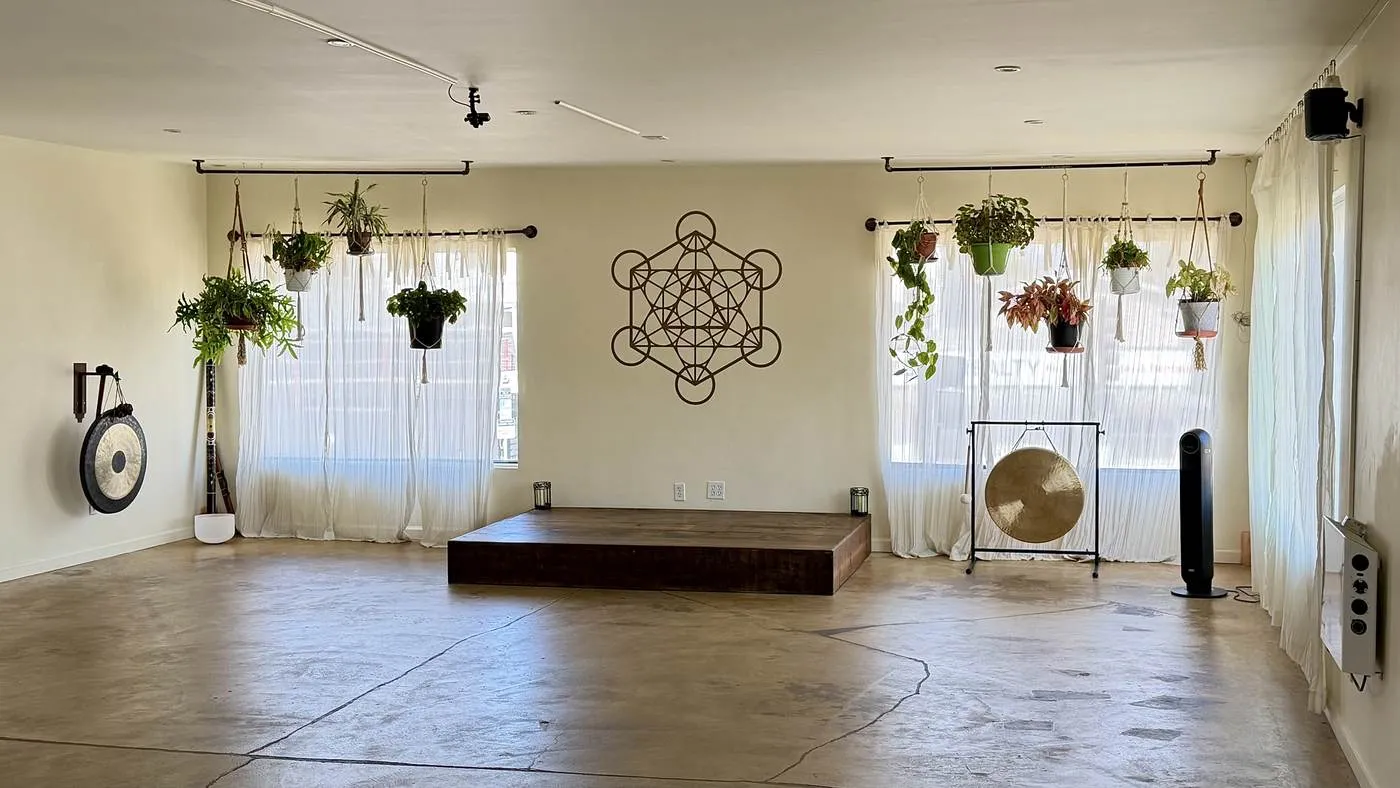
An eclectic, light-filled studio known for candlelit yin, soundbaths and a magical community feel.
Sweat Yoga West Hollywood
The WeHo outpost of Sweat Yoga, with self-paced heated flows and a popular yin soundbath class.
Frequently asked questions
How long does it take to get more flexible with yoga?
Most people notice small changes within a few weeks of practicing two or three times a week, with larger gains over a few months. Connective tissue changes slowly, so consistency matters far more than how hard any single session feels.
Is hot yoga better for flexibility?
Warmth makes muscles more pliable, so a heated room can help you ease into poses more comfortably. It can also mask your real limit, so move with the same care you would in an unheated class and don't chase depth just because the heat lets you.
Does yin yoga really improve mobility?
Yes. Yin's long, passive holds target the deeper connective tissue around the joints, which responds well to gentle, sustained load. It's slow and quiet rather than athletic, but it's one of the most effective styles for long-term range of motion.
Is it bad to feel pain when stretching?
A mild, breathable stretch sensation is fine. Sharp, pinching, or pain that makes you hold your breath is a signal to back off. Forcing past that point tends to cause the body to tighten protectively, which sets your progress back rather than forward.