Guide
Yoga for Strength: How the Practice Builds Real, Functional Power
Yoga doesn't look like strength training, but holding your own bodyweight with control is exactly that. Here's how yoga builds real, functional strength — and how to pair it with the rest of your training.

If you picture strength training as barbells and grunting, yoga can seem like the opposite — quiet, slow, all stretching and breath. But spend two minutes holding a low plank, or balancing on one leg while you lower into a lunge, and you’ll feel the truth: holding your own bodyweight with control is strength work, plain and simple. You just don’t have to load a bar to do it.
This guide is the honest version. No claims that yoga replaces everything else, no pretending a flow is a powerlifting session. Just a clear look at how yoga builds real, functional strength — and how to fit it alongside the rest of what you do.
How yoga builds strength
Strength is, at its core, your muscles’ ability to produce and control force. You don’t need external weight to train that — your own body is plenty. A pushup is your bodyweight; so is a squat, a plank, and nearly every standing yoga pose where you’re holding yourself in a shape against gravity.
What makes yoga effective is that it rarely lets you rush. In a lot of training, you move quickly and let momentum help. Yoga slows everything down, which means your muscles have to stay engaged the whole time rather than swinging through the hard part. That sustained, controlled effort is exactly what builds strength — especially in the smaller stabilizing muscles around your core, hips, and shoulders that bigger, faster movements tend to skip right over.
Functional strength, not just gym numbers
The strength yoga builds is the kind you actually use: holding a steady position, controlling your body through space, staying balanced and stable when life asks you to. That’s why so many athletes and lifters fold yoga into their week. It shores up the control and stability that heavy, repetitive training can leave underdeveloped — and a more stable body is a more resilient one.
Holds, control, and time under tension
If there’s one phrase that explains yoga’s strength benefit, it’s time under tension. The longer a muscle has to stay engaged, the harder it works — and yoga is full of holds.
The holds
Think of poses like plank, chair, warrior, and the many one-legged balances. None of them are flashy, but try holding any of them honestly for thirty to sixty seconds and your muscles will be talking to you. That burn isn’t a sign you’re doing it wrong; it’s the work. Long holds ask your muscles to keep firing without the relief of movement, which is one of the most direct ways to build endurance strength.
Slow transitions
The other half is control. Lowering slowly from plank to the floor, floating up out of a lunge, easing into and out of a balance — these slow transitions are secretly some of the hardest, most strengthening parts of a class. Moving slowly removes momentum and forces your muscles to do all the work. If you’ve ever wondered why a “gentle-looking” flow left you sore the next day, this is why.
A simple cue: whenever a teacher offers the option to move slower or hold longer, that’s the strength-building option. Take it when you want the work.
The strength-focused styles
Not every class is built for strength, and that’s fine — but if building power is your goal, two styles stand out.
Power yoga
Power yoga is the athletic, strength-leaning end of vinyasa. Classes keep you flowing through demanding holds and transitions with real intensity, so you build heat, endurance, and strength all at once. It’s the closest a flowing practice gets to a workout, and LA has strong options for it — you can find a sweaty, capable room and just go. Expect to leave a power class genuinely worked.
Sculpt
Sculpt takes a yoga sequence and adds resistance — usually light hand weights, sometimes bands — turning the flow into something much closer to a strength session. The added load means your muscles meet more resistance on every rep, and the yoga structure keeps you moving with control rather than swinging the weights around. It’s a popular middle ground for people who want strength gains without leaving the studio for a gym.
Both styles are easy to find around the city. You can browse what’s near you by neighborhood and pick a room that fits your schedule, since the class you’ll actually keep showing up to is the one close to home.
Pairing yoga with other training
Here’s the honest part: yoga is excellent, but it isn’t magic, and it isn’t a substitute for everything.
If your goal is maximum size or raw, heavy power, yoga won’t replace resistance training — bodyweight has an upper limit, and at some point you need external load to keep adding strength. What yoga does beautifully is complement that training. It builds the stabilizers, the control, and the mobility that heavy lifting often neglects, which means fewer nagging weak links and better movement under load.
A few ways people combine them well:
- Lifters use yoga for mobility and joint control, so they move better and recover between heavy sessions.
- Runners and cyclists use it to strengthen the core and hips and to open up tissue that gets tight from repetitive motion.
- Yoga-first people add a little resistance training when they want strength gains that bodyweight alone has stopped delivering.
The point isn’t yoga versus the gym. It’s that they cover each other’s blind spots — strength training builds raw force, yoga builds the control and stability that makes that force usable and safe.
Building a strength practice
You don’t need a complicated program. You need a repeatable one.
- Favor strength-leaning classes. If strength is the goal, lean toward power and sculpt rather than gentle or restorative formats — though a recovery day still has its place.
- Take the longer holds. When a teacher offers more time or a deeper option, that’s your strength work. Stay one breath longer than feels comfortable.
- Move slowly on purpose. Control the lowering and the transitions. Slow is where the strength is hiding.
- Be consistent, not heroic. Two or three focused sessions a week builds more usable strength than one brutal class that leaves you too sore to come back.
- Pair it intentionally. If you also lift or run, let yoga handle the stability and control, and let the rest of your training handle raw load.
Strength built this way tends to stick around, because it’s strength you can actually use — holding a steady plank, carrying groceries up the stairs, staying balanced when the ground shifts. Show up regularly, take the harder option when you want it, and let the quiet work add up. You’ll be stronger than you look, in exactly the ways that matter.
Studios to explore
Hot 8 Yoga Santa Monica
A polished hot-yoga studio with a deep class menu spanning yin, power, sculpt and barre fusion.
 Hot yoga
 Veda Yoga
A welcoming two-room studio with infrared heat, sculpt classes and immersion/teacher-training programs.
CorePower Yoga Downtown LA
A central branch of the national chain with reliably heated classes and easy drop-in scheduling.
shefayoga Venice
A beautiful Main Street studio with dharma-rich flows, sculpt, breathwork and reiki offerings.
Sweat Yoga Santa Monica
Candlelit, no-mirror hot yoga in downtown Santa Monica with a loyal, packed-room following.
 Sculpt
 CorePower Yoga Beverly Grove
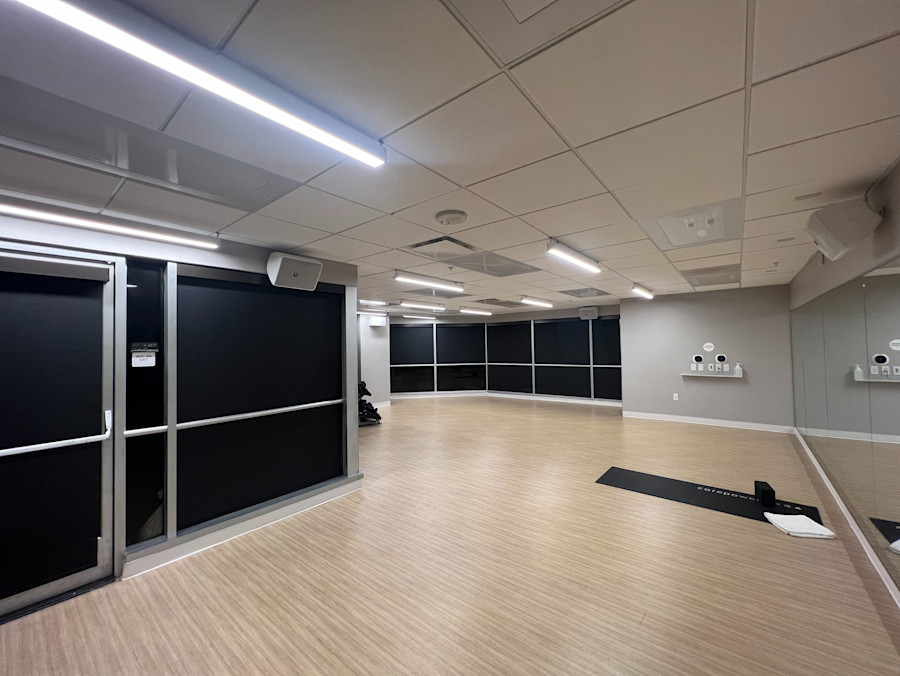
The Wilshire Boulevard room, on the lower level of an office tower near Fairfax. Heated power classes and weighted sculpt on the chain's usual daily schedule, in a large, plain, well-lit room.
Frequently asked questions
Can yoga actually build muscle?
Yes, within limits. Holding your bodyweight in poses like plank, chair, and the many one-legged balances creates real, sustained tension that strengthens muscle — especially the stabilizing muscles around your core, hips, and shoulders. It won't build size the way heavy lifting does, but it builds genuine, usable strength and control.
Is yoga enough on its own, or do I still need to lift?
It depends on your goal. For everyday strength, stability, and injury resilience, a consistent yoga practice goes a long way. If you're chasing maximum size or raw power, yoga works best alongside resistance training rather than instead of it. Many people pair the two and find each makes the other better.
Which styles of yoga are best for strength?
Power yoga and sculpt are the most strength-focused. Power yoga keeps you flowing through demanding holds, while sculpt adds light weights and resistance to the sequence. Both turn a yoga class into a real strength session, and LA has plenty of studios offering each.
Will yoga make me bulky or less mobile?
No. Yoga builds lean, functional strength while keeping (and often improving) your range of motion. Because it trains strength and flexibility together, it tends to leave you mobile and balanced rather than tight — which is exactly why a lot of athletes use it as a complement to heavier training.