Guide
Yoga Nidra: Deep Rest
Yoga nidra is yoga you do lying down, with your eyes closed, going nowhere. Here's what it is, what a session feels like, and who it tends to suit.

Most yoga asks something of you — to move, to balance, to hold a shape a little longer than feels comfortable. Yoga nidra asks the opposite. You lie down, you get warm, you close your eyes, and for the next half hour the only instruction is to listen and let go. No poses. No effort. Nowhere to be.
If that sounds almost too easy, here’s the catch: doing nothing well is harder than it looks, and it turns out to be one of the most restorative things you can give a tired nervous system. This is the friendly version — what yoga nidra is, what a session actually feels like, and whether it’s for you.
What yoga nidra actually is
The name translates loosely as “yogic sleep,” which is close but a little misleading. You’re not asleep. You’re resting in the state right on the edge of sleep — relaxed, heavy, drifting — while staying just aware enough to follow a teacher’s voice. Think of that hazy minute before you nod off at night, except held gently open for twenty or thirty minutes instead of slipping past in seconds.
It’s a guided practice. You don’t have to figure anything out or quiet your own mind by force. The teacher does the steering — talking you through a slow tour of the body, a few rounds of breath, and some simple prompts to notice sensation or imagery. Your only job is to lie there and let the words carry you.
How it’s different from meditation
People often lump yoga nidra in with seated meditation, and they’re cousins, but the experience is distinct. Seated meditation usually means sitting upright and working — gently, but actively — to anchor a wandering mind. Yoga nidra is done lying flat, fully supported, with someone else holding the thread for you. For anyone who finds sitting still genuinely uncomfortable, or whose mind races the moment it’s left alone, having a voice to follow makes all the difference.
A practice of structured rest
What gives yoga nidra its shape is a loose sequence the teacher moves through: settling in, scanning attention slowly across the body part by part, following the natural rhythm of the breath, and resting in stillness. You’re not trying to achieve any of it. The structure is just a banister — something to keep a hand on while you let the rest of you go slack.
What to expect in a session
You’ll set up the way you would for the final rest at the end of any yoga class, but more so. Lying on your back, maybe a bolster under your knees, a blanket over you, an eye pillow if the studio offers one. Comfort is the whole point — if you need to shift or prop something, you shift. A session runs anywhere from twenty minutes to about forty-five.
Once you’re settled, the teacher begins to talk, and you simply follow along. They might walk your attention through the body (“notice your right hand, your right wrist, your right elbow…”), guide a few slow breaths, or offer a calm image to rest your mind on. There’s nothing to repeat back, nothing to get right. If your attention drifts off entirely, the voice is still there when you come back.
A few things first-timers are often surprised by:
- You might fall asleep — and that’s allowed. The aim is the threshold between waking and sleeping, so dozing off isn’t failing. You’ll surface again.
- You’ll get cold. As the body relaxes, its temperature drops. This is why every yoga nidra teacher tells you to grab a blanket and socks.
- Time gets strange. Thirty minutes can feel like five, or like an hour. That loosening of your usual sense of time is a sign the practice is working.
- There’s no posture to learn. You will not be asked to do anything with your body except let it be heavy.
When it ends, the teacher brings you back slowly — small movements, a few deeper breaths, easing you upright. Most people sit up feeling like they’ve surfaced from a long nap in a fraction of the clock time.
Who it suits
The short answer: almost everyone, and a few people especially.
Yoga nidra is a natural fit if your mind tends to run hot — if you lie down at night and your to-do list switches on, or if “just relax” has never once worked as advice. Being guided takes the pressure off having to calm yourself.
It’s also one of the kindest entry points into yoga for anyone who can’t or doesn’t want to do a physical class. Because you stay lying down the whole time, it sidesteps the usual barriers — no flexibility, no strength, no balance, no shapes to copy from the person on the next mat. If a standard class feels out of reach, this is a real way in.
And it’s a gentle on-ramp to meditation for people who’ve tried sitting and bounced off it. The lying-down posture and the steady voice make stillness far more reachable than a silent cushion does.
A simple note on rest: yoga nidra is a practice for settling and unwinding, not a treatment for a medical condition. If you’re managing something specific, treat it as the calming, restful practice it is — and loop in your own healthcare provider for anything health-related. Approached that way, it’s a low-stakes, high-comfort thing to try.
Finding a restful class in LA
Here’s the quirk: in Los Angeles, you won’t always see “yoga nidra” on the schedule by name. It lives inside other restful formats more often than it stands alone — folded into a restorative class, tucked at the end of a yin session, or paired with a sound bath, where the long tones of bowls and gongs do much the same work of carrying you into deep rest.
So the move is to browse for the restful end of the spectrum and read the class descriptions. Studios like Boheme Yoga in Downtown LA lean restorative; Santa Monica Yoga, Yoga Nest Venice, and One Life Yoga in Pasadena run sound baths and candlelit, deeply quiet classes; and Kundalini Silverlake and Open Venice weave guided meditation into their offerings. Any of these is a sound place to look for the lying-down, voice-led, deep-rest experience.
The easiest way to find your version of it is to start from the practice itself. Browse the directory by style — restorative, sound bath, and meditation are the threads to pull — or look up a neighborhood to see what restful classes are a short drive from home. Many studios offer a discounted intro week, which is a low-pressure way to try a session and see how deep “doing nothing” can actually go.
Come warm, come tired, and let someone else hold the thread. The rest takes care of itself.
Studios to explore
Boheme Yoga
A tidy DTLA studio with hot classes, live-music sessions and restorative practice in the Historic Core.
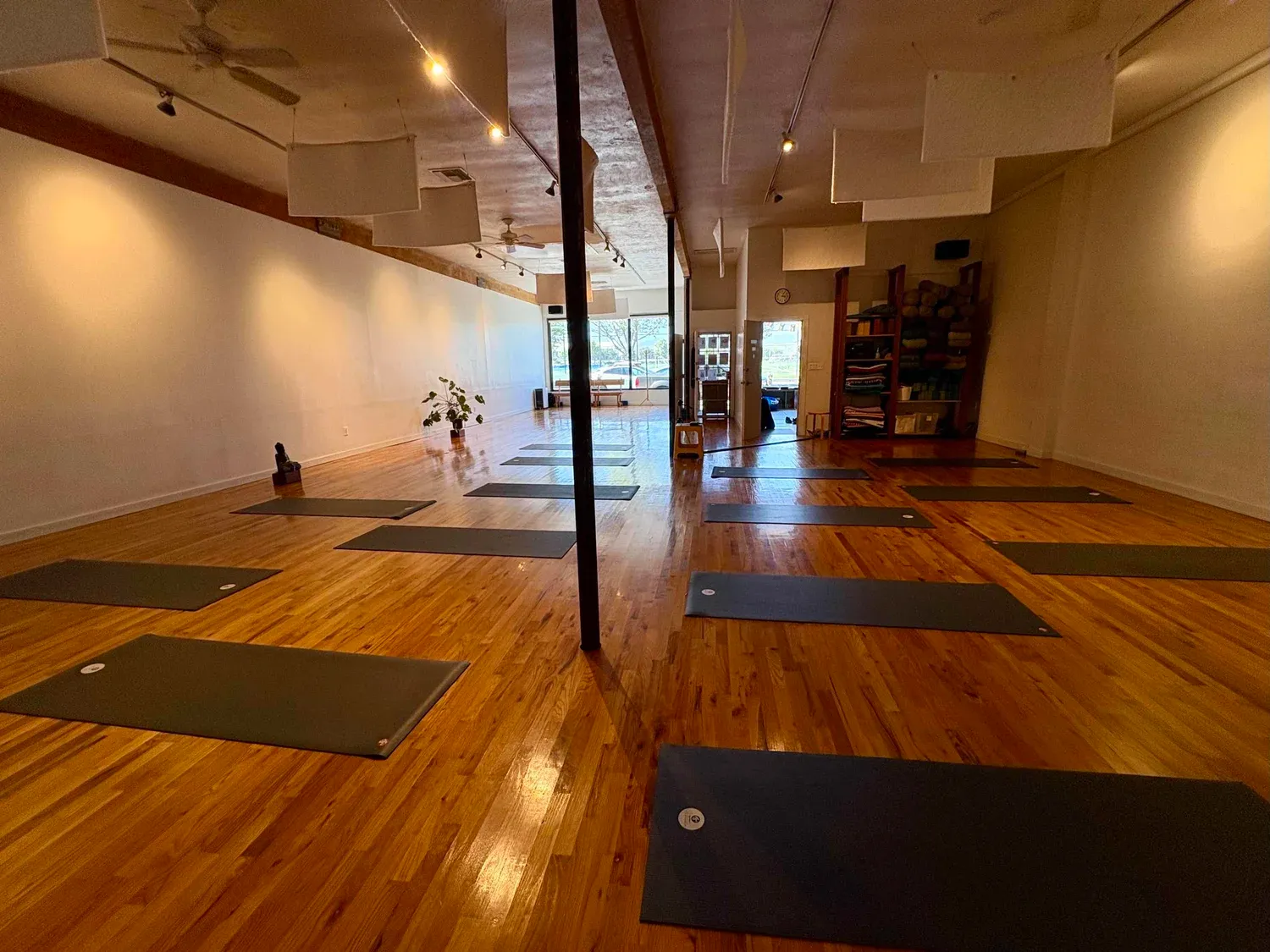 All levels
 Santa Monica Yoga
A long-running, down-to-earth studio with a strong community and evening candlelight and soundbath events.
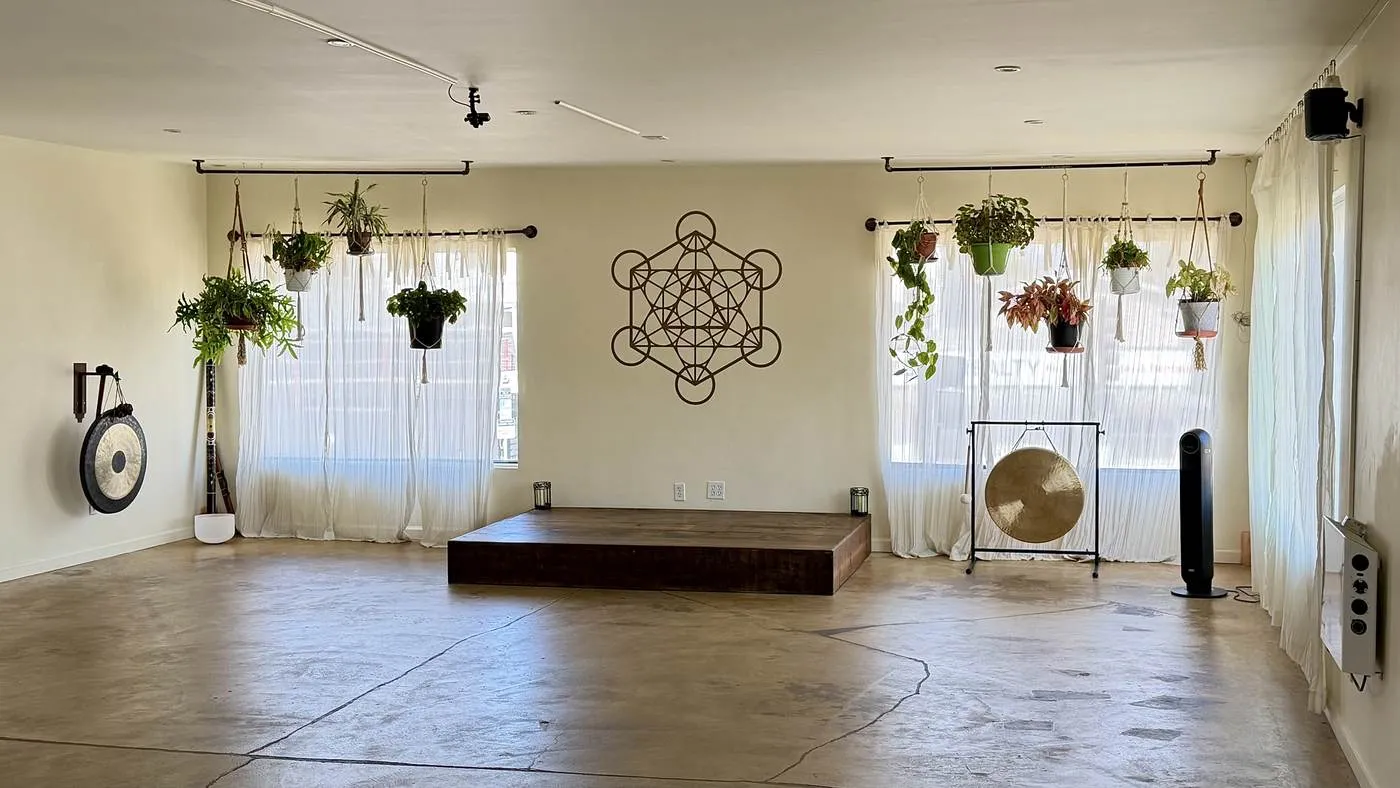 Sound bath
 Yoga Nest Venice
An eclectic, light-filled studio known for candlelit yin, soundbaths and a magical community feel.
One Life Yoga
A calm, intentional studio with a variety of classes, sound baths and an on-site sauna.
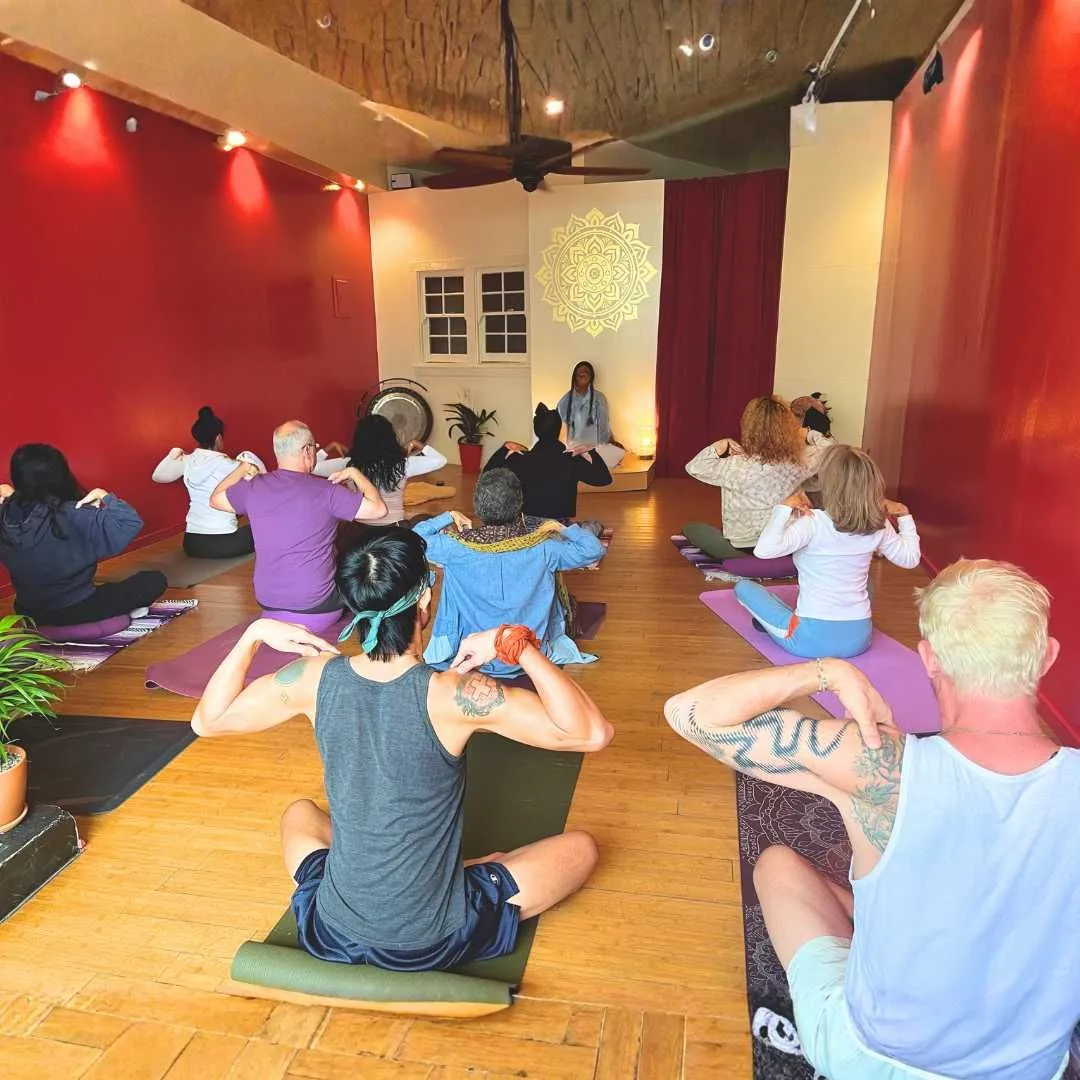 Kundalini
 Kundalini Silverlake
An intimate, affordable studio specializing in Kundalini practice, breathwork and chanting.
Open Venice
The in-person home of the Open app, blending movement, breathwork and meditation with a great sound system.
Frequently asked questions
Is yoga nidra the same as sleep?
Not quite. It's a relaxed state on the edge of sleep where you stay just aware enough to follow the teacher's voice. Many people do drift off, and that's completely fine.
Do I need any experience or flexibility?
None at all. You spend the whole session lying down, so there are no poses to learn and nothing to stretch into. It's one of the most accessible practices in yoga.
How long is a yoga nidra session?
Usually 20 to 45 minutes. Some studios offer it as a short add-on after a gentle class; others run a full standalone session, sometimes paired with a sound bath.
What should I bring or wear?
Comfortable, warm clothes and anything that helps you settle — a blanket, an eye pillow, socks. Your body temperature drops as you relax, so layers help.