Guide
Home Yoga Props: Block, Strap, Blanket, Cushion and Eye Pillow
At home there is no wall of props to borrow from. Most of the kit is already in your house, and the rule for buying the rest is the same one the studio taught you.
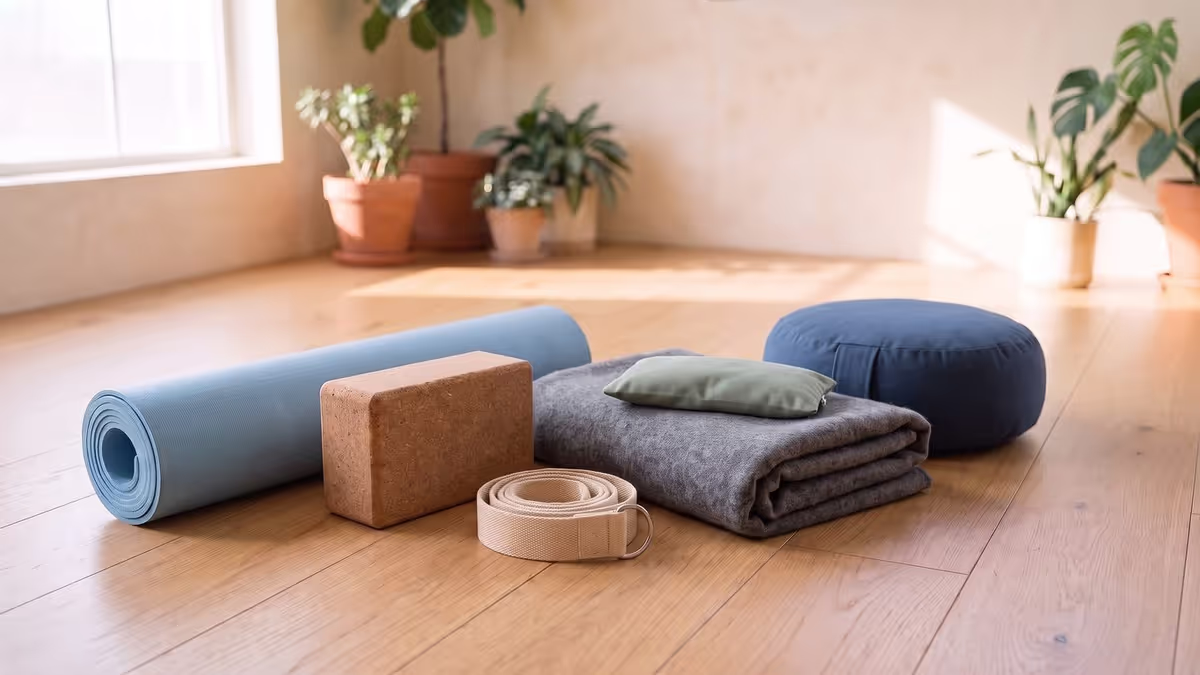
Our equipment checklist gives beginners one piece of advice above the rest: borrow the props at the studio first. Every studio keeps a wall of blocks, straps and blankets, and using theirs is how you find out which ones you actually need.
That advice still holds. This page is for the part of your practice that does not happen at a studio: the living-room floor, a morning stretch before work, a meditation before bed. There is no prop wall at home, so the question changes from “which do I borrow” to “which do I improvise, and when is improvising no longer good enough”.
The short answer is that most of the kit is already in your house.
The five props, and what stands in for each
| Prop | At home, try | Buy one when |
|---|---|---|
| Block | Firm hardback books, tied together | The books keep sliding |
| Strap | A belt or bathrobe tie | You want a loop that holds its size |
| Blanket | A firm folded blanket or bath towel | Yours fold too thin for a firm seat |
| Meditation cushion | A folded blanket or sofa cushion | You sit daily and the stand-in sags |
| Eye pillow | A folded cloth or scarf | You want a little weight and lavender |
If you also practise at a studio, use theirs and watch which one you reach for. That is the prop to buy for home, and usually only that one.
Block
A block raises the floor to your hand. In a forward fold you cannot reach the ground from, the block meets you halfway, and seated, it lifts your hips. Studios keep a stack of them by the wall for exactly that.
The stand-in: two or three firm hardback books, tied or taped so they move as one. It works, and it is the weakest substitute on this list. Books slide on a mat, the stack is rarely the height you want, and a loose cover shifts under your hand.
That is why the block is often the first prop worth buying. Manduka’s Cork Yoga Block measures 4 x 6 x 9 inches and weighs 2.2 pounds. Manduka’s case for it is the weight: it says the block stays where you put it, and that the cork surface is textured for grip. Its edges are rounded.
Care is simple. Manduka says to wipe it with a damp cloth and mild soap, use a 50/50 water and vinegar mix for a deeper clean, let it dry fully, and never submerge it, because cork can swell.
Strap
A strap extends your reach: a loop around a foot you cannot hold, or a length of webbing between your hands behind your back. Like the block, it is an accessibility tool, and using one is not a sign of doing it wrong.
The stand-in: a belt, a bathrobe tie or a long scarf. Our checklist already recommends a bathrobe tie or a belt at home, and for most people it is enough for a long time.
A real strap earns its place when you want a loop that holds a fixed size, so you can set it once and rest a limb in it. Manduka’s Align strap does that with a zinc alloy buckle. Manduka says the design is modelled on BKS Iyengar’s, which is fitting: props are the defining feature of Iyengar classes. It is unbleached cotton webbing 1.75 inches wide, sold in 6, 8 and 10 foot lengths, and Manduka says to hand wash it and hang it to dry.
Blanket
The blanket is the prop that does the most different jobs: folded under your hips for a seated pose, under a knee in a lunge, rolled behind your back, or spread over you in savasana. In restorative and yin practice you spend long minutes supported by one.
The stand-in: almost any firm blanket you own, or a thick bath towel. This is the prop you are least likely to need to buy, because most homes have one that folds into a firm, flat seat.
The case for a dedicated one is density. A soft throw squashes flat under your weight; Manduka describes its blanket’s weave as dense and stretch-resistant, built to hold its shape through repeated use. The Recycled Wool Blanket is 82 by 60 inches and 3.5 pounds, made in India from 75% recycled wool and 25% recycled synthetic fibres. Manduka recommends dry cleaning, and allows a cold hand wash or delicate cycle with line drying and no tumble dryer. That care label is the main thing to weigh against the towel you already own.
Meditation cushion
A meditation cushion raises your hips above your knees when you sit on the floor. If you sit for a few minutes at the end of practice, you do not need one. If you sit every day, it is the prop you will notice most.
The stand-in: sit on the edge of a firmly folded blanket, or on a sturdy sofa cushion, or simply on a chair. Our meditation guide for beginners says a chair is fine, and that what matters is consistency, not the right cushion.
Manduka’s Equa Meditation Cushion is round, listed at 19 by 7 inches, and weighs 4.89 pounds. Its trick is that it has two sides: one filled with organic buckwheat hulls, which Manduka describes as the firmer side, and one with a softer recycled cotton and polyester fill, so you turn it over to choose. It is made in Poland. The microfibre cover goes in the machine on cold and hangs to dry, with no fabric softener; the inner cushion is spot clean only.
At nearly five pounds it is the heaviest prop here, and the one that most clearly stays at home.
Eye pillow
An eye pillow is a small, weighted bag that lies over your eyes in savasana. It keeps the light off and gives your face something to rest under. Of the five props it is the most optional.
The stand-in: a soft cloth or a scarf, folded and laid across your eyes. It does the light part completely.
What a folded cloth does not do is weigh anything or smell of anything. Manduka’s Eye Pillow is 4.7 by 9.4 inches and 0.6 pounds, filled with European flaxseed and French lavender inside an organic cotton cover. That lavender is worth knowing about before you buy: if you prefer no scent, the cloth is the better choice. The cover comes off and goes in the machine cold; the inner pillow is not washable, and Manduka says not to heat or microwave it.
If you end your practice with a long rest, or practise yoga nidra lying down, this is the prop that suits it.
The order to buy them in
There is no correct kit, and our checklist’s last word applies here too: add a single prop only when you reach for it and wish it were yours.
If you want a rule of thumb for a home practice, it runs from the worst stand-in to the best:
- Block. Books are a poor imitation, so this is often first.
- Strap. A belt does well for a long time, then a buckle starts to matter.
- Meditation cushion. Only if you sit daily.
- Eye pillow. Only if you want the weight or the scent.
- Blanket. Often not at all, because you already own one.
All five sit on our gear page with the rest of the Manduka range we link to. If you have not chosen a mat yet, that comes first, and our Manduka mat comparison and mat buying guide cover it.
What we can tell you, and what we cannot
We have not practised with these props. Nobody here owns them, and we are not going to write a hands-on verdict we have not earned.
The sizes, weights, materials and care instructions above come from Manduka’s own product pages, read in October 2026, and anything about how a prop behaves is Manduka’s description rather than ours. The household substitutes and the buying order are our suggestions.
The one thing we would say with confidence: at home, as at the studio, start with what is already there. If you have a studio you visit, the studio directory lists LA rooms by neighbourhood, and borrowing their props for a few weeks is the cheapest way to learn which one belongs in your living room.
Studios to explore
 Featured Meditation
Open Venice
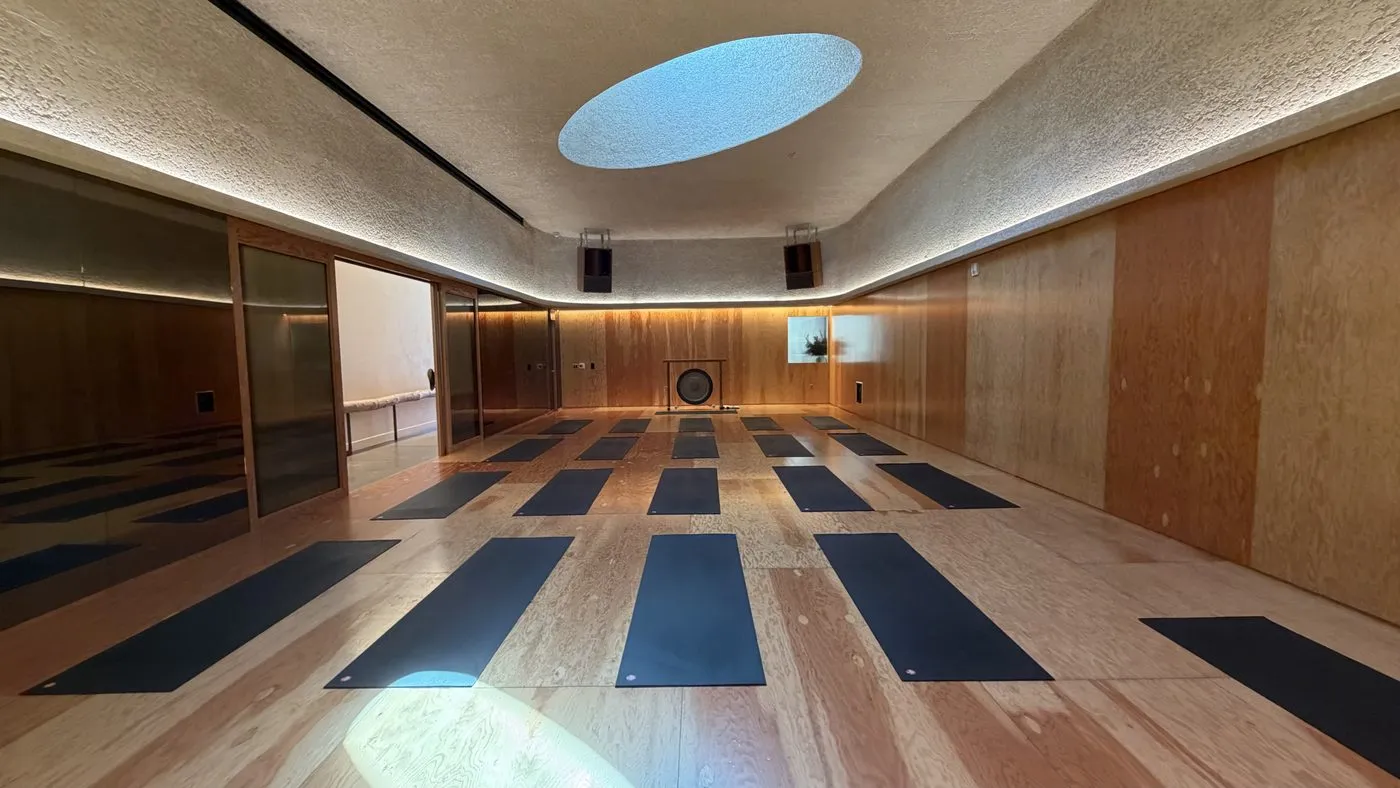
Open Venice is the physical studio of Open, a meditation and breathwork app that brings mindfulness and wellness into everyday life. The studio offers a curated mix of movement and relaxation classes, including Flow, Align, Tone, Power Tone, Breath + Sound and Restore, with sessions throughout the day. Guests can also book 30-minute Hot + Cold sauna sessions. Mats, sweat towels and eye masks are provided, creating a welcoming space to move, recharge and unwind.
 Hot yoga
Veda Yoga Culver City
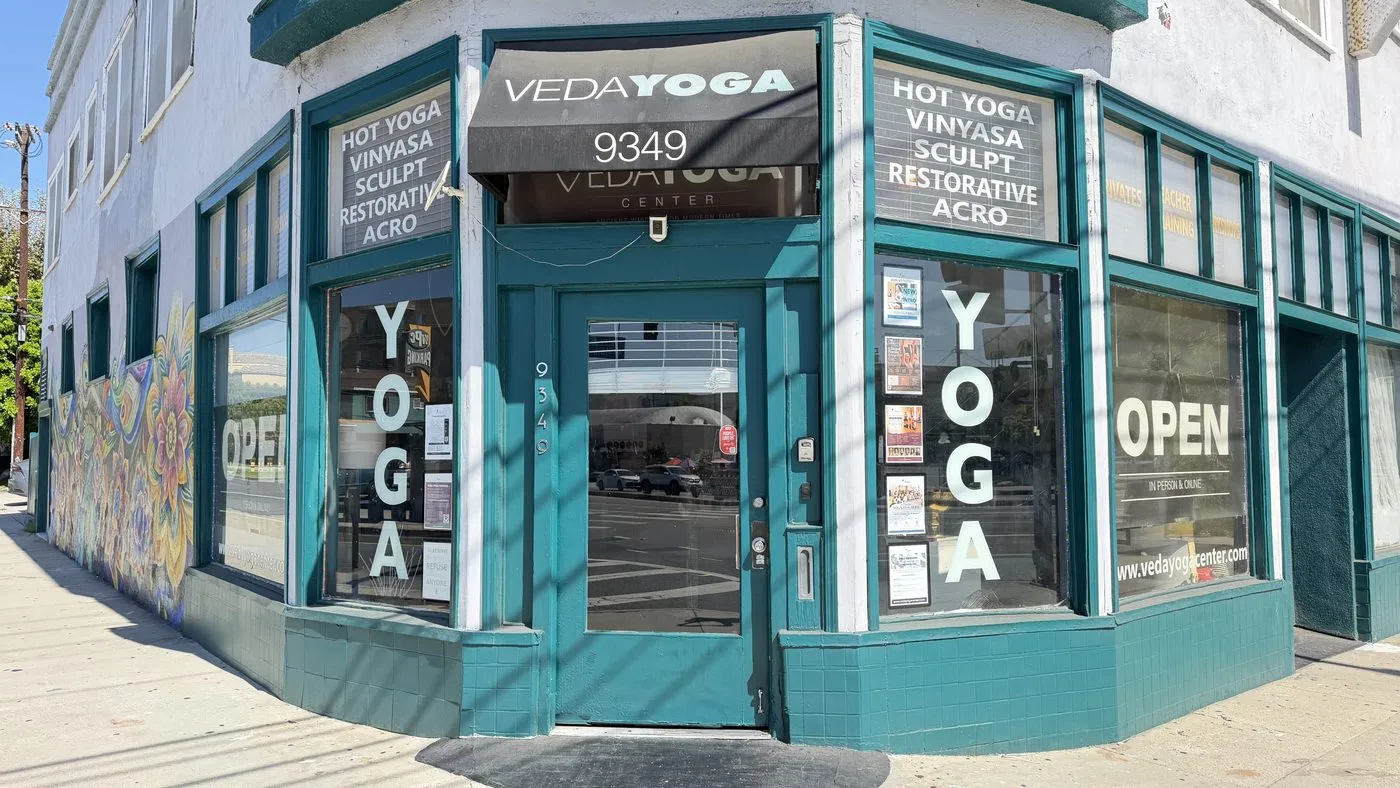
A welcoming two-room studio with infrared heat, sculpt classes and immersion/teacher-training programs. Its own site and booking system call it Veda Yoga Venice, since it is on Venice Boulevard, but it is in Culver City; the second Veda room is on La Cienega.
 Sound bath
Yoga Nest Venice
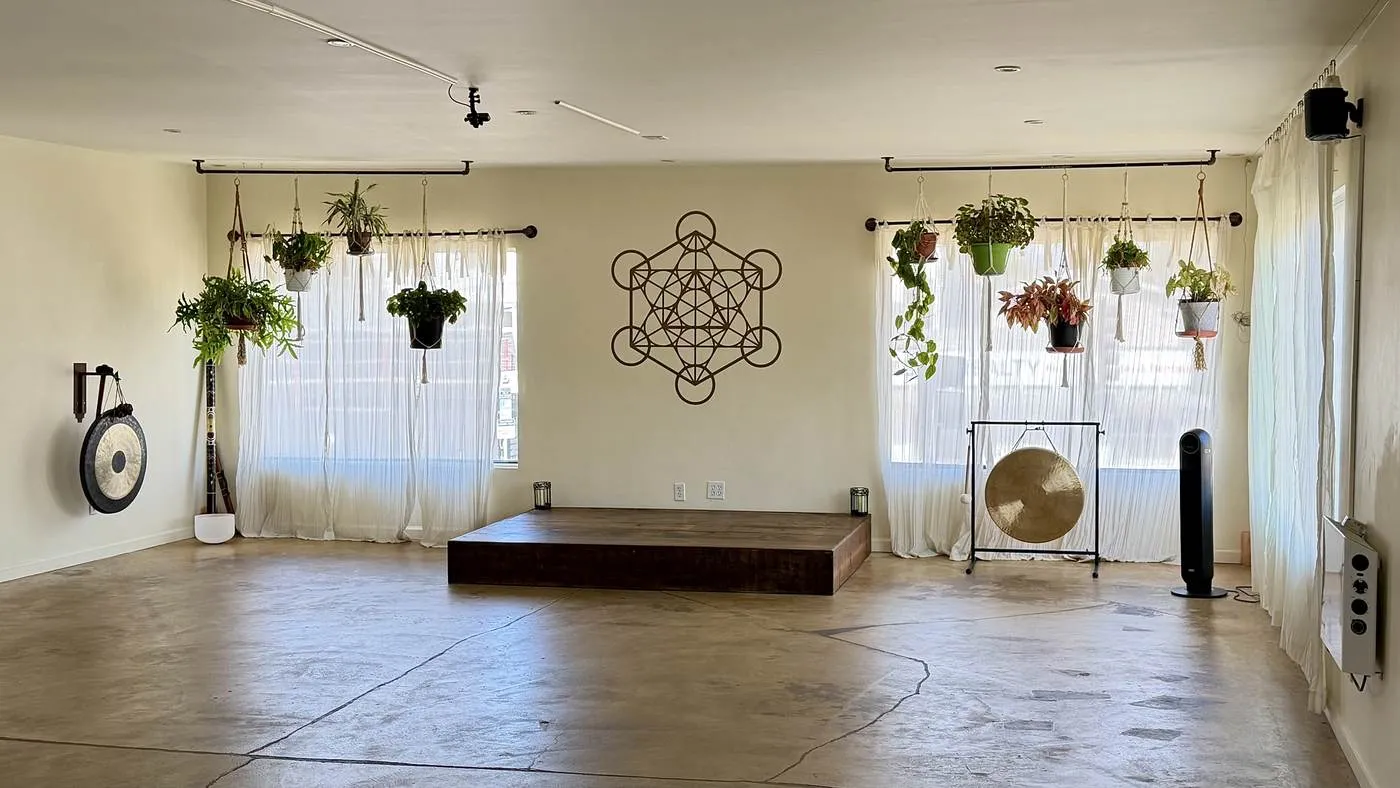
An eclectic, light-filled studio known for candlelit yin, soundbaths and a magical community feel.
 Sculpt
shefayoga Venice
A beautiful Main Street studio with dharma-rich flows, sculpt, breathwork and reiki offerings.
Boheme Yoga
A tidy DTLA studio with hot classes, live-music sessions and restorative practice in the Historic Core.
 Pilates
3 Wellness Home
A women-only wellness studio on Central Avenue running small-group classes (reformer Pilates, stretching and yoga), alongside EMS body-sculpt treatments and one-to-one sessions. The sculpt and Pilates side is clearly the draw; yoga is one item on a broader menu. The studio does not publish its street number on its own site, so the suite here comes from its booking listing.
Frequently asked questions
What yoga props do I need at home?
None, strictly. A mat and some clear floor are enough. The five props people add are a block, a strap, a blanket, a meditation cushion and an eye pillow, and each one has a household stand-in. Buy a prop when you notice you keep improvising it.
What can I use instead of a yoga block?
A stack of firm hardback books, taped or tied together so they do not slide apart, works for a hand on the floor in a fold or a seat under the hips. It is the weakest of the household stand-ins, because books shift and are rarely the right height, so the block is often the first prop worth buying.
What can I use instead of a yoga strap?
A belt, a bathrobe tie or a long scarf. Our equipment checklist says the same. A strap's advantage is a buckle that holds a loop at a set size and webbing long enough to use with room to spare.
Do I need a meditation cushion to meditate?
No. You can sit on the edge of a firm folded blanket or a sturdy sofa cushion, or on a chair. A dedicated cushion is worth it if you sit every day and the improvised version keeps collapsing under you.
How big is the Manduka cork block?
Manduka lists it at 4 x 6 x 9 inches (10 x 15 x 23 cm) and 2.2 pounds (1 kg), with rounded edges. The weight is the point: Manduka says it keeps the block from shifting.
Can I wash a yoga eye pillow?
Manduka's eye pillow has a removable cover that goes in the machine on a cold, gentle cycle and dries flat. The inner pillow, filled with flaxseed and lavender, is not washable, and Manduka says not to heat or microwave it.