Guide
All in Motion Yoga Mats: One Name, Five Different Mats
All in Motion is not a mat, it is a shelf. Five materials sit under one brand name and they behave five different ways, so the name on the label predicts nothing.
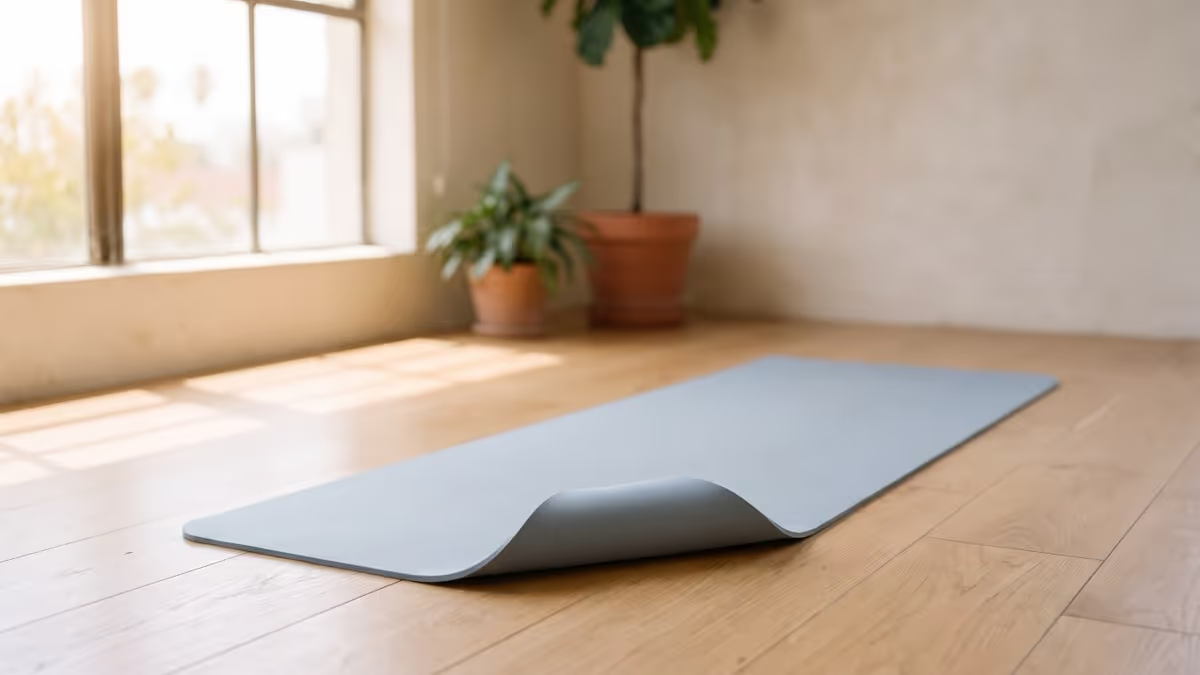
The most useful thing to know about the All in Motion yoga mat is that there is no such thing.
All in Motion is Target’s house athletic brand, and under that one name Target sells mats in PVC, TPE, natural rubber, natural rubber with a polyurethane top, and NBR foam, in thicknesses from 3mm to 15mm. Those materials do not behave alike. Two of them are not really built for the same activity.
So a search for “all in motion yoga mat” returns a shelf, not a product, and the brand name on the label predicts almost nothing about what you will get.
What is actually on the shelf
The materials Target lists under the name, and what each one means in practice:
| Listed as | Thickness | Grip when you sweat | Really for |
|---|---|---|---|
| PVC | 3mm, 5mm | falls (closed-cell) | durable all-rounder, dry practice |
| TPE | 5mm | falls (closed-cell) | light, softer, less durable |
| Natural rubber | 5mm | material alone does not say | dry practice, probably |
| Rubber + polyurethane | 5mm | rises (open-cell) | sweat, hot, vigorous |
| NBR foam | 15mm | falls (closed-cell) | floor work, knees, not standing |
The mat buying guide explains why that third column is the one that decides things: closed-cell surfaces shed moisture and lose grip as you sweat, open-cell surfaces take a little in and gain it.
One honest gap in that table. Natural rubber on its own does not tell you which side of the line a mat sits on. Jade’s Harmony is open-cell rubber and Manduka’s eKO is closed-cell rubber, and they behave in opposite directions. Our Jade Harmony page covers that trap. If a Target listing says only “natural rubber”, you cannot tell, and it is reasonable to assume the more common closed-cell build.
Low tack and high tack: use this
Target publishes a grip rating on the listing, as low tack grip or high tack grip, and that is genuinely more than most brands tell you.
Tack is stickiness underfoot. It is not the same question as the wet-grip one above, and both matter:
- High tack actively resists your hand or foot sliding. This is what you want in any vigorous practice, and what stops your hands creeping forward in downward dog.
- Low tack is smoother. Perfectly fine for gentle floor work, stretching and restorative practice. A nuisance in a flowing class.
Two of the printed PVC mats are listed low tack; a solid PVC one is listed high tack. If two mats look identical apart from the pattern, that line is the reason to pick one over the other.
The rubber-polyurethane one is the interesting item
Buried in the range is a natural rubber mat with a polyurethane top layer, listed high tack.
That is the same construction as the lululemon Reversible and Manduka’s GRP: an open-cell polyurethane surface bonded to a rubber base, which is the build that grips harder as you sweat. At a house-brand price, that is the most interesting thing on this shelf by a distance.
We have not handled it, so we are not going to tell you it is as good. What we can tell you is what to check, and it is the same list our lululemon page gives for any cheaper version of that construction:
- Is the top layer actually polyurethane, or a printed coating over foam?
- Is the base actually rubber? PU over foam gives you the grip without the density, and it will feel unstable.
- How well is the top layer bonded? This is where inexpensive versions fail. A thin or poorly bonded PU layer peels at the edges, and once it starts there is no repair.
If it gets all three right, it is doing the same physics as a mat costing several times more. If it gets the third wrong, you will know within a year.
The one on the shelf, as listed
Target lists exactly one mat in this build, and these are its published figures, read off the listing on 12 September 2026:
| Yoga Mat Rubber (5mm), All in Motion | |
|---|---|
| Price | $35.00 |
| Material | Polyurethane, Rubber |
| Grip | High tack |
| Dimensions | 68 × 26 in (5 mm thick) |
| Listed for | Yoga, hot yoga, aerobics |
| Colours | Cream, Gray, Green |
| Guest rating | 4.0 / 5 from 31 ratings |
| Returns | One year with a receipt, as a Target Owned Brand |
Read the length twice. 68 inches is three inches shorter than the 71-inch standard that the Manduka PRO and the lululemon Align both use, and shorter than almost everything else on the market. At 5 foot 6 you will not notice. Much past 5 foot 9 and savasana puts your heels on the floor, which is exactly the thing a mat is for. This is the single most likely reason to send it back, and it is the one spec the marketing copy does not lead with.
Everything else reads the way you would want: the material line says polyurethane and rubber rather than foam, and Target states high tack outright. That is the first two of our three checks answered on the listing itself. The third (how well the top layer is bonded), cannot be answered from a product page by anyone, including us, and it is the one that decides whether this is a bargain or a year.
The listing is on Target. We earn nothing from that link.
The 15mm is a floor mat
Target’s 15mm option is NBR foam and Target files it as a fitness mat, which is the honest description.
At 15mm you are standing on three times a normal yoga mat. It is genuinely excellent under knees, hips and elbows, and it makes single-leg balances harder in a way that has nothing to do with your balance improving. Our page on the Retrospec Solana covers this trade in detail, because that mat is the same material at a similar thickness and the same misunderstanding follows it around.
Buy it for the floor. Do not buy it as your only mat.
Which one to buy
- First mat, general practice, want it to last. The 5mm PVC, high tack.
- You sweat, or you practise hot. The rubber-polyurethane one, with the three checks above.
- You want light and cheap and you know it is a starter. The 5mm TPE.
- Your knees are the problem. The 15mm, as a floor mat alongside something thinner.
- You want a thinner mat for travel. The 3mm PVC, understanding you will feel the floor.
What a house-brand mat is, and is not
Worth saying plainly, because people are oddly apologetic about buying one.
It is a completely reasonable first mat. A beginner does not need a premium mat, and the money is better spent on classes than on equipment you are not sure you will keep using. Nothing about starting on a Target mat holds your practice back.
What it will not do is match a premium mat on lifespan, and it will not behave in a heated room unless you deliberately chose the polyurethane version. Both of those are honest trade-offs rather than defects.
The upgrade moment, when it comes, is usually one of two things: you started sweating and the mat stopped gripping, or the surface wore through where your hands land. The buying guide covers what to move to.
How to tell which one you already own
A lot of people arrive here having bought one and not knowing what it is, which is the direct consequence of everything above. The mat itself does not usually say, and the Target order history often just says “yoga mat”.
You can work it out by hand in about a minute, using the same test our care guide opens with.
Drip a few drops of water on the surface and wait ten seconds.
- It beads and sits there. Closed-cell. That is PVC, TPE or NBR foam, and it means grip drops as you sweat.
- It darkens the spot and sinks in. Open-cell. That is the polyurethane-topped one, and it means grip rises as you sweat.
Then weigh it and look at a cut edge.
- PVC. Plastic-smooth, springy, light, with a uniform foam edge.
- TPE. Feels like foam rather than plastic, very light, often two-tone.
- Natural rubber. Distinctly heavy, a faint rubbery smell, and a slight drag on the surface.
- Rubber with a polyurethane top. A smooth top layer over a darker base, and slightly tacky when damp.
- NBR foam. Thick, squishy, and very light for its bulk.
Knowing which you have changes two things immediately: whether you should be taking it to a heated class, and which cleaners will destroy it.
Caring for it, once you know which one you have
The routine that is safe on every material here: a cloth wrung out in plain water after each practice, a trace of mild dish soap for a deeper clean, then a plain-water pass to lift the soap off, and dry it flat before rolling.
Past that it splits by material, and the mat-care guide has the full table:
- PVC is the most forgiving here, and tolerates heavily diluted vinegar.
- TPE wants gentler pressure and no hot water, and a washing machine will deform it permanently.
- Natural rubber and polyurethane tolerate no vinegar, no alcohol and no essential oils, and take much longer to dry.
- NBR foam takes water in at the cut edges. Never soak it.
If you do not know which you bought, treat it as the most fragile option. Damp cloth, plain water, dry flat. That is safe on all of them.
What we can tell you, and what we cannot
We have not practised on these mats. Nobody here owns one, and we are not going to write a hands-on verdict we have not earned. Several sites test mats properly, and if you want a tested ranking they are the better source.
The materials, thicknesses and grip ratings above come from Target’s own product listings. What we have added is what those specifications mean once you are on the mat, which is a property of the materials rather than of the brand.
The one thing we would say without hesitation: find the material on the listing before you buy. On this shelf that single line tells you more than every review of the brand put together, because the reviews are all describing different mats.
Once you have one, the studio directory lists LA studios by neighbourhood and style.
Studios to explore
Boheme Yoga
A tidy DTLA studio with hot classes, live-music sessions and restorative practice in the Historic Core.
 Pilates
 3 Wellness Home
A women-only wellness studio on Central Avenue running small-group classes (reformer Pilates, stretching and yoga), alongside EMS body-sculpt treatments and one-to-one sessions. The sculpt and Pilates side is clearly the draw; yoga is one item on a broader menu. The studio does not publish its street number on its own site, so the suite here comes from its booking listing.
 Flow
Flow Black Dog Yoga
A long-running Studio City room on Moorpark, and one of the Valley's easier studios to walk into cold. The beginner classes are genuinely for beginners rather than a slower flow. Vinyasa across levels with restorative on the schedule, plus workshops and teacher training. Street-level, with the name on the awning so you cannot miss it.
 Flow
Flow CAMP LA
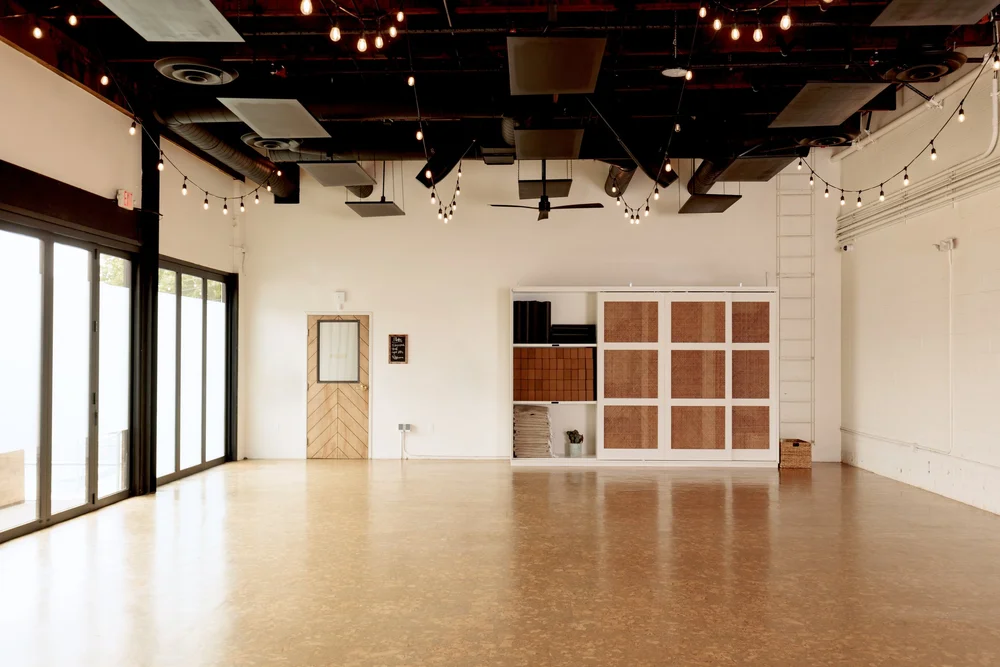
A fitness campus rather than a yoga studio: three studios on one Lincoln Boulevard site, for strength circuits, heated mat Pilates and yoga, opened in 2021 and part of CAMP, which also runs a campus in Tampa. The yoga room runs an all-levels Flow most days, a 75-minute Flow at weekends, Power Flow and Chill, and a gentler Restore; heated classes sit at about 88 to 92°F, and Restore runs at reduced heat. Park in the lot at 2723 Lincoln (in from Lincoln, out on Hill Street) or in the second lot across the street; a mat rents for $3.
 Flow
Flow Center For Yoga
The studio calls itself the longest continuously operating yoga room in Los Angeles, founded in 1967 and on Larchmont since 1969, in a 1925 building that was a Masonic temple and then a dance school. Nine formats run off one schedule, from a foundational level-one class and Iyengar through vinyasa, infrared hot flow, power sculpt, pilates and restorative.
 Sound bath
 CEREMNY
A first-floor Washington Blvd space that runs soul yoga and sound baths alongside somatic workshops, breathwork and a 200-hour teacher training. The schedule leans slow and guided rather than back-to-back drop-ins, and monthly immersive workshops are the centre of it, worth checking the calendar before you plan a first visit.
Frequently asked questions
Is the All in Motion yoga mat good?
That question cannot be answered as asked, because All in Motion is a brand covering at least five different materials. A 5mm PVC mat and a 15mm NBR foam mat both carry the name and are built for completely different practices. Find the material on the Target listing first, then judge it.
What material is the All in Motion yoga mat?
It depends which one. Target sells All in Motion mats in PVC, TPE, natural rubber, natural rubber with a polyurethane top, and NBR foam. The listing states the material, and that is the single most useful thing on the page.
What does low tack and high tack grip mean?
Tack is stickiness underfoot. High tack means the surface actively resists your hand or foot sliding, which is what you want in a vigorous practice. Low tack means a smoother surface that you slide across more easily, which is fine for gentle floor work and a problem in downward dog. Target publishing this on the listing is genuinely useful, because most brands leave you to guess.
Is the All in Motion mat good for hot yoga?
Only the rubber-polyurethane version. That construction is open-cell, so it grips harder as you get damp. The PVC, TPE and NBR options are closed-cell, meaning sweat sits on the surface and grip drops off as the class gets harder. If a listing does not say polyurethane, assume it is the wrong mat for a heated room.
Is the 15mm All in Motion mat good for yoga?
For floor work, kneeling and stretching, yes, and it is very comfortable. For standing yoga it works against you, because 15mm of foam lets your standing foot sink and every balance becomes a correction. Target files it as a fitness mat, which is the honest description.
How long does an All in Motion yoga mat last?
It depends on the material and on care rather than on the brand. A PVC one is the most durable of the group and can last years if you wipe it after practice and dry it flat. A TPE one is softer and will show wear sooner. Rolling any of them up damp is what ends them early.
Is a Target yoga mat good enough to learn on?
Yes. A house-brand mat is a completely reasonable first mat, and buying one is not a compromise you need to feel bad about. What it will not do is behave well in a heated room unless you picked the polyurethane version, and it will not last the way a premium PVC mat does. Both of those are fine trade-offs while you find out whether you are going to keep practising.
How do you clean an All in Motion yoga mat?
A cloth wrung out in plain water after each practice, and a trace of mild dish soap for a deeper clean followed by a plain-water pass. Beyond that it depends on the material: PVC tolerates heavily diluted vinegar, while natural rubber and polyurethane tolerate none of it. Never soak or machine wash any of them, and dry flat before rolling.