Guide
The lululemon Yoga Mat: Which Side, Which Thickness
It is called the Reversible Mat and the two sides are not a colour choice. One is built for sweat and one is built for dry practice, and it rolls out sweat-side up.
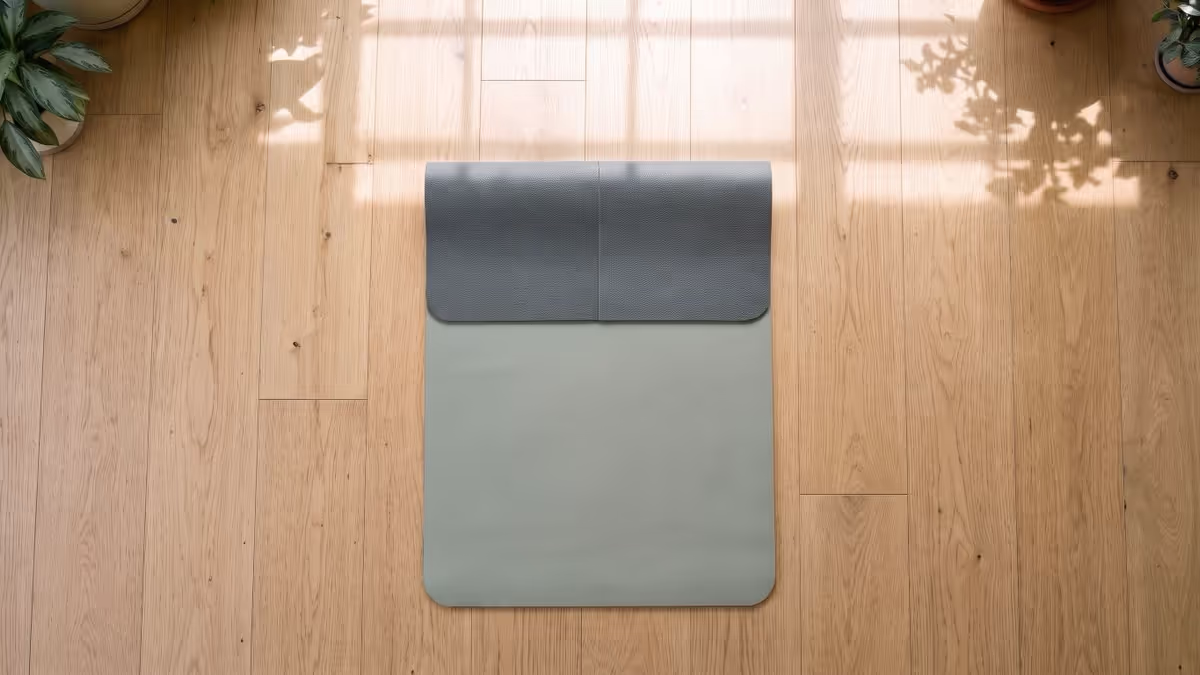
Almost everything written about the lululemon mat argues about whether it is worth the money. That is the least interesting question about it.
The interesting one is in the name. It is called the Reversible Mat, and the two sides are not a colour choice. They are two different materials doing two different jobs, and the mat rolls out with one of them facing up. Most people never turn it over.
The two faces, and what each is for
- The smooth side is polyurethane. It is open-cell, which means it takes a little moisture in rather than shedding it. That is the mechanism behind the grip: the damper your hands get, the harder it holds. It is built for sweat.
- The textured side is natural rubber. It is the base of the mat, closed and tougher, and it grips well when dry. It is built for practice that does not raise a sweat.
Underneath both is the same natural rubber body, which is where the cushioning and most of the weight come from.
Now the part that matters. It rolls out polyurethane side up. So unless you have deliberately flipped it, you have been practising on the sweat side, and if your practice is a gentle home flow or restorative work, that is the wrong face: the surface most vulnerable to wear, most demanding to clean, and least suited to what you are doing.
Turning it over costs nothing and doubles the life of the side you actually need.
Which side you should be on
- Hot, power, vinyasa, anything that leaves you damp. Polyurethane side up. This is what it is for and it is genuinely very good at it.
- Restorative, yin, meditation, gentle home practice. Rubber side up. You are not going to sweat enough to activate the polyurethane, and the rubber face is more durable.
- Mixed practice. Pick by the class you do most, and flip for the outliers.
If you have owned one for a year without flipping it, look at both faces now. The difference in wear will tell you what your practice has been doing.
5mm or 3mm
The only other real decision in the range.
5mm is the standard version and the right answer for most people. Enough cushioning for kneeling, enough firmness to stand on.
3mm is lighter and thinner. Better to carry, slightly better for standing balance, and noticeably less forgiving on knees and hip bones. It is the sensible choice if the mat travels with you daily and the wrong one if you spend a lot of your practice on the floor.
The mat buying guide has the general version of this trade. It applies here exactly as it does anywhere: thickness you add for your joints is stability you take from your feet.
The rest of the range, briefly
lululemon sells several mats and the names do not help, so people arrive searching for one and buy another.
- The Reversible Mat is the one this page is about, and the one most people mean. Polyurethane over natural rubber, 5mm or 3mm.
- The Mat is a different product: natural rubber, single surface, no polyurethane layer. Grippier dry, less specialised for sweat, and simpler to look after.
- The Align is the 5mm mat people most often weigh against a Manduka PRO rather than against anything in this range, we put the two side by side, spec for spec.
- The foldable travel mat folds rather than rolls, so it goes flat in a suitcase. It is thin by design and you will feel the floor through it. Worth it if you travel, and not a replacement for a home mat.
If you are choosing between the Reversible Mat and The Mat, the question is whether you sweat. If you do, the polyurethane layer is the entire reason to pay for the Reversible. If you do not, you are buying and then having to look after a surface you will never activate.
It is bigger than a standard mat, in both directions
26 by 71 inches, against a typical 24 by 68.
This gets mentioned in passing and it should not be. Two inches of extra width is the difference between your hands landing on the mat and landing on the floor in wide-legged standing poses. Three inches of extra length is the difference between your heels being on the mat or off the end if you are tall.
Our yoga for men guide notes how often taller beginners end up half off a standard mat and assume that is normal. It is not, and this is one of the few mats where the size is quietly solving it.
The weight is the real cost
About 5.2 pounds for the 5mm. That is heavy, and it is heavy for a reason: natural rubber is dense, and the density is what gives you the cushioning and the stability.
Whether that matters is entirely about your logistics. If the mat lives in a spare room, it is irrelevant. If you walk to a studio, or take it on a bike, or carry it up three flights, it is the single thing most likely to end with the mat staying home.
Worth being honest with yourself about before buying, because it is not a complaint anyone makes in the shop.
Why a new one feels slippery
This is the most common complaint about the mat and it is not a fault.
A polyurethane surface is designed to grip once there is moisture in it. Brand new and bone dry, it can feel oddly smooth, and people conclude they have bought an expensive mat that does not work. It breaks in over the first few weeks of use, and it behaves completely differently once you are warm.
The buying guide covers the underlying divide: open-cell surfaces gain grip as they dampen, closed-cell surfaces lose it. Almost every “my mat is slippery” story is somebody on the wrong side of that line for their practice.
If it is slippery after cleaning rather than when new, that is a different problem and it is almost always leftover soap. The care guide has the fix.
The dupe question, answered properly
lululemon yoga mat dupe is a real and frequent search, and almost every answer
to it comes from somebody selling the dupe.
Here is the version from a site that sells neither. What you are trying to duplicate is a construction, not a brand: a polyurethane top layer bonded to a natural rubber base. That combination is why the mat behaves the way it does, and it is not proprietary. Several manufacturers build the same sandwich for less.
So the question to ask about any cheaper version is not whether it looks similar. It is:
- Is the top layer actually polyurethane, or a printed coating on foam? If the listing will not say, assume the latter.
- Is the base natural rubber? A PU layer over foam gives you the grip without the density, and it will feel unstable.
- How well is the top layer bonded? This is where cheap versions fail. A thin or poorly bonded polyurethane layer peels at the edges within months, and once it starts there is no repair.
A dupe that gets all three right is genuinely close to the original, because the original is not doing anything exotic. A dupe that gets the third one wrong is a mat you will replace inside a year.
For a concrete example at the cheap end, Target sells a rubber-and-polyurethane mat under its All in Motion label that is the same construction. At the other end, the Alo Warrior is the same build again, larger and heavier, with only one working face rather than two.
Caring for it
Polyurethane is the most easily damaged surface of any common mat material, and this page would be doing you a disservice to bury that.
- Wipe both faces with a cloth wrung out in plain water, after every practice. Not weekly. The open-cell side holds what you leave on it.
- Deep clean with cool water and a soft cloth, small circles, then a second pass with plain water to lift any soap.
- Never scrub, never soak, never machine wash.
- No vinegar, no alcohol, no essential oils. Oils in particular break down the polyurethane grip layer permanently, and that is not reversible.
- Dry it flat and completely. After a deep clean this can take most of a day.
how to clean a lululemon yoga mat is one of the most-searched questions about
this mat, which tells you how many people find out about the care burden after
they have bought it. The full method for this material and the four others is in
the mat-care guide.
One genuine plus: the mat includes an antimicrobial additive aimed at mould and mildew. Useful, and not a substitute for drying it properly. Mildew in a mat is still unrecoverable.
What we can tell you, and what we cannot
We have not practised on this mat. Nobody here owns one, and we are not going to write a hands-on verdict we have not earned. Several sites test mats properly, and if you want a tested ranking they are the better source.
What is on this page comes from lululemon’s own specification, from the retail listings, and from what those numbers mean in practice. The dimensions, the weight, the two materials and the antimicrobial additive are all published. The consequences we draw from them are properties of polyurethane and of natural rubber, and hold for any mat built this way.
The one thing we would say without hesitation, and it costs nothing: find out which side you are on. It is the cheapest improvement available to anyone who already owns this mat, and most owners have never made it.
Still choosing? The buying guide walks through the four decisions that pick any mat, and the studio directory is there when you want a room to take it to.
Studios to explore
 Hot yoga
 Hot 8 Yoga Pasadena
A large, much-loved Old Town studio with a serene outdoor courtyard and classes from dawn to night.
Hot yoga Hot 8 Yoga Santa Monica
A polished hot-yoga studio with a deep class menu spanning yin, power, sculpt and barre fusion.
 Hot yoga
 Sweat Yoga Santa Monica
Candlelit, no-mirror hot yoga in downtown Santa Monica with a loyal, packed-room following.
 Hot yoga
 Veda Yoga Culver City
A welcoming two-room studio with infrared heat, sculpt classes and immersion/teacher-training programs. Its own site and booking system call it Veda Yoga Venice, since it is on Venice Boulevard, but it is in Culver City; the second Veda room is on La Cienega.
Hot yoga Sweat Yoga West Hollywood
The WeHo outpost of Sweat Yoga, with self-paced heated flows and a popular yin soundbath class.
Hot yoga Hot 8 Yoga Hollywood
The Hollywood branch of Hot 8, with clean facilities, easy parking and a full menu of heated classes.
Frequently asked questions
Which side of the lululemon Reversible Mat should I use?
Use the smooth polyurethane side if you sweat, because it grips harder as it gets damp. Use the textured natural rubber side for dry practice, meditation or restorative work, because it grips well dry and is the tougher of the two surfaces. The mat rolls out polyurethane side up, so if you have never thought about it, that is the side you have been using.
Should I get the 5mm or the 3mm lululemon mat?
The 5mm is the standard choice and suits most practice. The 3mm is lighter and thinner, which makes it better for carrying and for standing balance, and noticeably less forgiving under your knees. If the mat lives at home, take the 5mm. If you carry it daily, the 3mm is worth the loss of cushioning.
Why is my lululemon mat slippery?
Two likely reasons. If it is new and slippery when dry, that is normal for a polyurethane surface: it is built to grip once there is a little moisture, and it breaks in over the first few weeks. If it is slippery after cleaning, it is almost certainly leftover soap. Wipe it again with plain water, changing the water a few times, and dry it fully.
Is the lululemon mat good for hot yoga?
The polyurethane side is one of the better surfaces for hot yoga, because it grips harder the wetter it gets. The cost is care: open-cell surfaces absorb sweat, so it needs wiping after every practice and can take most of a day to dry properly after a deep clean.
How do you clean a lululemon yoga mat?
A cloth wrung out in plain water, on both faces, after every practice. For a deeper clean use cool water, a soft cloth and small circles, then a second pass with plain water. Never scrub it, never soak it, and keep vinegar, alcohol and essential oils away from both sides. The polyurethane face is the most easily damaged surface of any common mat material.
What is a good lululemon yoga mat dupe?
What you are actually trying to duplicate is the construction: a polyurethane top layer bonded to a natural rubber base. Any mat built that way behaves broadly the same, and several brands make one for less. The thing to check on a cheaper version is whether the polyurethane layer is bonded well, because a thin or poorly bonded top layer is what peels.
How big is the lululemon Reversible Mat?
26 by 71 inches, against a typical 24 by 68. That is two inches wider and three inches longer than standard, which is genuinely useful in wide-legged standing poses and if you are tall enough that your hands or heels usually hang off the end.
How heavy is the lululemon mat?
The 5mm weighs about 5.2 pounds, which is heavy for a yoga mat. That is the price of a natural rubber base. If it lives in one room it does not matter at all. If you walk or cycle to class, it is the single most likely reason you stop taking it.