Guide
Manduka PRO vs PROlite: Same Mat, Different Bag
The same surface, the same factory and the same guarantee. Manduka itself says the choice comes down to where you practise, and the spec sheet says the same thing in pounds.
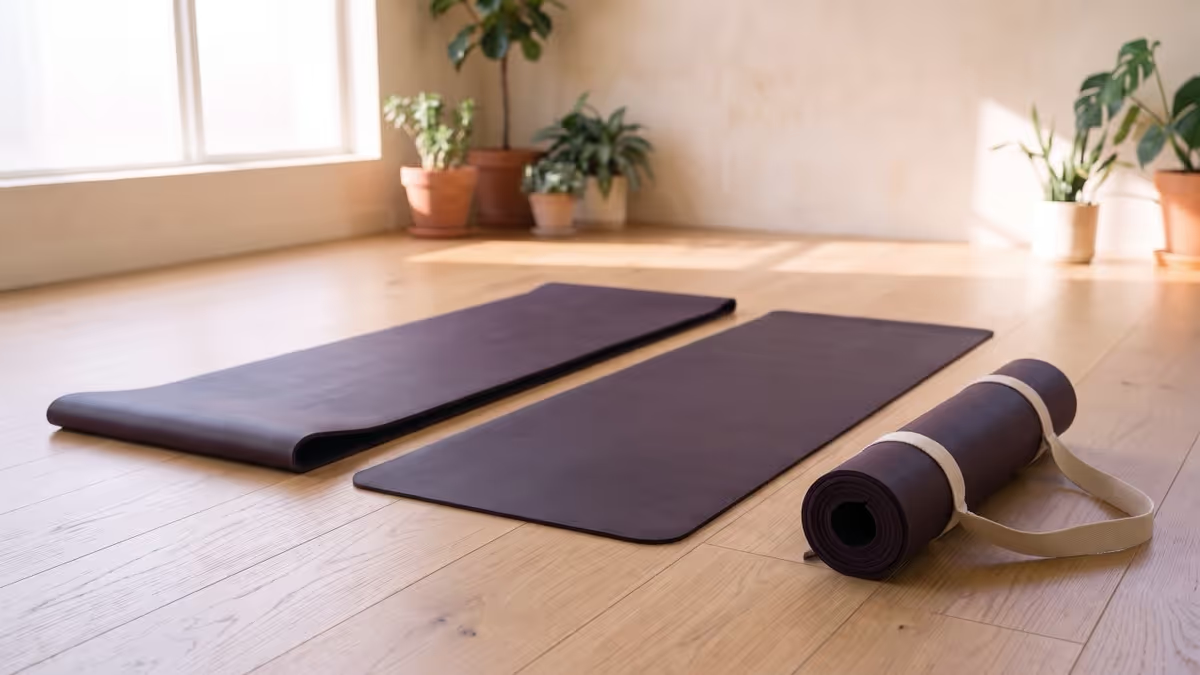
The PRO and the PROlite are the most-confused pair in yoga, and the confusion is mostly about a difference that is not there.
They are not a premium mat and a budget version of it. Manduka sells them as two members of one family, the PRO Series: the same PVC, made in the same country, with the same closed-cell surface, the same base and the same lifetime guarantee. Our Manduka range guide settles the pair in a paragraph, on weight rather than cushioning. This page is the long version of that answer, built entirely from Manduka’s own published figures.
The two mats, as Manduka specifies them
| PRO | PROlite | |
|---|---|---|
| Thickness | 6mm | 4.7mm |
| Width | 26 in (66 cm) | 24 in (61 cm) |
| Standard length | 71 in (180 cm) | 71 in (180 cm) |
| Standard weight | 7.5 lb (3.4 kg) | 4.6 lb (2.1 kg) |
| Short | 68 in, 7 lb | 68 in, 4.5 lb |
| Long | 85 in, 9.5 lb | 79 in, 5 lb |
| Material | PVC, made in Germany | PVC, made in Germany |
| Surface | closed-cell | closed-cell |
| Latex | latex-free | latex-free |
| Guarantee | lifetime | lifetime |
Every figure is from Manduka’s product pages for the PRO and the PROlite, read on 16 October 2026. Both pages say the PRO Series is certified to OEKO-TEX’s STANDARD 100 for harmful substances.
Read the table top to bottom and something stands out: the bottom half is identical. Everything that differs is size, meaning thickness, width, weight and the length of the long version.
Three numbers separate them
Thickness: 1.3mm. The PRO is 6mm, the PROlite 4.7mm. Manduka describes the PRO as having “a higher level of cushioning”, and it is the one it pitches at knees and wrists in weight-bearing poses. Manduka calls both high-density, with the same “floor-like stability”, so neither is a soft mat. The extra thickness is most noticeable under a kneecap.
Width: 2 inches. Easy to miss, because the lengths match. Every PRO size is 26 inches wide and every PROlite size is 24. On the standard length that makes the PRO about 8% larger in area. Manduka says the PROlite’s narrower size is what suits it to “smaller spaces and tight class settings”.
Weight: nearly 3 pounds. 7.5 pounds against 4.6 for the standard length. The PRO is thicker and wider at once, and weighs about 60% more. That is the number you feel every time you pick it up.
Manduka’s own answer is about where you practise
Manduka settles its own comparison plainly. The FAQ on both product pages says the difference “comes down to how and where you practice”.
On the PRO page the mat is “built to support your home practice”, and Manduka recommends it to anyone “creating a dedicated home practice”. On the PROlite page it is Manduka’s “#1 yoga studio mat”, the one with a “lightweight design” that is “easy to carry to and from the studio”.
That is the same rule our range guide arrives at from the numbers, which is reassuring, and it reduces the decision to a single question.
The question: does the mat move?
- It lives in one room. Take the PRO. You never lift it, so its weight costs you nothing, and you get the extra cushioning and the extra two inches of width for free.
- It goes on your shoulder. Take the PROlite. Three pounds is not much in a shop and a great deal on a walk to class, several times a week, for years. Our buying guide makes the point generally: weight is the specification most likely to end with a mat staying home.
- You practise in a crowded studio. The PROlite’s 24 inches is the more usual width, and the one Manduka designed for tight rooms.
- You are tall. Check the long sizes before anything else, because they are not the same. The PRO’s long version is 85 inches; the PROlite’s is 79. Manduka also sells longer and wider PRO variants, the PRO Long & Wide and the PRO Squared, for anyone who wants more room again.
If you genuinely do both, a home practice most days and a class once a week, the trips decide it, because the weight only costs you when the mat moves.
What does not change between them
This is the part worth reading before you pay more for the bigger mat in the hope that it is the better one.
- The surface is the same. Both are closed-cell. Manduka says the surface keeps sweat and moisture on top of the mat rather than letting it soak in, which makes them easy to clean.
- The grip in a sweaty class is the same. Because of that surface, Manduka says either mat “may feel slick if you’re prone to sweat”, and recommends one of its hand towels for grip or a full mat towel for heated practice. Moving from a PROlite to a PRO does not change the surface. A towel changes it.
- The base is the same. Both use what Manduka calls a proprietary dot pattern that keeps the mat from shifting on the floor.
- The guarantee is the same. Both carry the PRO Series lifetime guarantee, which Manduka says covers manufacturing and workmanship defects under normal use, and not misuse, improper care or normal cosmetic wear. One footnote on the PROlite page: printed designs can wear off over time, and the guarantee covers the mat itself but not printed graphics.
- The break-in advice is the same. A new mat may feel different for the first few practices. Manduka recommends practising on it regularly, and says it does not recommend the salt method or other treatments.
If you sweat, neither is the answer on its own
Both mats are closed-cell, so the sweat question our range guide opens with applies to them equally. A heated class or a vigorous flow leaves moisture sitting on the surface, and grip falls away just when you need it.
Manduka’s own fix is a towel over the mat, the Yogitoes or the Equa. Our towel guide compares the two. If you practise hot most of the time, the range guide covers the one open-cell mat in that range, which works with sweat rather than against it.
Caring for either one
The instructions on the two product pages are the same.
- After practice, wipe the mat down and let it dry completely before rolling it up.
- To clean it, Manduka recommends warm water or its own Yoga Mat Wash & Refresh, and says other cleaning solutions are “not tested or recommended”.
- Avoid soaking the mat, harsh household cleaners and the washing machine.
- To store it, roll it with the top surface facing outwards, which Manduka says keeps the corners flat when you practise, and keep it somewhere cool and dry.
Our mat-care guide has the general method for PVC. One difference to know about: it advises against essential oils on any mat, and Manduka’s own mat wash contains lemongrass or lavender essential oil, so if you follow our guide, warm water is the option that satisfies both.
Price
On 16 October 2026 Manduka’s own store listed the PRO from $125 to $164 and the PROlite from $108 to $124, depending on length and colour, with some PRO colours marked down. Prices change and some colours sell out, so check the live price of the PRO or the PROlite in the size you want rather than relying on these. Links on this page pay us a commission if you buy through them. The PROlite also has a spec page of its own.
What we can tell you, and what we cannot
We have not practised on these mats. Nobody here owns a PRO or a PROlite, and we are not going to write a hands-on verdict we have not earned. If you want a tested ranking, sites that test mats properly are the better source.
Every specification on this page is Manduka’s own published figure, and the framing of the PRO as a home mat and the PROlite as a studio mat is Manduka’s, not ours. What we have added is arithmetic and the consequence: Manduka gives the two mats the same surface and the same advice for sweat, so the choice between them comes down to thickness, width and weight, and of those three, weight is the one you feel every day.
If you are still choosing a mat rather than choosing between these two, the buying guide covers the four decisions that pick any mat, and our gear page lists the Manduka products we link to. When you have one, the studio directory lists LA studios by neighbourhood and style.
Studios to explore
 Hot yoga
Hot 8 Yoga Pasadena
A large, much-loved Old Town studio with a serene outdoor courtyard and classes from dawn to night.
Hot yoga Hot 8 Yoga Santa Monica
A polished hot-yoga studio with a deep class menu spanning yin, power, sculpt and barre fusion.
 Hot yoga
Sweat Yoga Santa Monica
Candlelit, no-mirror hot yoga in downtown Santa Monica with a loyal, packed-room following.
 Hot yoga
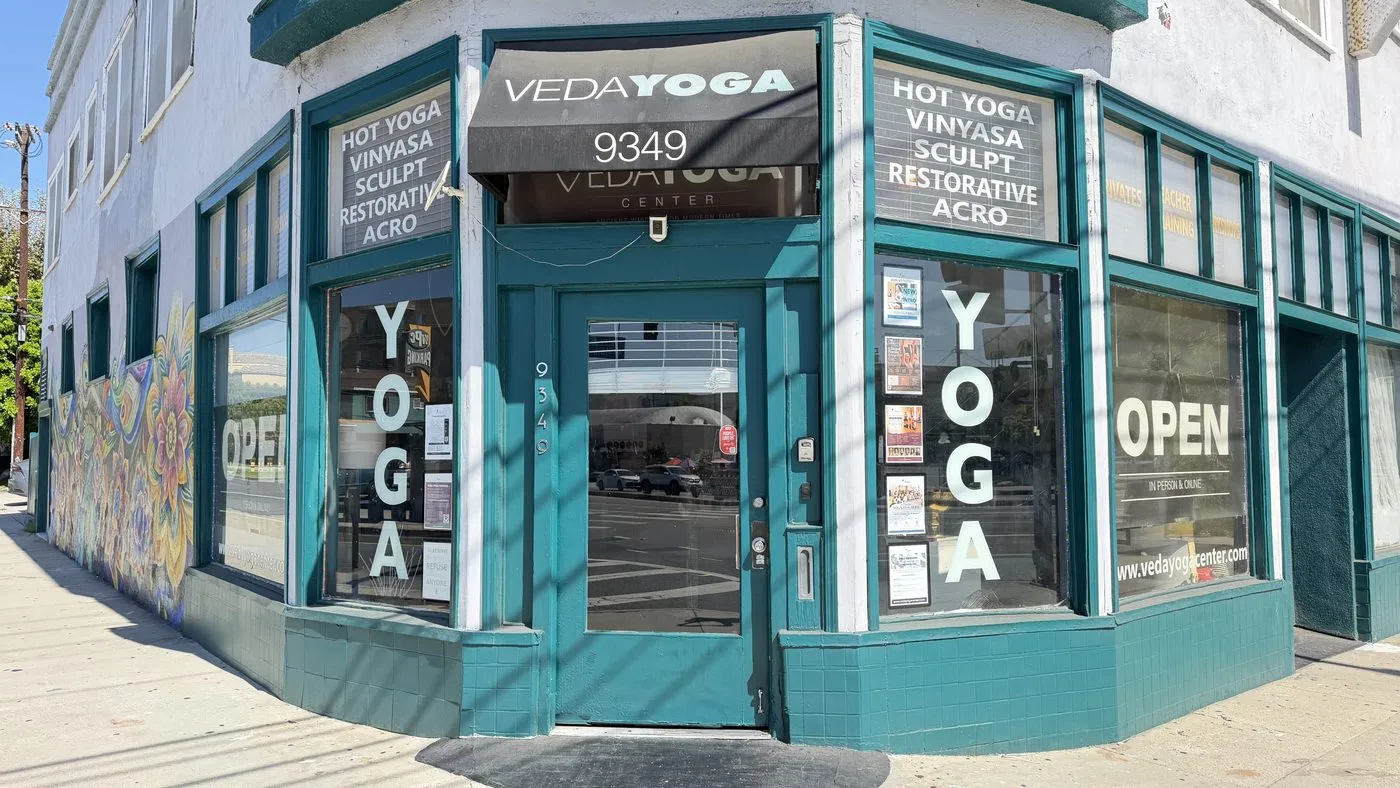
Veda Yoga Culver City
A welcoming two-room studio with infrared heat, sculpt classes and immersion/teacher-training programs. Its own site and booking system call it Veda Yoga Venice, since it is on Venice Boulevard, but it is in Culver City; the second Veda room is on La Cienega.
 Sculpt
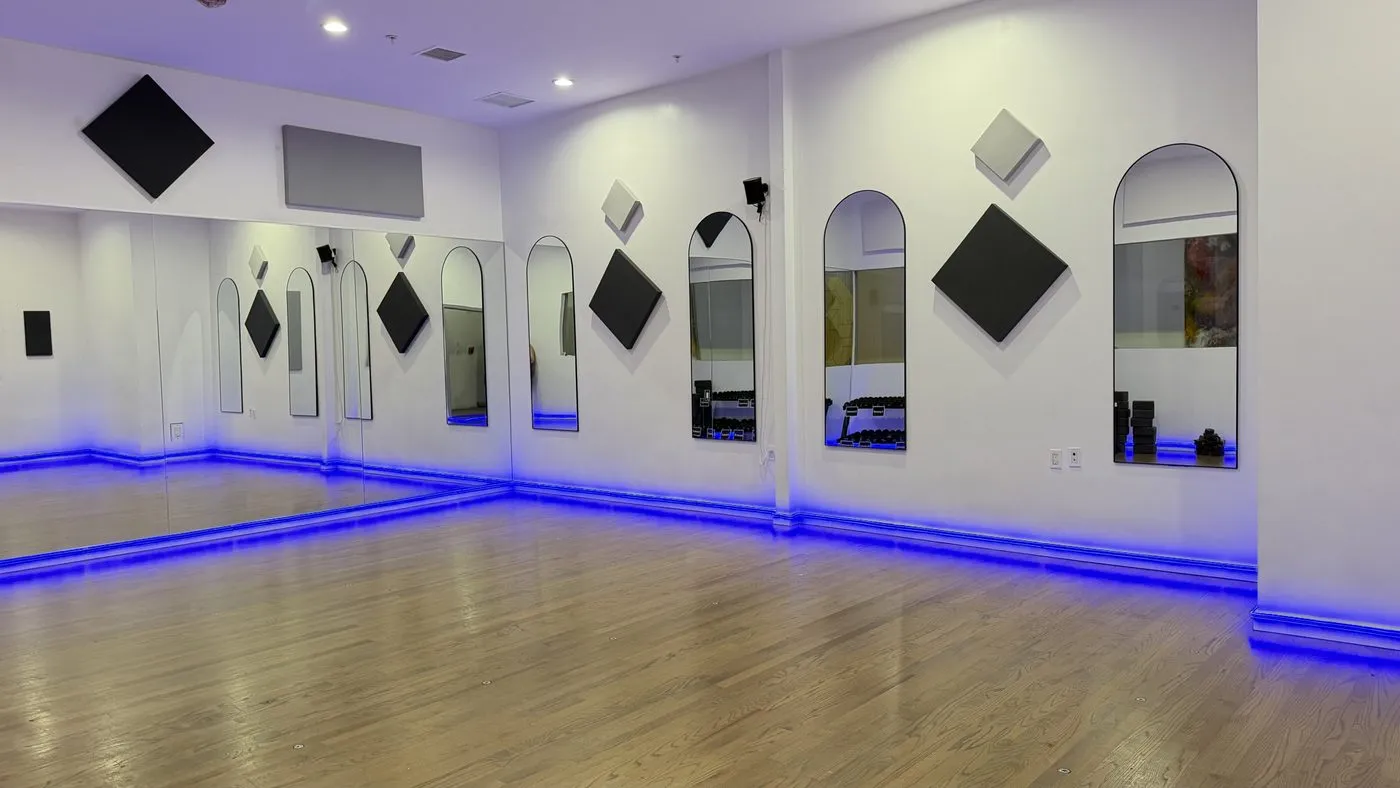
shefayoga Venice
A beautiful Main Street studio with dharma-rich flows, sculpt, breathwork and reiki offerings.
Hot yoga Sweat Yoga West Hollywood
The WeHo outpost of Sweat Yoga, with self-paced heated flows and a popular yin soundbath class.
Frequently asked questions
What is the difference between the Manduka PRO and PROlite?
Thickness, width and weight. Manduka lists the PRO at 6mm, 26 inches wide and 7.5 pounds for the standard 71 inch length, and the PROlite at 4.7mm, 24 inches wide and 4.6 pounds. Both are made in Germany from the same PVC, with the same closed-cell surface and the same lifetime guarantee. Manduka says the difference comes down to how and where you practise.
Is the Manduka PROlite as durable as the PRO?
Manduka makes the same claim for both: they are the PRO Series, made from the same PVC, and both carry the lifetime guarantee. The PROlite is the mat Manduka describes as its number one studio mat, built for daily studio use. We have not used either, so we cannot add a durability verdict of our own.
How much does the Manduka PROlite weigh?
Manduka lists 4.6 pounds (2.1 kg) for the standard 71 inch PROlite, 5 pounds for the 79 inch long version and 4.5 pounds for the 68 inch short one. The standard PRO is 7.5 pounds.
Is the Manduka PRO wider than the PROlite?
Yes. Manduka lists every PRO size at 26 inches (66 cm) wide and every PROlite size at 24 inches (61 cm). That makes the PRO's standard mat about 8% larger in area, and it is part of why Manduka calls the PROlite the better fit for small spaces and crowded classes.
Which is better for hot yoga, the PRO or the PROlite?
Neither, on its own. Both have the same closed-cell surface, which keeps sweat on top of the mat rather than letting it soak in, and Manduka says that can feel slick if you sweat. For heated practice Manduka recommends laying one of its mat towels over either mat. If hot yoga is most of what you do, our Manduka range guide covers the one open-cell mat in the range.
Do the PRO and PROlite need breaking in?
Manduka's position is that a new PRO Series mat may feel different for the first few practices, that regular practice is the whole method, and that it does not recommend the salt method or any other treatment. It applies the same advice to both mats.
How do you clean a Manduka PRO or PROlite?
Manduka's instructions for both: wipe the mat down after practice and let it dry completely before rolling it. For a proper clean it recommends warm water or its own Yoga Mat Wash & Refresh, says other cleaning solutions are not tested or recommended, and advises against soaking, harsh household cleaners and machine washing.