Guide
Yoga Styles Explained: A Plain-English Guide
Confused by the menu of yoga styles? Here's the plain-English version — what each one actually feels like, who it suits, and where to find it in LA.

If you’ve ever scrolled a studio schedule and felt your eyes glaze over — vinyasa, yin, Iyengar, Kundalini, sculpt, restorative — you are not alone. The names sound like a secret language, and nobody hands you a translation on the way in. So here it is: a plain-English tour of the main yoga styles, what each one actually feels like, and how to figure out which fits the day you’re having.
There’s no hierarchy here, no “real” yoga versus the rest. The best style is simply the one you’ll keep showing up for.
What actually makes styles different
Strip away the Sanskrit and the marketing, and most styles vary along just three dials:
- Heat — is the room a comfortable temperature, or cranked to 95–105°F?
- Pace — do you flow continuously, or hold each pose and settle in?
- Hold time — are you moving every breath, or staying put for minutes?
Almost every style is some combination of those three. A fast, room-temperature flow and a slow, heated hold feel like different sports, but they’re built from the same handful of choices. Once you can read a class by its heat, pace, and hold time, the schedule stops looking like a foreign menu.
The active styles
These are the ones that get your heart rate up and leave you a little wrung out in the good way.
Vinyasa and power
Vinyasa is the flowing, breath-led style most people picture when they think “yoga class” — you move from pose to pose more or less continuously. Power yoga is vinyasa with the intensity turned up: stronger, faster, more athletic, often with less hand-holding on the shapes. If you want a workout that also asks you to breathe, this is the lane. Look at power classes to see where it’s offered.
Hot yoga
Hot yoga is any style practiced in a heated room. The warmth loosens muscles and makes everything feel more intense — you’ll sweat, a lot. Some people find the heat addictive; others find it a step too far for a first class. It’s worth trying once you’ve got a few sessions under your belt. Browse hot yoga in LA to find a heated room near you.
Sculpt
Sculpt blends yoga shapes with light weights and cardio bursts, usually in a heated room and often set to music. It leans more toward fitness than philosophy, and it’s a favorite for people who want yoga to double as a sweat session.
The gentle styles
Not every class is about effort. These styles are about slowing the nervous system down — and they can be surprisingly hard in their own quiet way.
Restorative
Restorative is the gentlest style on most menus: you’re propped up with bolsters, blankets, and blocks, holding a handful of fully supported shapes for several minutes each. There’s almost nothing to “do” — the props hold you so your body can let go. It’s a genuine reset for a stressed week. See restorative classes to find a studio that offers it.
Yin
Yin looks like restorative from across the room — slow, floor-based, quiet — but it asks a little more. You hold deep stretches for two to five minutes to work the connective tissue around the joints. The stillness is the practice, and for busy minds that can be the real challenge. Explore yin yoga when you want long, meditative holds.
Meditation and sound baths
Some classes drop the poses almost entirely. A meditation session is exactly what it sounds like — seated or lying down, guided breath and attention. A sound bath layers on resonant instruments like singing bowls and gongs while you simply lie back and listen. Both are easy entry points if the physical side of yoga feels intimidating, and they pair beautifully with a busy LA week.
The specialized styles
A few styles have their own distinct lineage and feel.
Iyengar
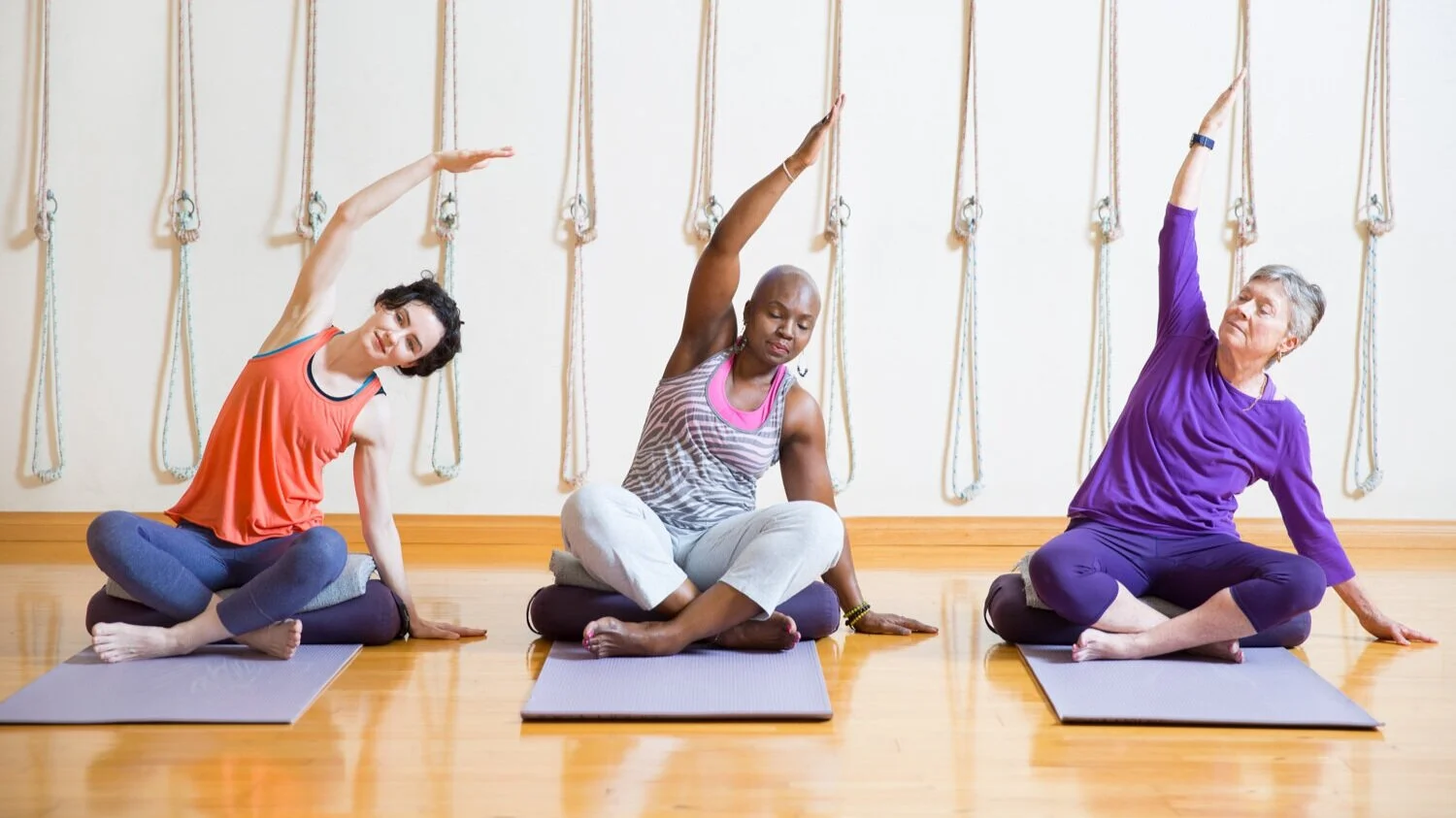
Iyengar yoga is precise and prop-heavy, with a strong focus on alignment. Poses are held while a teacher fine-tunes the details, and straps, blocks, and walls do a lot of the work. It’s methodical and deeply technical — wonderful if you like understanding exactly how a pose is built. Look up Iyengar classes to find a studio that teaches it.
Kundalini
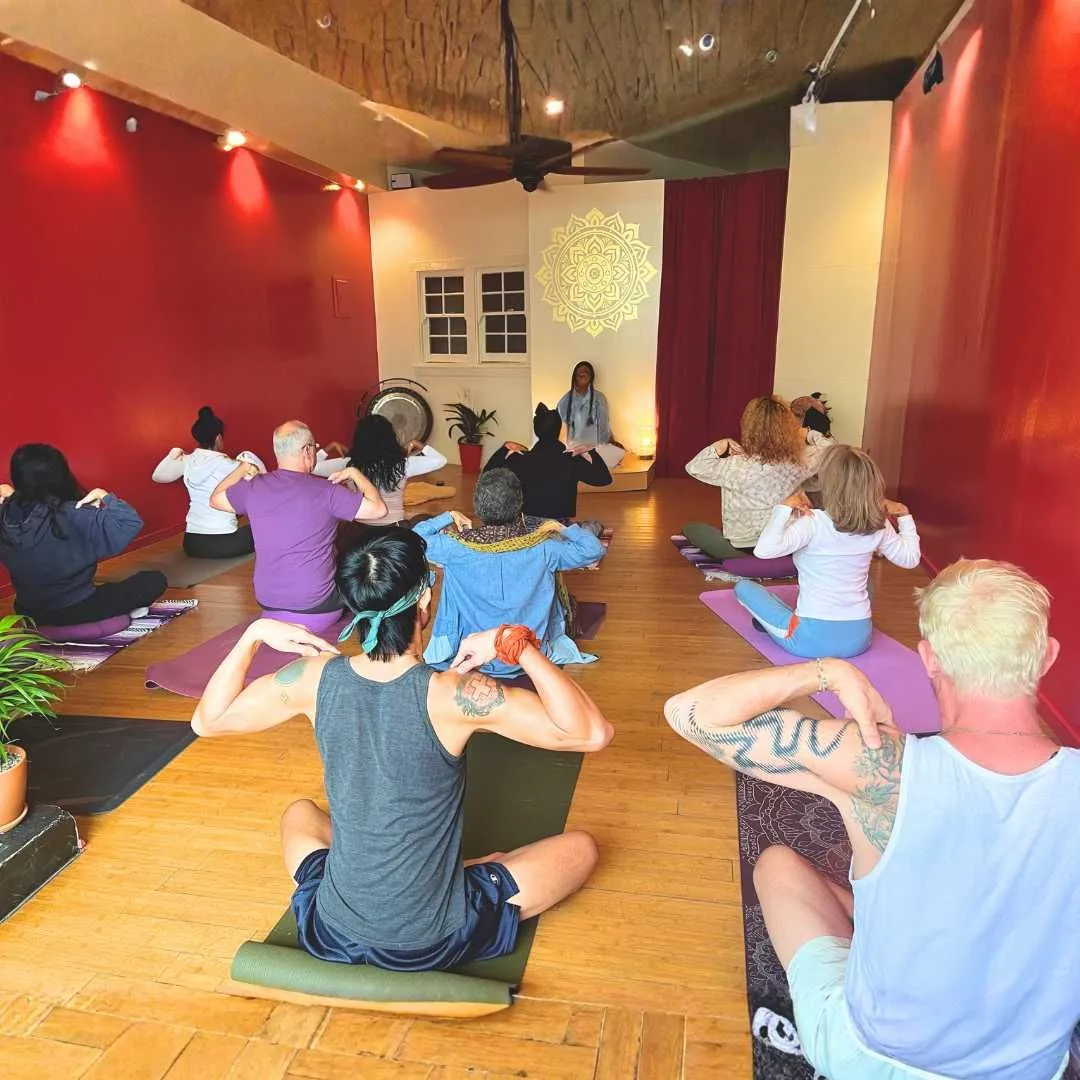
Kundalini is the most distinctive style you’ll meet: a blend of repetitive movements, breathwork, chanting, and meditation aimed at shifting your energy and state of mind. It can feel unusual the first time, and that’s the point — it’s less about the shapes and more about the experience. See Kundalini yoga if you’re curious about something different.
Prenatal
Prenatal classes adapt the practice for pregnancy, with modifications that keep things safe and comfortable through each trimester. They’re also a lovely way to meet other expecting parents. Browse prenatal yoga to find a welcoming class. As always, check with your own healthcare provider before starting or continuing any practice during pregnancy.
How to choose
You don’t have to commit to a single style — and you really shouldn’t on day one. Pick by the day you’re having:
- Want to sweat and work hard? Power, hot, or sculpt.
- Want to slow down and unwind? Restorative, yin, or a sound bath.
- Want precision and structure? Iyengar.
- Want something different? Kundalini.
Most LA studios offer several styles under one roof, so the easiest path is to sample a few and notice which room you leave feeling more like yourself. When you’ve got a sense of what you’re after, browse the directory by style to see who teaches it, or by neighborhood to find something close to home. And if you’re brand new, start with our guide to beginner-friendly yoga in LA.
The labels are just a starting point. The practice is the same invitation in every room: show up, breathe, and see what shifts.
Studios to explore
Boheme Yoga
A tidy DTLA studio with hot classes, live-music sessions and restorative practice in the Historic Core.
Yoga Circle Downtown
An old-school, down-to-earth studio with strong yin classes and a robust livestreaming option.
 Iyengar
 Yoga House
A genuine old-school studio with experienced teachers, Iyengar classes and a welcoming community.
 Kundalini
 Kundalini Silverlake
An intimate, affordable studio specializing in Kundalini practice, breathwork and chanting.
Open Venice
The in-person home of the Open app, blending movement, breathwork and meditation with a great sound system.
 All levels
 Santa Monica Yoga
A long-running, down-to-earth studio with a strong community and evening candlelight and soundbath events.
Frequently asked questions
What is the easiest yoga style for beginners?
Gentle, slower styles tend to be the friendliest first stop — think hatha, all-levels vinyasa, and restorative. They hold poses long enough to learn them and don't assume you already know the shapes.
What's the difference between yin and restorative yoga?
Both are slow and floor-based, but yin holds stretches to work the deep connective tissue, while restorative uses props to fully support you so your body can rest. Yin asks a little effort; restorative asks none.
Is hot yoga better for weight loss?
Hot yoga makes you sweat and can feel intense, but the heat itself isn't a magic fat-burner — most of what you lose in class is water. Any consistent movement practice helps; pick the style you'll stick with.
Do I need to pick one style and stick with it?
Not at all. Many people rotate styles by mood or week — a power class one day, a sound bath the next. Most LA studios offer several styles under one roof, so you can mix freely.