Guide
Alo Warrior Mat: Premium Build, and What You Pay For
The fair question is whether you are paying for the mat or the label. The build is genuinely the premium one, which makes the answer more interesting than either camp expects.
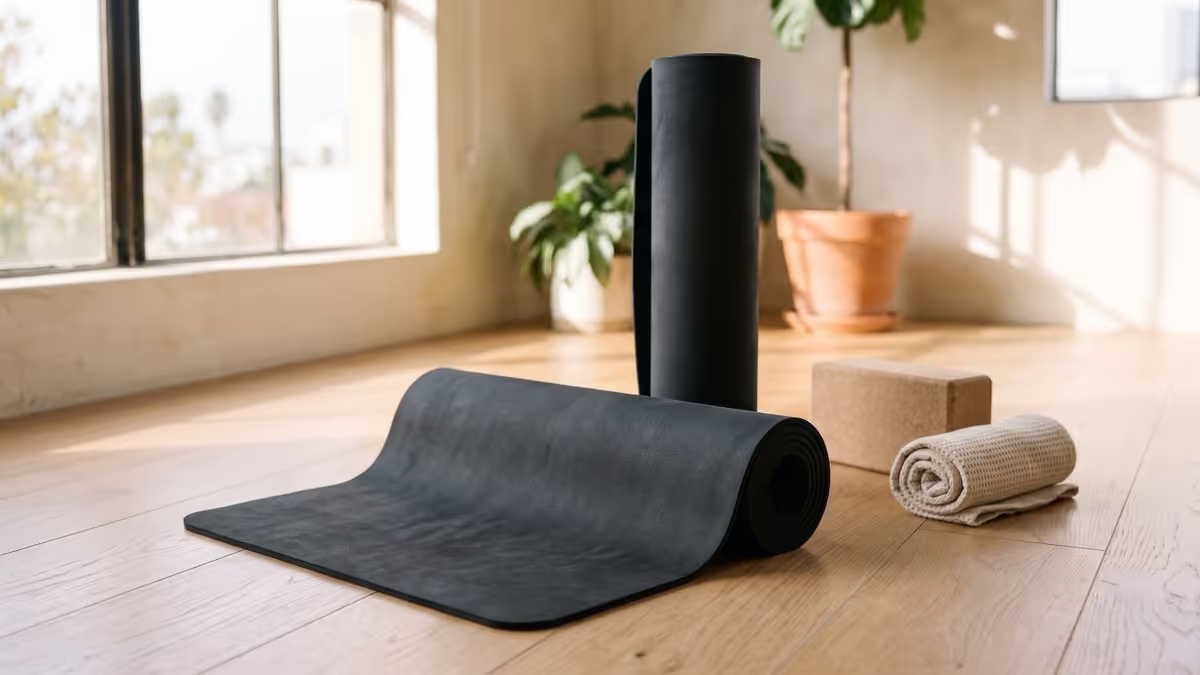
The question everyone actually asks about this mat is whether you are paying for the mat or for the label.
It is a fair question and the answer is more interesting than either camp expects. The construction is genuinely the premium one. This is not a fashion mat with a cheap build and a logo on it. It is the same sandwich the mats a teacher would recommend on merit are built from, and it behaves accordingly.
Which moves the question somewhere more useful: not “is it good”, but “what is the premium over its rivals buying, given they are built the same way”.
What it is
- Surface: a polyurethane top layer
- Base: natural rubber
- Thickness: 5mm
- Size: roughly 74 by 26 inches, larger than standard in both directions
- Weight: approximately 8 pounds
- PVC-free

A polyurethane top on a rubber base is the construction that grips hardest when you sweat, because the PU surface is open-cell: it takes in a little moisture rather than shedding it. Alo calls this moisture-activated, which is an accurate description of open-cell behaviour rather than a proprietary technology.
Our mat buying guide covers the underlying divide, and it is the single most useful thing to know before buying any mat.
Four premium mats, one construction
Here is the part this page can tell you that a single-product review cannot.
By the time you have looked at the top of this category, you have met the same build four times:
| Build | Thick | Size | Weight | |
|---|---|---|---|---|
| Alo Warrior | PU + rubber | 5mm | 74 × 26 in | ~8 lb |
| lululemon Reversible | PU + rubber | 5mm | 71 × 26 in | 5.2 lb |
| Manduka GRP Adapt | PU + rubber | 5mm | 71 / 79 in | 5.5 lb |
| Target’s rubber-PU | PU + rubber | 5mm | – | – |
Sizes and weights are the standard versions, and a dash means the maker does not publish the figure.
Same mechanism, four times. Which means the differences between them are not about how the mat grips. They are about size, weight, finish, what the second face does, and price.
That is worth knowing before you decide any of them is worth a premium over the others, and it is why the fourth row matters: a house-brand version of this construction exists, and the thing to check on it is the quality of the bond rather than the idea.
So what is the premium buying?
Three things, honestly stated.
Size. At roughly 74 by 26 inches the Warrior is bigger than a standard mat in both directions and bigger than the lululemon in one. If you are tall enough that your heels hang off the end of a normal mat, that is not a cosmetic difference. It is the most concrete thing the extra money buys.
Finish. The surface treatment and the colourways are the point of the brand, and there is nothing wrong with wanting a mat you like looking at. It will not make you practise better and it might make you practise more often, which is a real effect even if it is not a technical one.
The brand. Said plainly rather than sneered at. Some of the price is the name, as it is with any premium label, and you are allowed to want that. What we would object to is a page telling you the extra is buying grip, because the comparison above shows it is not.
The catch nobody mentions: it is one-sided
This is the genuine functional difference against its closest rival, and it is almost never in the reviews.
The lululemon Reversible has two working faces: smooth polyurethane for sweat, and a textured natural rubber side for dry practice. You flip it depending on the class, and doing so roughly doubles the life of the polyurethane face because you are not wearing it out on gentle days.
The Alo Warrior has one working surface. The polyurethane face is the mat.
That means every session runs on the layer that is most easily damaged and most demanding to clean, whether or not the practice needed it. If most of your practice is hot or vigorous, this is irrelevant, because you would be on that face anyway. If your week is mixed, it is a real difference in how long the mat lasts.
The weight
Approximately 8 pounds, per Alo. That is heavy (roughly two and a half to three pounds more than the lululemon Reversible or the Manduka GRP Adapt), and it is the complaint that comes up most often.
It is also inherent. Natural rubber is dense, and the density is what gives the mat its stability and its cushioning. There is no version of this construction that is both grippy-when-wet and light.
If the mat lives in one room, this does not matter at all. If you walk to a studio several times a week, weigh it honestly first, and look at the lightweight version Alo sells alongside the Warrior before concluding the brand is not for you.
Why a new one can feel smooth
Common, and not a fault.
A polyurethane surface is built to grip once there is moisture in it. Brand new and completely dry, it can feel oddly smooth, and people who have just spent premium money on a mat find that alarming. It changes over the first few weeks of use and behaves completely differently once you are warm.
If it goes slippery after a wash rather than when new, that is a different problem and it is nearly always leftover soap. The care guide has the fix.
Caring for it
Polyurethane is the most easily damaged surface of any common mat material, and with one working face there is no second surface to fall back on.
- After every practice: a cloth wrung out in plain water. Not weekly. The open-cell surface holds what you leave on it.
- Deep clean: cool water, soft cloth, small circles, then a plain-water pass to lift any soap.
- Never scrub, soak or machine wash it.
- No vinegar, no alcohol, no essential oils. Oils break down the polyurethane grip layer permanently, and there is no repair.
- Dry flat and fully. After a deep clean, allow most of a day.
The full method for this material and the others is in the mat-care guide.
Who it is for
- You practise hot or vigorously, and you want the best wet grip. This construction is the right answer, and the Warrior is a good example of it.
- You are tall. The extra size is the clearest thing the price buys.
- You want a mat you enjoy owning. A legitimate reason, as long as you know that is what you are buying.
Who it is not for
- You carry your mat everywhere. Eight pounds, several times a week.
- Your practice is mostly gentle and dry. You will be wearing out a sweat-specific surface for nothing, with no second face to switch to.
- You want this construction at the lowest price. It exists for less, and Target’s rubber-PU option is the same idea at a house-brand price, subject to checking how well the layer is bonded.
What we can tell you, and what we cannot
We have not practised on this mat. Nobody here owns one, and we are not going to write a hands-on verdict we have not earned. Several sites test mats properly, and if you want a tested ranking they are the better source.
The materials, thickness, size and weight above come from Alo’s own listings and the retailers. What we have added is the comparison, which is the thing a single-product review structurally cannot give you, and the consequences of open-cell polyurethane, which hold for any mat built this way.
The one thing we would say without hesitation: the build is not the question here. It is a good mat. The question is whether the size and the finish are worth the gap over three other mats that grip exactly the same way, and that is a judgement about your own money rather than about the mat.
Still deciding? The buying guide covers the four decisions that pick any mat, and the studio directory lists LA studios by neighbourhood and style, hot rooms included.
Studios to explore
 Hot yoga
 Hot 8 Yoga Pasadena
A large, much-loved Old Town studio with a serene outdoor courtyard and classes from dawn to night.
Hot yoga Hot 8 Yoga Santa Monica
A polished hot-yoga studio with a deep class menu spanning yin, power, sculpt and barre fusion.
 Hot yoga
 Sweat Yoga Santa Monica
Candlelit, no-mirror hot yoga in downtown Santa Monica with a loyal, packed-room following.
 Hot yoga
 Veda Yoga Culver City
A welcoming two-room studio with infrared heat, sculpt classes and immersion/teacher-training programs. Its own site and booking system call it Veda Yoga Venice, since it is on Venice Boulevard, but it is in Culver City; the second Veda room is on La Cienega.
Hot yoga Sweat Yoga West Hollywood
The WeHo outpost of Sweat Yoga, with self-paced heated flows and a popular yin soundbath class.
Hot yoga Hot 8 Yoga Hollywood
The Hollywood branch of Hot 8, with clean facilities, easy parking and a full menu of heated classes.
Frequently asked questions
Is the Alo yoga mat worth it?
The construction is genuinely premium, so this is not a case of paying purely for a logo. It is a polyurethane top on a natural rubber base, which is the same build as the other top-tier mats. What the price premium over those rivals buys is size, finish and the brand rather than a different mechanism. If you want that construction and the extra size, it is a fair buy. If you only want the construction, it is available for less.
What is the Alo Warrior mat made of?
A polyurethane top layer bonded to a base of natural rubber. It is 5mm thick, PVC-free, and measures roughly 74 by 26 inches, which is larger than a standard mat in both directions.
Is the Alo mat good for hot yoga?
Yes. The polyurethane surface is open-cell, so it takes in a little moisture and grips harder as you get damp. Alo describes this as moisture-activated, and it is the same behaviour as any PU-topped mat. The trade is care: it needs wiping after every practice and dries slowly.
Why does my Alo mat feel slippery?
If it is new and slippery when dry, that is normal for a polyurethane surface. It grips once there is moisture and breaks in over the first few weeks. If it turned slippery after a wash, that is almost certainly leftover soap rather than the mat, and a plain-water pass fixes it.
Alo Warrior or lululemon Reversible?
Same construction, so grip behaves the same way. The Alo is larger, at roughly 74 by 26 against 71 by 26, and heavier. The lululemon is genuinely reversible, with a textured natural rubber face you can flip to for dry practice, which the Alo does not offer. If you are tall, the Alo. If you want two usable surfaces, the lululemon.
How heavy is the Alo Warrior mat?
Alo gives it as approximately 8 pounds. That is heavy, the heaviest of the premium mats built this way, and it is the most common complaint about it. A natural rubber base is dense, which is what gives the mat its stability. If you carry your mat to a studio, weigh that seriously before buying.
How do you clean an Alo yoga mat?
A cloth wrung out in plain water, after every practice. For a deeper clean use cool water and a soft cloth in small circles, then a second pass with plain water to lift any soap. Never scrub it, never soak it, and keep vinegar, alcohol and essential oils away from it. Oils break down a polyurethane grip layer permanently.
Is there a lighter Alo mat?
Alo sells a lightweight version alongside the standard Warrior. If weight is your objection to the Warrior, that is the thing to look at rather than a different brand, though a thinner mat is always a trade against cushioning.